



The October 2026 housing market in Kingston and the surrounding area continued to favour buyers, with fewer residential sales, lower average selling prices and more available homes than a year earlier. The latest figures from the Kingston and Area Real Estate Association show a market where buyers have more choice, while sellers face greater competition.
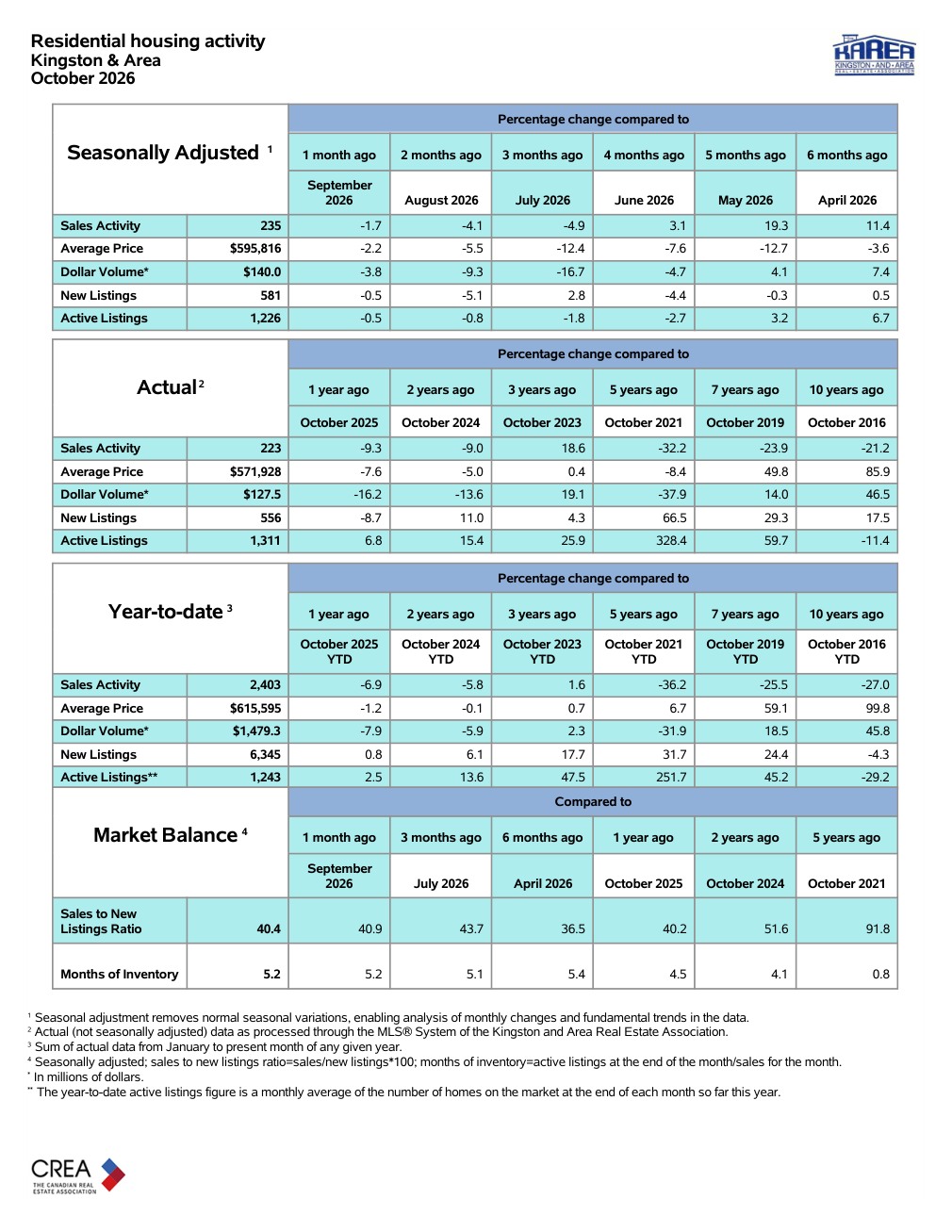
There were 223 residential sales in October 2026, down 9.3% from October 2025. The average selling price was $571,928, down 7.6%, while the median price fell 5.2% to $545,000.
Although these figures indicate softer conditions, they do not mean every property has declined in value by the same amount. Location, property type, condition and recent comparable sales remain important.
October 2026 residential market activity
The number of available homes continued to increase. There were 1,311 active residential listings at the end of October 2026, up 6.8% from a year earlier.
During the month, 556 new properties entered the market, down 8.7% from October 2025.
The market had 5.9 months of inventory, up from 5.0 months a year earlier. Months of inventory show how long it would take to sell the available properties at the current sales rate if sellers did not list any additional homes.
The sales-to-new-listings ratio was 40.1%, indicating conditions that favour buyers. Homes sold for an average of 95.8% of their asking prices, while the median time on the market remained at 31 days.
These statistics reinforce the importance of setting realistic expectations. Buyers have opportunities to negotiate, but well-priced properties can still attract competition.
Average prices and benchmark prices
One of the more important distinctions in the October 2026 figures is the difference between average selling prices and MLS® benchmark prices.
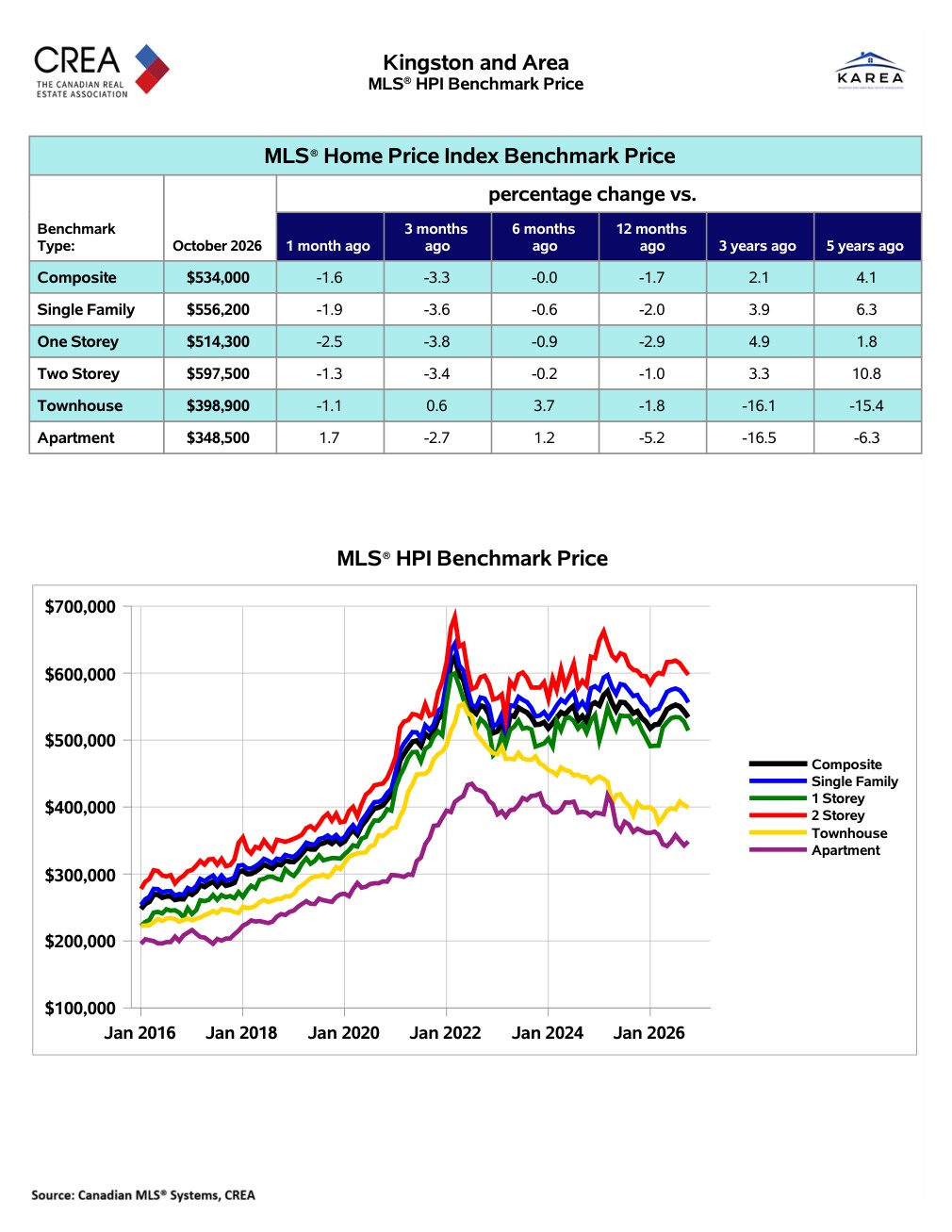
The average residential selling price fell 7.6% year over year. However, the MLS® Home Price Index composite benchmark price was $534,000, down just 1.7%.
The benchmark price tracks the value of a representative property and is less affected by the mix of homes sold in a given month.
The October 2026 benchmark price for single-family homes was $556,200, a 2.0% decline from a year earlier.
The townhouse benchmark was $398,900, down 1.8%, while the apartment benchmark was $348,500, down 5.2%.
These differences matter when evaluating an individual property. A month with fewer high-priced waterfront or luxury transactions can produce a lower average selling price without indicating that every home has lost a corresponding percentage of its value.
Single-family homes in October 2026
Single-family homes accounted for 190 sales during October, down 9.1% from the previous year.
The average selling price was $584,330, down 9.0%, while the median price was $550,000, down 6.8%.
There were 1,022 active single-family listings at month-end, up 4.9% year over year. Months of inventory rose from 4.7 to 5.4.
The median selling time was 30.5 days, compared with 30 days in October 2025.
For buyers considering detached homes in Kingston, Amherstview, Gananoque, Napanee, or surrounding rural communities, the increased selection may offer opportunities less common in stronger sellers’ markets.
For sellers, the results make accurate pricing and property condition increasingly important.
Townhouse market activity
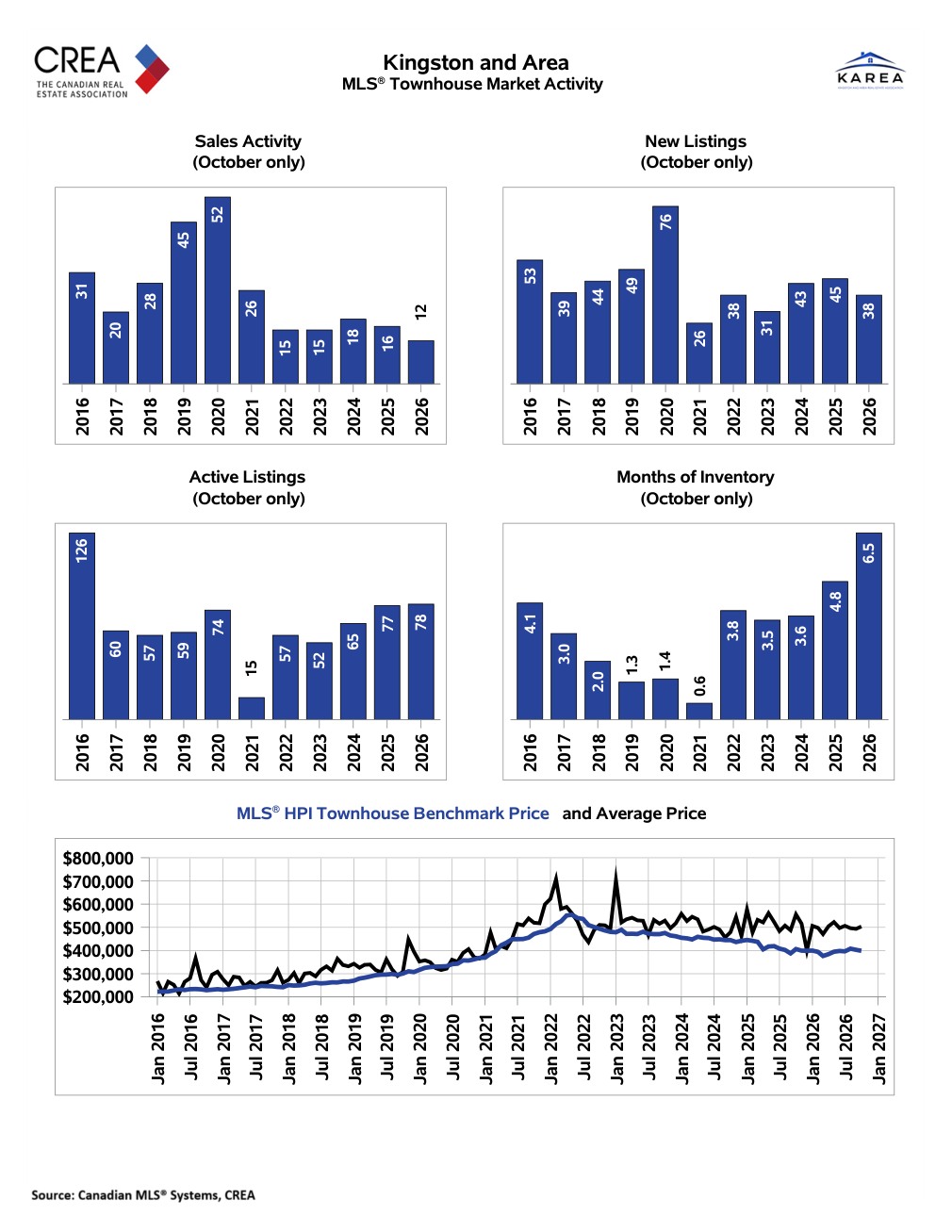
Townhouse sales remained slow in October 2026, with only 12 transactions compared with 16 a year earlier.
The average townhouse selling price was $503,703, down 9.4%, while the median price declined 12.7% to $477,500.
There were 78 active townhouse listings, with 6.5 months of inventory compared with 4.8 months in October 2025.
Townhouses spent a median of 30.5 days on the market, up from 27 days.
With relatively few monthly transactions, average and median differences in size, location and property type can considerably affect townhouse prices.
Buyers should also distinguish between freehold and condominium townhouses, particularly when comparing monthly ownership expenses.
Apartment condominium market activity
Apartment condominiums continued to offer a considerable choice for buyers.
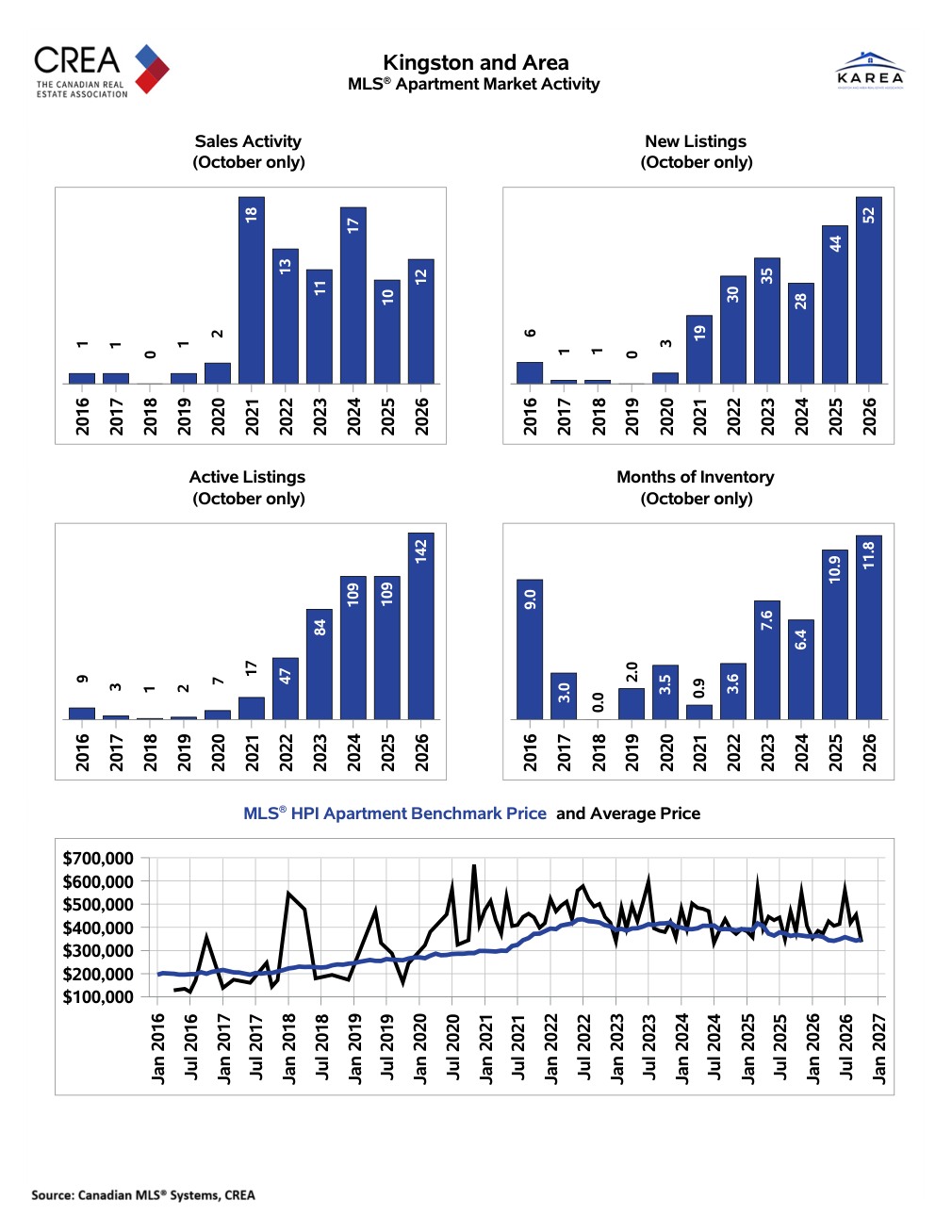
There were 12 apartment sales in October 2026, up from 10 in October 2025. However, active listings increased 30.3% to 142 properties.
The average apartment selling price declined 11.8% to $336,242, while the median price was $300,000, down 7.0%.
Months of inventory reached 11.8, compared with 10.9 a year earlier.
Interestingly, the median time on the market decreased from 55.5 days to 35.5 days, despite the increase in available inventory.
For buyers considering a condominium as an alternative to renting or purchasing a detached home, the asking price is only part of the financial picture. Monthly condominium fees, property taxes, insurance, parking and potential special assessments all deserve attention.
Condominium fees can increase over time, and buyers should review the status certificate, reserve fund information, and the condominium corporation’s financial position before committing to a purchase.
Interest rates and the October housing market
Mortgage financing remained an important consideration for buyers during October 2026.
On October 28, the Bank of Canada increased its overnight lending rate by 0.25 percentage points to 2.50%, its first increase since July 2023.
The decision reflected concerns about persistent inflation pressures, particularly those associated with elevated energy prices.
Variable-rate mortgage borrowers may experience increased borrowing costs when lenders adjust their prime rates. Bond yields and lenders’ funding costs primarily influenced fixed mortgage rates.
For prospective buyers, mortgage pre-approval remains important, but so does understanding the full cost of ownership. Buyers should consider property taxes, insurance, utilities, maintenance, and emergency savings.
The next scheduled Bank of Canada rate announcement is December 9, 2026.
Source: Bank of Canada, October 28, 2026 interest rate announcement.
What October 2026 means for homebuyers
For buyers, the October 2026 statistics suggest greater flexibility than in the more competitive markets of recent years.
More available properties and longer selling times can create opportunities to negotiate price, closing dates and appropriate conditions.
Some buyers may also consider homes with basement apartments or potential secondary suites to help offset ownership expenses.
However, a basement apartment and a legally recognised secondary suite are not necessarily the same thing. Buyers need to understand zoning, building requirements, fire safety, insurance and financing before assuming that rental income will be available.
I’ll explore these considerations in an upcoming article about buying a house with a basement apartment in Kingston and Area, including the important differences between secondary suites and in-law suites.
Renting, buying and building long-term equity
Another consideration is whether changing market conditions make homeownership more practical for renters who have been waiting to buy.
Lower selling prices and greater selection may improve opportunities, but the decision involves more than comparing a mortgage payment with monthly rent.
You need to include property taxes, maintenance, insurance, condominium fees, and closing costs when evaluating affordability.
Mortgage principal repayment can gradually build equity, something that monthly rent does not accomplish directly.
The financial choices people make before purchasing also matter. How quickly individuals accumulate vehicle expenses can affect a down payment, borrowing costs, and everyday spending.
An upcoming article will delve deeper into these questions regarding home buying, daily spending choices, and establishing long-term financial stability.
How does October compare with the 2026 year-to-date market?
A single month’s statistics are useful, but they do not always represent the broader direction of the housing market.
Through the end of October 2026, Kingston and Area recorded 2,403 residential sales, down 6.9% from the first ten months of 2025.
The year-to-date average selling price was $615,595, down only 1.2%, far smaller than the 7.6% year-over-year decline recorded in October alone.
New listings totalled 6,345 through October, up 0.8%, while the average number of active listings rose 2.5%.
These figures support the broader trends discussed in my 2026 Year-to-Date Market Report, which examined housing activity from January through September.
Looking at the year provides more context for the differences between individual monthly results and longer-term market conditions.
For another comparison, readers can also review my September 2026 Market Report, which examined pricing, sales and inventory across Kingston and the surrounding communities.
Frequently asked questions about the October 2026 housing market.
What was the average home price in Kingston and Area in October 2026?
The average residential selling price was $571,928, down 7.6% from October 2025. The median price was $545,000, down 5.2%. These numbers reflect regional data, and they should not be confused with Kingston-specific prices.
Were more homes available for sale in October 2026?
Yes. There were 1,311 active residential listings at the end of October, up 6.8% from a year earlier. The market had 5.9 months of inventory.
How long did homes take to sell in October 2026?
The median time on the market was 31 days for all residential properties. Individual selling times varied by property type, location, condition and asking price.
Is Kingston a buyer’s market in October 2026?
The regional statistics indicate conditions that favour buyers, with a 40.1% sales-to-new-listings ratio and 5.9 months of inventory. However, conditions vary across neighbourhoods and property types.
Are condominium apartments becoming more affordable?
The average apartment selling price was $336,242, down 11.8% year over year. The MLS® apartment benchmark price declined 5.2% to $348,500. Buyers should also consider monthly condominium fees, property taxes, the building’s condition, and the corporation’s reserve fund. Major structural problems, deteriorating parking garages, roofing issues or other expensive repairs can lead to substantial special assessments, requiring owners to contribute thousands of dollars beyond their regular condominium fees. A careful review of the status certificate, reserve fund study and financial statements is essential before purchasing.
Should sellers wait until spring 2027 to list their homes?
Not necessarily. The best time to sell depends on the property, competing listings, personal circumstances and local demand. Waiting until spring does not guarantee a higher selling price, particularly if additional listings enter the market.
Looking ahead to the end of 2026
October 2026 continued the trend toward a market where buyers have more choice, and sellers must pay closer attention to competition.
Although the monthly average price declined significantly from a year earlier, benchmark and year-to-date prices show a more moderate adjustment.
The Bank of Canada’s recent interest rate increase adds another consideration for buyers and sellers as the market approaches year-end.
For anyone planning to buy or sell in Kingston, Frontenac, Lennox and Addington, or Leeds and Grenville, the most useful information remains the recent selling prices and available listings for comparable properties in the immediate area.
Whether you are considering a first home, a condominium, a rural property or selling a long-time family home, understanding current local conditions can help you make informed decisions.
Source: Kingston and Area Real Estate Association / Canadian Real Estate Association, October 2026 MLS® Residential Market Activity and Home Price Index Report.