


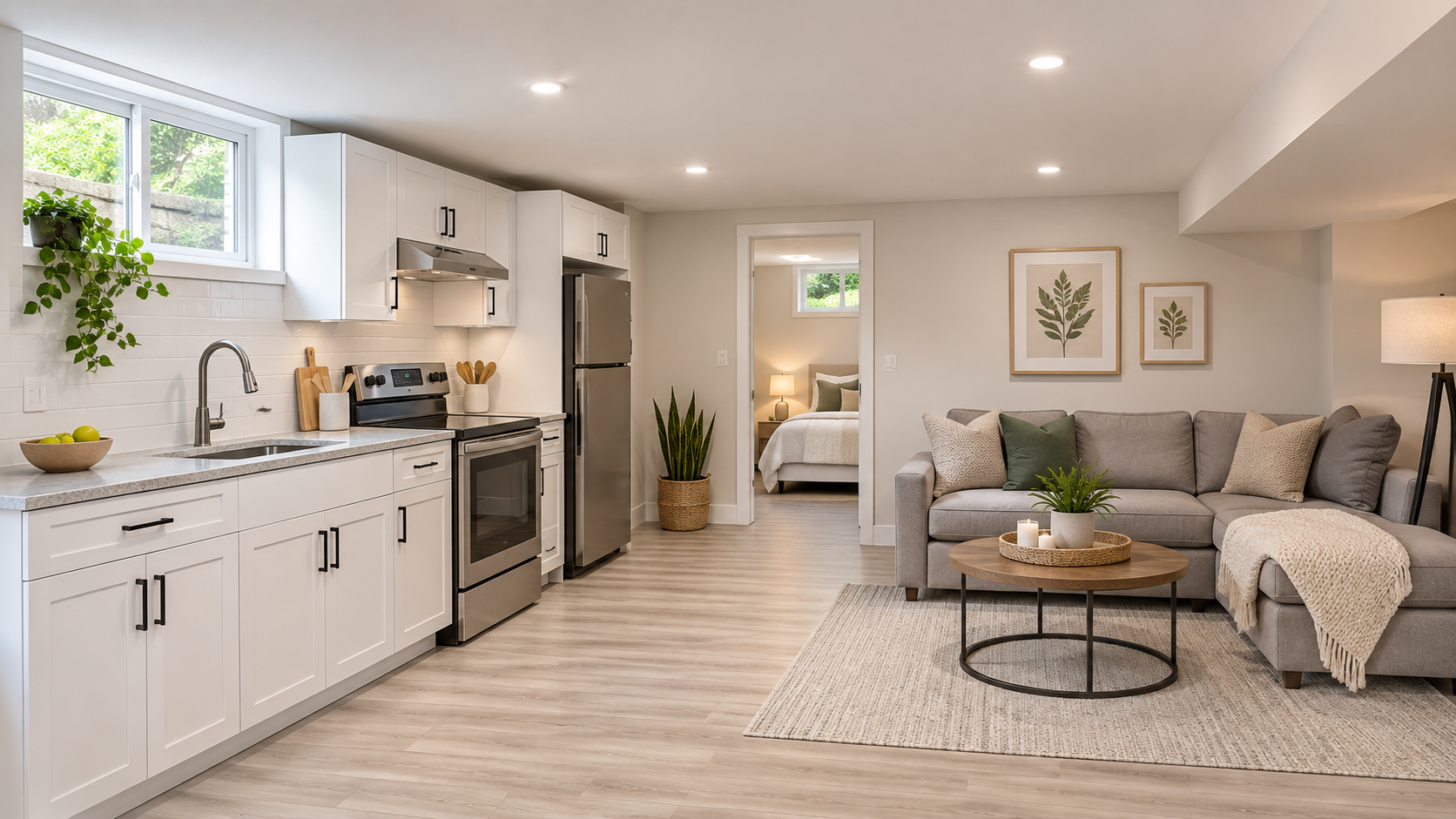
Buying a house with a basement apartment in Kingston and the surrounding area can be an attractive option for homebuyers looking to reduce their monthly housing costs. With mortgage payments, property taxes, insurance, and utilities all taking a toll on household budgets, earning rental income from part of your home deserves serious consideration.
A basement apartment may let you buy a property that would otherwise stretch your budget. It can also offer flexibility for extended family, adult children, or aging parents, and potentially become a valuable investment.
However, there is an important distinction between a house with a finished basement, one advertised as having an in-law suite, and a property containing a legal secondary residential unit.
Understanding that difference before making an offer could save you considerable money and frustration.
Why is buying a house with a basement apartment appealing?
For many purchasers, the biggest advantage of a basement apartment is the potential rental income.
Instead of relying entirely on employment or other household income to cover mortgage payments and operating expenses, a homeowner may receive monthly rent from a separate residential unit.
Consider a property with a basement apartment rented for $1,800 per month. That represents $21,600 in annual gross rental income.
That money could meaningfully contribute to mortgage payments, property taxes, or other ownership expenses. However, gross rental income isn’t the same as profit. Additional insurance costs, maintenance, repairs, utilities, and occasional vacancies all need to be considered.
There are also advantages beyond income.
A basement apartment can provide separate accommodation for a family member who wants some independence while remaining close by. It might eventually serve a different purpose as the household’s needs change.
For buyers interested in building long-term wealth through real estate, buying a home with a rental unit may be an entry point to property ownership as an investment.
Ensuring the property is suitable, affordable, and legally permitted for its intended use is key.
Is a basement apartment the same as an in-law suite?
This is one of the most important questions buyers should ask when viewing a property.
Real estate listings sometimes describe a finished lower level as an in-law suite, secondary suite, basement apartment, or additional residential unit. Although people sometimes use these terms interchangeably, they don’t automatically establish the property’s legal status.
What is an in-law suite?
An in-law suite refers to living accommodation intended for a family member, often a parent or other relative.
It might include a bedroom, bathroom, living area, and even a kitchen or kitchenette.
In some homes, the lower level remains connected to the principal residence through an interior stairway or shared entrance. In others, the space may have its own exterior entrance and appear almost completely independent.
The important point is that calling something an in-law suite doesn’t establish whether it can legally operate as a separate rental dwelling.
If authorities have not approved the basement as an additional dwelling unit with a kitchen, bathroom, and bedroom, people may still consider it part of the principal residence.
Conversely, a family member could live in a properly authorized secondary suite rather than a paying tenant.
The occupants’ relationship to the homeowner and the name used in the listing do not determine whether the accommodation is a legal second unit.
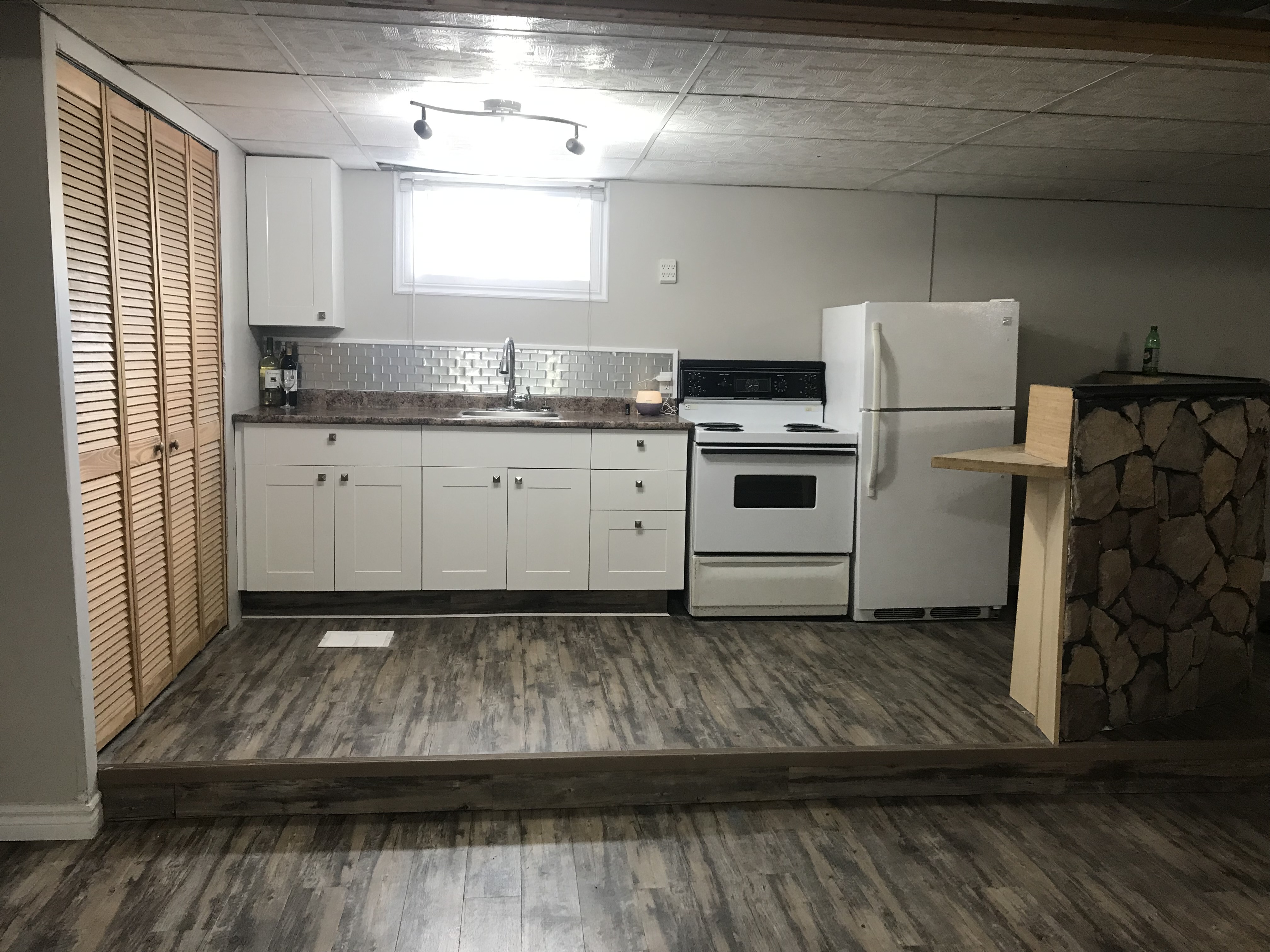
What is a legal secondary suite?
In Ontario, a secondary suite is a self-contained dwelling unit within a building containing no more than two dwelling units, as defined by the applicable Building Code.
In Kingston, these units fall under the broader municipal category of Additional Residential Units, commonly called ARUs.
A legal basement apartment must comply with the applicable zoning, building, and safety requirements. These can involve entrances and exits, ceiling heights, fire separation, smoke alarms, ventilation, heating, and other construction standards.
The property owner can rent a legal secondary suite to someone not related to them.
Buyers should never assume that a basement apartment is legal just because previous tenants rented it, it has its own kitchen, or it shows up as a second unit in an MLS® listing.
The property’s actual approvals and compliance matter far more than its description.
What does the City of Kingston require for a basement apartment?
The City of Kingston permits additional residential units on many residential properties, subject to applicable requirements.
Its Additional Residential Units information explains the different types of units, including basement conversions, attached units, and detached residential accommodation.
However, not every property automatically qualifies.
Zoning and location restrictions
Specific restrictions in Kingston control the locations where residents may establish basement apartments.
For example, certain areas have sewer capacity limitations, sewer surcharging concerns, or natural hazard restrictions. A property in one of these areas may face additional requirements or may not qualify for a basement apartment without further approvals.
This is important when considering older homes or properties in neighbourhoods with older municipal infrastructure.
Buyers should also know municipal rules can vary outside Kingston. Buyers must evaluate properties in Loyalist Township, South Frontenac, Greater Napanee, Gananoque, and other nearby municipalities based on applicable local requirements.
Provincial legislation has expanded opportunities for additional residential units, but municipal zoning, servicing, building, and safety considerations still apply.
Building permits and inspections
The City of Kingston requires permits for new and existing additional residential units.
A homeowner converting an existing basement into a separate apartment must obtain the necessary building permits and complete the required inspections.
Renovations may be required for an existing basement apartment built without proper approvals before the authorities can legalize it.
Depending on its condition, those renovations could be relatively straightforward or quite expensive.
For this reason, buyers should review the property’s permit history and request any available documentation that shows the unit has approval.
The City’s ARU permit information is a useful starting point.
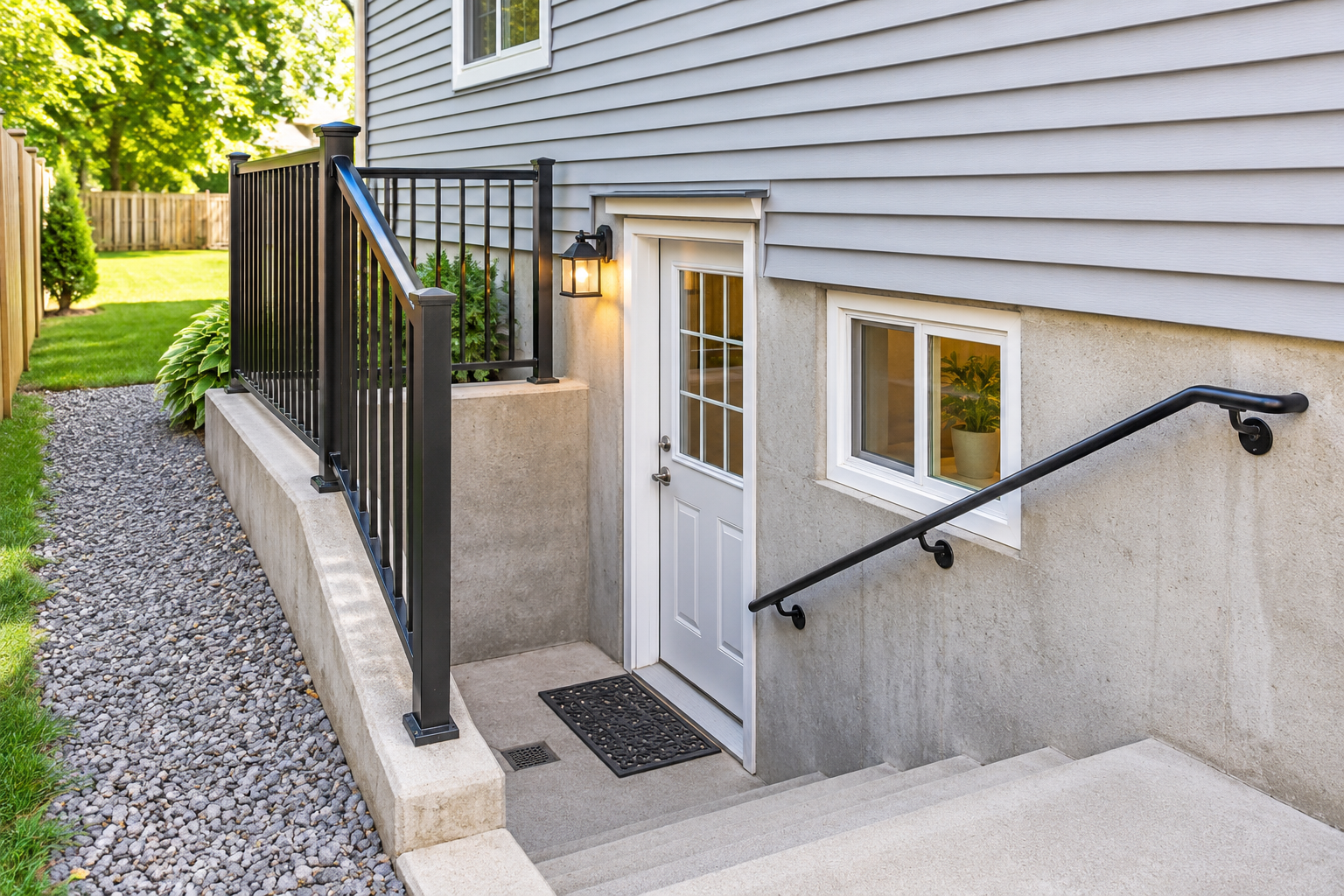
Fire safety, ceiling heights, and separate entrances
A basement apartment involves more than installing kitchen cabinets and a bathroom.
Because two households may occupy the same building, the Ontario Building Code establishes requirements intended to protect occupants.
Fire separation between units, interconnected smoke alarms, appropriate exits, heating arrangements, and safe access are important considerations.
Ceiling heights also matter. A basement that seems comfortable for occasional family use may not satisfy the applicable requirements for a separate residential unit.
Ontario’s Building Code provisions for secondary suites can differ from those for other building types, and some existing structures may face different compliance considerations.
The City of Kingston summarizes the 2024 Ontario Building Code changes, which took effect January 1, 2025.
These requirements are technical, and a regular home inspection isn’t a substitute for confirmation from the municipal building department.
If you’re buying a property specifically for its rental potential, confirming the unit’s legal status should be part of your due diligence.
Can a basement apartment have an entrance through the garage?
Some properties have basement apartments accessed through an attached garage, sometimes through a shared foyer or enclosed hallway.
These arrangements require careful investigation. A steel door with a self-closing device doesn’t, by itself, establish that the entrance complies with the Ontario Building Code.
You must consider the construction separating the garage from the residential space, protection against vehicle exhaust fumes, fire safety, and the availability of an approved exit route.
Buyers should also pay attention to interior stairways and connecting doors. If a required escape route passes through a door controlled or locked by another occupant, that could present a serious safety issue.
Before you purchase a property with an unconventional basement apartment entrance, ask the municipal building department to confirm whether they approved the arrangement and whether any outstanding compliance issues exist.
Can rental income help you qualify for a mortgage?
This is another area where buyers sometimes misunderstand how financing works.
Rental income can help with mortgage qualification, but lenders don’t count every dollar of projected rent as qualifying income.
The treatment depends on the lender, whether the property will be owner-occupied, the number of residential units, the mortgage insurance requirements, and the documentation available.
For example, Canada Mortgage and Housing Corporation allows certain approaches to rental income when evaluating insured mortgage applications. For an eligible owner-occupied two-unit property, the applicable qualification method may consider up to 100% of the gross rental income.
That doesn’t mean the lender automatically adds the entire rent to your employment income or guarantees approval for a larger mortgage.
Different lenders may apply different calculations, and they must also consider your debts, credit history, down payment, and financial circumstances.
A mortgage broker familiar with properties containing secondary suites can explain how the anticipated rental income may affect your borrowing capacity.
I would encourage buyers to have that conversation before making an offer rather than assuming the rent will make the mortgage affordable.
It’s also important to distinguish between purchasing a home you intend to occupy and buying a property strictly as an investment. Non-owner-occupied rental properties often have different financing requirements, including larger down payments.
How much rental income should you expect?
Potential rental income depends on the property’s location, size, condition, and amenities.
A modern two-bedroom basement apartment with good natural light, a separate entrance, parking, and in-unit laundry may appeal to a different tenant market than a smaller one-bedroom unit with shared facilities.
Location also makes a difference.
Properties convenient to Queen’s University, Kingston General Hospital, CFB Kingston, St. Lawrence College, or major employment areas may attract tenants with different needs and expectations.
A well-maintained apartment in Kingston’s west end may offer a different rental experience from a unit near downtown or in a smaller surrounding community.
Buyers should investigate current comparable rental listings and, wherever possible, actual leased properties rather than relying entirely on the seller’s projected rental income.
The $1,800 monthly rent example used earlier in this article is illustrative, not a statement of average Kingston rental rates.
When tenants occupy a basement apartment, the current rent may also differ substantially from what a similar vacant unit could command today.
That distinction becomes important when calculating the property’s financial value.
Buying a house with an existing basement apartment tenant
Purchasing a property with an existing tenant brings another set of considerations.
Under Ontario’s Residential Tenancies Act, selling the property does not automatically terminate a residential tenancy.
In most circumstances, the purchaser becomes the new landlord and assumes the existing tenancy along with its rights and obligations.
That means buyers should obtain and review the current lease, rent amount, payment arrangements, utility responsibilities, and other relevant tenancy information before purchasing.
An existing tenant may provide immediate rental income, but the buyer needs to understand that they cannot just consider an occupied unit as vacant accommodation.
What if the buyer wants the basement for personal use?
A purchaser intending to occupy a tenant’s rental unit may have rights under Ontario’s rules governing purchasers’ own use, but specific procedures, notice requirements, and eligibility conditions apply.
The rules also distinguish between a landlord seeking possession for personal use and a seller serving notice on behalf of a purchaser.
Legislative changes effective September 21, 2026, altered certain requirements for landlords’ own-use applications, but those changes do not all apply to purchasers’ own-use notices.
A notice does not itself guarantee the tenant will leave by the specified date. If the tenant does not vacate, an order from the Landlord and Tenant Board may be required.
Buyers who need vacant possession should have their lawyer review the situation and ensure the agreement of purchase and sale addresses it appropriately.
Never assume that purchasing a home automatically gives you the right to remove a tenant.
More information is available through the Landlord and Tenant Board.
Understanding Ontario’s rent control rules
Another consideration is whether the basement apartment is subject to Ontario’s annual rent increase guideline.
Many existing rental units are subject to rent control. However, certain newer units first occupied for residential purposes after November 15, 2018, may qualify for an exemption.
Eligibility for the exemption for basement apartments created in existing houses depends on specific factors, including when and how the unit was created.
You must not assume a basement apartment is exempt simply because the house underwent recent renovations.
Buyers should investigate the unit’s history, existing tenancy, and applicable rules before estimating future rent increases.
Even when a unit is exempt from the annual guideline, other requirements under the Residential Tenancies Act still apply.
Ontario’s residential rent increase information explains these distinctions.
What expenses come with owning a basement apartment?
Rental income looks attractive when considered on its own. Once you include expenses, the actual financial picture becomes clearer.
A homeowner with a basement apartment may face higher insurance costs than someone occupying an entire house themselves. Notify the insurer about the separate rental unit in the property.
Utilities can also become complicated.
Some properties have separate meters, allowing tenants to pay directly for certain services. Others share electricity, gas, water, or heating systems, requiring a clear understanding of who is responsible for what.
Maintenance is another expense. Appliances eventually fail, plumbing problems occur, and tenants may report issues that require prompt attention.
They should also allow for times when the apartment stays vacant, or rent payments don’t arrive.
Renting out part of a home may affect property taxes, mortgage interest, insurance, and certain maintenance expenses for tax purposes.
Owners should discuss the details with an accountant, especially when part of their principal residence is used to generate rental income.
In certain situations, renting part of a principal residence can also affect the principal residence exemption when the property owner eventually sells it.
The key is to calculate rental income conservatively, allowing for realistic expenses and repairs.
What happens if your tenant stops paying rent?
One financial risk prospective landlords should consider is a tenant falling behind on rent or stopping payments altogether.
If you’re relying on $1,800 in monthly rental income to help cover your mortgage and other household expenses, six months without that income represents $10,800 in lost revenue. Meanwhile, the mortgage, property taxes, insurance, and maintenance costs continue.
In Ontario, landlords cannot simply change the locks or remove a tenant who has stopped paying rent. They must follow the process set out in the Residential Tenancies Act.
The process begins with an N4 notice for non-payment of rent. If the tenant fails to address the issue, the landlord may ask the Landlord and Tenant Board to issue an order to collect the unpaid rent and evict the tenant. If the court grants an eviction order and the tenant refuses to leave, the appropriate court enforcement office must handle the enforcement.
The process can take time, and issuing an eviction order doesn’t always recover outstanding rent.
This is why buyers considering a basement apartment should have sufficient financial reserves to manage their property even when rental payments are interrupted.
Rental income can provide a tremendous advantage, but you should never treat it as guaranteed income.
For additional information, visit the Landlord and Tenant Board’s guide to unpaid rent.
Could you purchase a house and create a basement apartment later?
Some buyers find a suitable home without an existing second unit but recognize the basement’s potential.
Perhaps it has a separate exterior entrance, reasonably high ceilings, and enough space for a kitchen, bathroom, and living area.
Converting that space into a legal basement apartment may be possible, but it’s important to investigate before purchasing.
The property’s zoning and servicing must permit the proposed use. The basement must also meet the applicable construction and safety requirements.
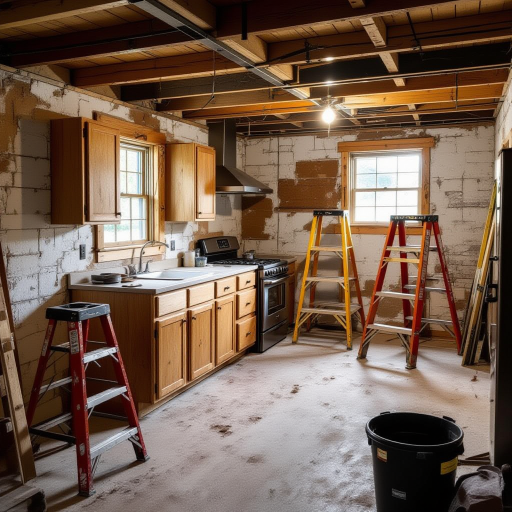
Adding a separate kitchen, upgrading electrical systems, modifying plumbing, creating appropriate fire separation, and completing other renovations can become expensive.
A basement with a history of water infiltration or poor drainage may present additional challenges.
Buyers should seek appropriate professional advice and consult the municipality before relying on a future conversion as part of their financial plan.
Kingston has offered financial assistance for eligible additional residential unit projects, although the availability and terms of these programs can change. As of November 2026, applications to the City’s ARU Incentive Program are being placed on a waitlist, and eligibility is subject to program deadlines and requirements.
The City of Kingston’s ARU incentive information provides current details.
Making an offer on a house with a basement apartment
When purchasing a house with a basement apartment, the agreement of purchase and sale deserves particular attention.
The conditions and documentation required will depend on the property and how the buyer intends to use it.
Financing is an obvious consideration, especially where the mortgage approval depends partly on rental income.
A home inspection can help identify concerns with the building’s condition, including moisture, drainage, and the heating, electrical, and plumbing systems.
However, inspectors seldom certify that a basement apartment is legal or complies with all applicable municipal requirements.
If the rental unit is essential to the purchase, buyers should also investigate permits, approvals, tenancy documentation, and any outstanding work orders or compliance concerns.
Before you confirm the agreement when the apartment has a tenant, clarify the existing lease and the buyer’s expectations regarding possession.
A condition permitting appropriate due diligence may be valuable, but the wording matters. Buyers should understand what the condition allows them to investigate and how they may exercise their rights under it.
These are matters to discuss with your REALTOR® and, where appropriate, your real estate lawyer.
Is it a smart investment to buy a house featuring a basement apartment?
For the right buyer and the right property, a basement apartment can provide substantial long-term benefits.
Rental income may help manage housing expenses, reduce the financial pressure of mortgage payments, and create opportunities to build equity.
A legal second unit may also appeal to future buyers interested in rental income or multigenerational living.
However, there are risks.
Tenants can move, operating costs can rise, repairs can be unexpected, and the housing market doesn’t guarantee appreciation.
If the owner relies on the basement apartment being continuously occupied at the highest possible rent, the property may leave the owner vulnerable financially.
I believe a better approach is to purchase a property that makes sense under realistic conditions, with rental income providing an advantage rather than being the only thing keeping the household afloat.
Buying a basement apartment property in Kingston and the surrounding area
Kingston and its surrounding communities offer a variety of properties that may suit buyers looking for an additional residential unit.
These include established homes with existing basement apartments, older properties with conversion potential, and purpose-built two-unit homes.
Opportunities vary considerably depending on neighbourhood, municipal requirements, property condition, and purchase price.
For some buyers, the best choice may be a home with an already authorized basement apartment and an established rental history.
For others, it may be a house with flexible lower-level accommodation for family use, without immediately taking on the responsibilities of becoming a landlord.
The important thing is knowing exactly what you’re purchasing.
A basement kitchen doesn’t confirm a legal apartment. An existing tenant doesn’t guarantee future rental income, and an appealing projected rent doesn’t replace thorough financial analysis.
Buying a house with a basement apartment can be a worthwhile way to make homeownership more affordable and potentially build long-term wealth. The strongest purchases begin with realistic expectations, careful investigation, and an understanding of both the benefits and responsibilities of owning a property with two residential units.
Frequently Asked Questions:
Is a basement apartment legal if it has a separate entrance and kitchen?
Not necessarily. A separate entrance, kitchen, and bathroom don’t automatically make a basement apartment legal. Buyers should verify that the unit complies with applicable municipal zoning, building, and fire safety requirements and that the necessary permits and approvals are in place.
What is the difference between an in-law suite and a legal secondary suite?
An in-law suite usually refers to accommodation intended for family members, while a legal secondary suite is a recognized, self-contained residential unit that meets applicable requirements. Whether the unit can legally be rented does not depend on the name used in a real estate listing.
Can basement apartment rental income help me qualify for a mortgage?
Yes, potentially. Some lenders consider rental income when determining mortgage eligibility, but their calculations vary. A mortgage broker can explain how much income may qualify and whether the property meets the lender’s requirements.
Can I remove an existing tenant after purchasing a house?
Not automatically. In Ontario, an existing tenancy continues when a property changes ownership. Ending a tenancy requires a valid legal reason and compliance with the Residential Tenancies Act. Buyers who require vacant possession should get legal advice before committing to the purchase.
What happens if a basement apartment tenant stops paying rent?
The landlord must follow Ontario’s legal process beginning with an N4 notice for unpaid rent. If the issue remains unresolved, the landlord may have to apply to the Landlord and Tenant Board. The process can take time, so landlords should maintain financial reserves to cover interruptions in rental income.
Is purchasing a house with a basement apartment a wise investment?
It can be, provided the property is legally suitable, the purchase price is reasonable, and the projected income supports the additional expenses. Before deciding, buyers should consider financing, maintenance, insurance, taxes, potential vacancies, and tenant-related risks.
Don’t miss these guides.
Basement Finishing Essentials: Homeowners Guide
Thinking about finishing or converting a basement? Learn about ceiling heights, moisture concerns, electrical systems, plumbing, and the difference between additional living space and a legal rental unit.
Budget Considerations for Your Home Purchase,
Understand why mortgage qualification is only part of affordability and how to choose a property that fits your household budget over the long term.
Kingston and Area Home Buyers Guidebook
A guide to the home-buying process, including preparing your finances, viewing properties, making an offer, understanding conditions, and preparing for closing.
Budget Considerations for Your Home Purchase,
Learn how to evaluate mortgage payments, ownership expenses, and your overall budget before purchasing.
Understanding the Home Buying Process
Learn the steps involved in purchasing a home, from mortgage pre-approval and property searches to making an offer, including conditions, and preparing for closing.