



Looking for ways to save for a home? You’ve probably heard the joke that young people could afford to buy a house if they stopped buying avocado toast and expensive coffee. It’s an amusing line, but it doesn’t explain the challenges Canadians face when trying to enter the housing market.
Home prices have exploded over the decades, and many households struggle to save while paying rent, groceries, transportation, insurance, and other everyday expenses. Giving up an occasional breakfast won’t solve the housing affordability problem.
However, there’s some truth to the joke. Small financial decisions, repeated over months and years, can make a difference. The same applies to wider choices about vehicles, borrowing, and handling finances.
Saving for a home doesn’t have to mean giving up everything you enjoy. It’s about finding opportunities to spend less on things that aren’t important to you and directing that money toward what is.
For buyers in Kingston, Amherstview, Gananoque, Napanee, and the surrounding communities, those choices could help you save for a home. For existing homeowners, similar habits can help build equity, reduce debt, and create opportunities to invest in real estate.
Daily choices help you save for a home.
I’ve always believed in getting value for my money rather than paying extra simply because something is new.
When shopping for a vehicle, I prefer one that’s three or four years old. I compare what’s available and look for the lowest kilometres I can find at a reasonable price. Someone else has already absorbed much of the initial depreciation, while I still get a vehicle with plenty of useful life remaining.
I take a similar approach to cellphones. The newest model might have a better camera or a few additional features, but that doesn’t mean replacing a perfectly good phone makes financial sense.
I also make my coffee at home. Rather than paying for a gym membership, I’ve purchased a treadmill and other exercise equipment that I can use whenever I like.
None of these decisions alone will make someone wealthy. Together, they can reduce ongoing expenses without requiring significant sacrifices.
A vehicle is a good example. Someone carrying a substantial monthly car payment has less money available for saving and may qualify for a smaller mortgage because of that debt.
The same principle applies to other purchases. The question isn’t whether you can afford the monthly payment. It’s whether that expense is worth what you might give up elsewhere.
Where is your money going every month?
Many Canadians understand how much they earn but have a less accurate picture of their spending.
Monthly subscriptions are a good example. Streaming services, music subscriptions, cellphone plans, cloud storage, fitness apps, and other recurring charges can quietly add up to hundreds of dollars.
Consider a household spending $80 each month on subscriptions. That’s $960 annually. Cutting the total in half would save $480 without eliminating entertainment or other useful services.

Coffee and takeout meals are another example.
Spending $8 on breakfast five mornings each week adds up to $2,080 annually. Bringing breakfast from home won’t eliminate the cost of food, but reducing that expense by half could free up more than $1,000 each year.
Buying lunch every workday is another expense worth examining. A fast-food meal can easily cost $15, depending on what you order. A friend recently mentioned that he and his wife spent more than $30 on just two pitas over the weekend. At $15 per lunch, five days a week for 52 weeks, you’re spending $3,900 annually.
Even allowing for the cost of preparing lunches at home, the savings could be substantial. Bringing lunch from home a few days each week is another practical way to save for a home without giving up the occasional meal out.
The point isn’t to stop going out for breakfast. It’s to understand what habitual spending costs.
A household that saves $40 each month on subscriptions, $80 on takeout, and another $80 through other spending adjustments would save an additional $200 per month.
That’s $2,400 annually, or $12,000 over five years, before interest.
Finding small ways to save for a home can make a meaningful difference to your down payment.
Pay yourself first instead of saving what’s left.
One of the simplest ways to save for a home is to transfer money into savings automatically when you get paid.
For eligible first-time buyers, Canada’s First Home Savings Account (FHSA) offers an important advantage.
If you wait until the end of the month to save whatever remains, other expenses may consume most of it.
Instead, arrange an automatic transfer into a separate savings account shortly after payday.
Saving $100 every two weeks adds up to $2,600 annually. Continue for five years, and you’ve accumulated $13,000 before interest.
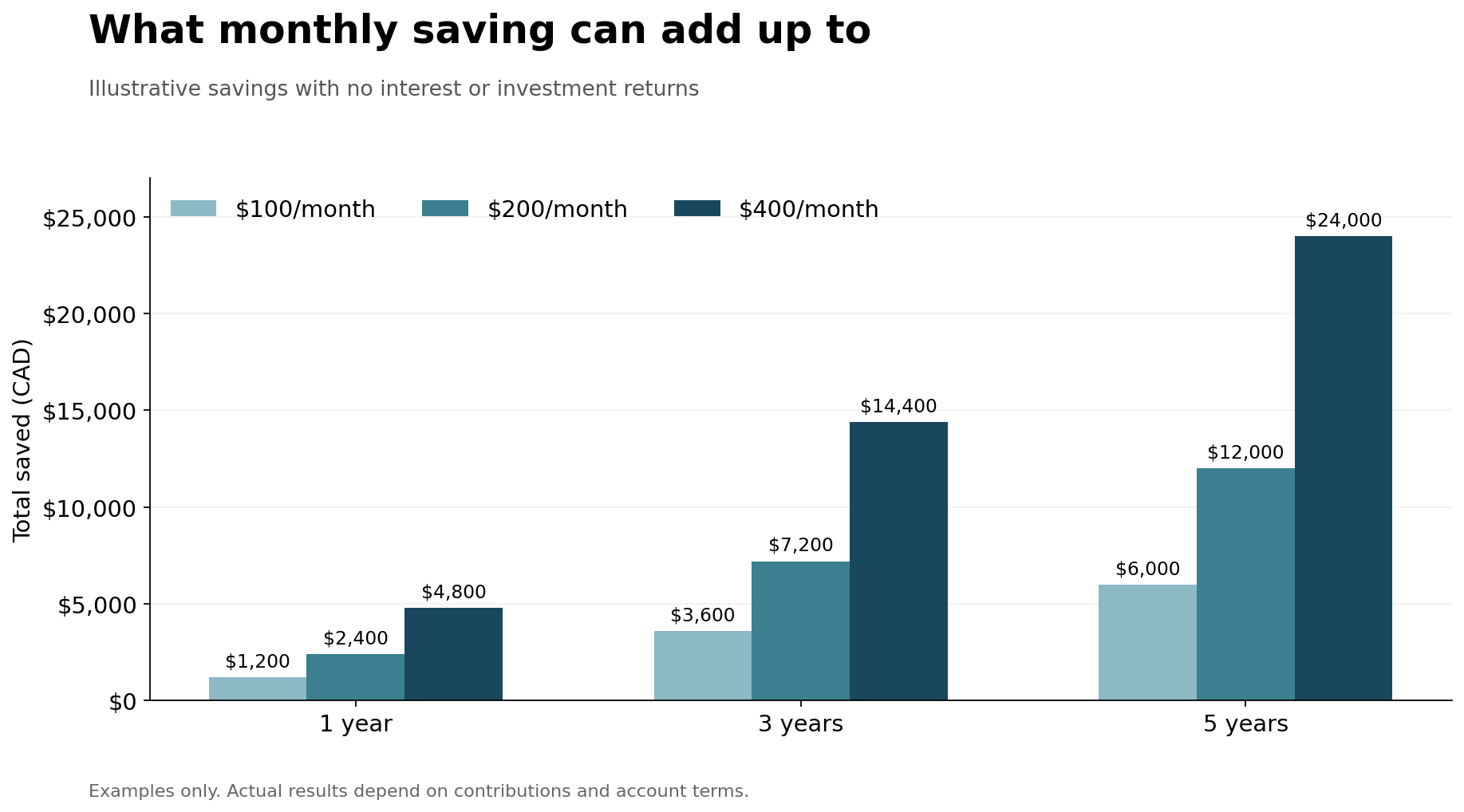
Increase that to $200 every two weeks, and the five-year total reaches $26,000.
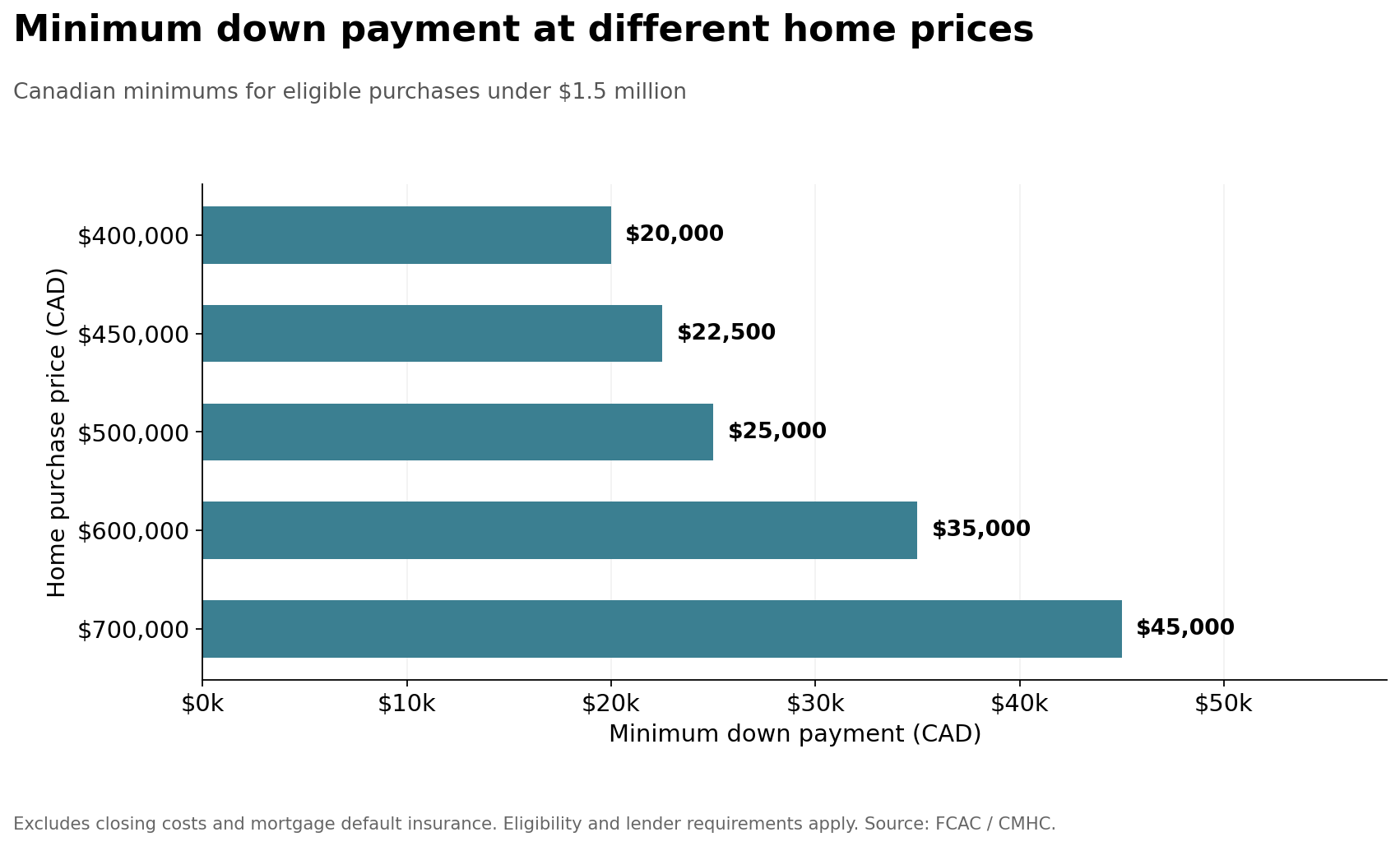
For someone saving for a home, they could use that to cover a minimum down payment on certain properties, although they must also consider closing costs and other expenses.
The amount doesn’t have to be ambitious at first. Establishing a manageable savings habit and increasing contributions as your income allows can be more effective than setting an unrealistic target and abandoning it.
One of the best ways to save for a home is to set smaller, achievable goals. If your target is a $25,000 down payment, concentrate on saving your first $5,000, then the next $5,000. Review your progress every few months and increase your contributions when your finances allow.
Breaking a large goal into smaller milestones can make the process less overwhelming and help you stay motivated.
Use the First Home Savings Account

For eligible first-time buyers, Canada’s First Home Savings Account (FHSA) offers an important advantage.
The FHSA allows qualifying individuals to contribute up to $8,000 annually, subject to available contribution room, with a lifetime contribution limit of $40,000.
Contributions can reduce taxable income, and qualifying withdrawals used to purchase a first home are tax-free.
Eligible buyers may also combine FHSA savings with the RRSP Home Buyers’ Plan and other available assistance.
I’ve covered these opportunities in more detail in Exploring Home Buyer Programs in Ontario, 2027.
If you plan to purchase within the next few years, it’s worth discussing savings options with a financial adviser. Money needed for a down payment soon shouldn’t depend on stock market gains that may disappear just when you’re ready to buy.
Paying down debt can be as important as saving.
Trying to save for a home while carrying expensive credit card debt can be counterproductive
Imagine having a $5,000 credit card balance with a 21% annual interest rate. If that balance remains outstanding for a full year, the interest alone would be approximately $1,050, assuming the balance and rate remain unchanged.
That money isn’t reducing your debt or building savings. It’s the cost of borrowing.
Paying off high-interest debt frees up money for other priorities and improves your financial position before applying for a mortgage.
Lenders examine existing financial obligations when assessing mortgage applications. Vehicle loans, credit card balances, lines of credit, and other debts can affect the amount you’re approved to borrow.
Someone with a good income but substantial monthly debt payments may have less purchasing power than someone earning the same amount with fewer obligations.
Reducing debt accomplishes two things: decreasing interest expenses and potentially improving mortgage qualification.
Maintain an emergency fund as well. Emptying every account to purchase a home can leave a new owner vulnerable when the furnace fails, the roof leaks, or an unexpected expense arises.
Buying a home today versus buying decades ago
It’s easy to compare today’s housing prices with what homes cost 20 or 30 years ago and conclude that previous generations had everything easier.
There’s no question that house prices were much lower in dollar terms.
However, mortgage interest rates were considerably higher during certain earlier periods, and pay cheques were smaller.
When I purchased my first home, the financial environment differed from what buyers face today. We should pay attention to today’s affordability challenges and not dismiss them.
Often, home prices have increased much faster than household incomes, making it especially difficult for first-time buyers to save for a down payment.
But comparing purchase prices alone doesn’t tell the complete story. Mortgage rates, wages, taxes, household debt, and the cost of living all affect affordability.
Every generation has faced financial challenges shaped by the economic conditions of its time.
The question for today’s buyer isn’t whether someone else purchased a home for $75,000 or $150,000 decades ago.
It’s whether you can find a suitable property today that fits your finances and remains affordable in the long term.
Could a slower Kingston housing market create opportunities?
Saving for a home is only part of the equation. Knowing when and what to purchase matters, too.
One advantage of preparing financially in advance is being ready when market conditions favour purchasers.
During September and October 2026, Kingston and the surrounding area experienced lower sales activity and increased housing inventory.
According to the Kingston and Area Real Estate Association, October ended with 1,311 active residential listings, 6.8% more than a year earlier. That represented the highest October inventory in a decade.
The MLS® Home Price Index composite benchmark was $534,000, down 1.7% from October 2025.
There were 5.9 months of inventory, compared with five months a year earlier.
These figures don’t mean every home has lost value or that sellers are desperate to negotiate. They suggest that buyers have more choice than in the highly competitive markets of recent years.
My September 2026 Kingston and Area Market Report explains how increased listings and slower sales affected buyers heading into autumn.
The October 2026 market report continues that discussion with more recent figures.
Why preparation matters in a slower market?
When homes attract multiple offers and sell within days, buyers can feel pressured to decide quickly.
A slower market may give you more time to compare properties, assess their condition, review financing options, and negotiate terms.
Someone who has saved a down payment, reduced debt, and obtained mortgage pre-approval could find it easier to spot an opportunity.
That might mean buying a home on the market for several weeks or finding a suitable property that needs cosmetic improvements instead of costly structural repairs.
However, don’t confuse a lower asking price with good value. Every property needs to be assessed against comparable sales, its condition, location, and the cost of necessary repairs.
Predicting the exact bottom of the market is another challenge. Nobody knows whether prices will decline further or when demand might increase.
The goal is to purchase a home that makes financial sense for you, not to win a guessing game about the market.
Your first home doesn’t have to be your dream home.
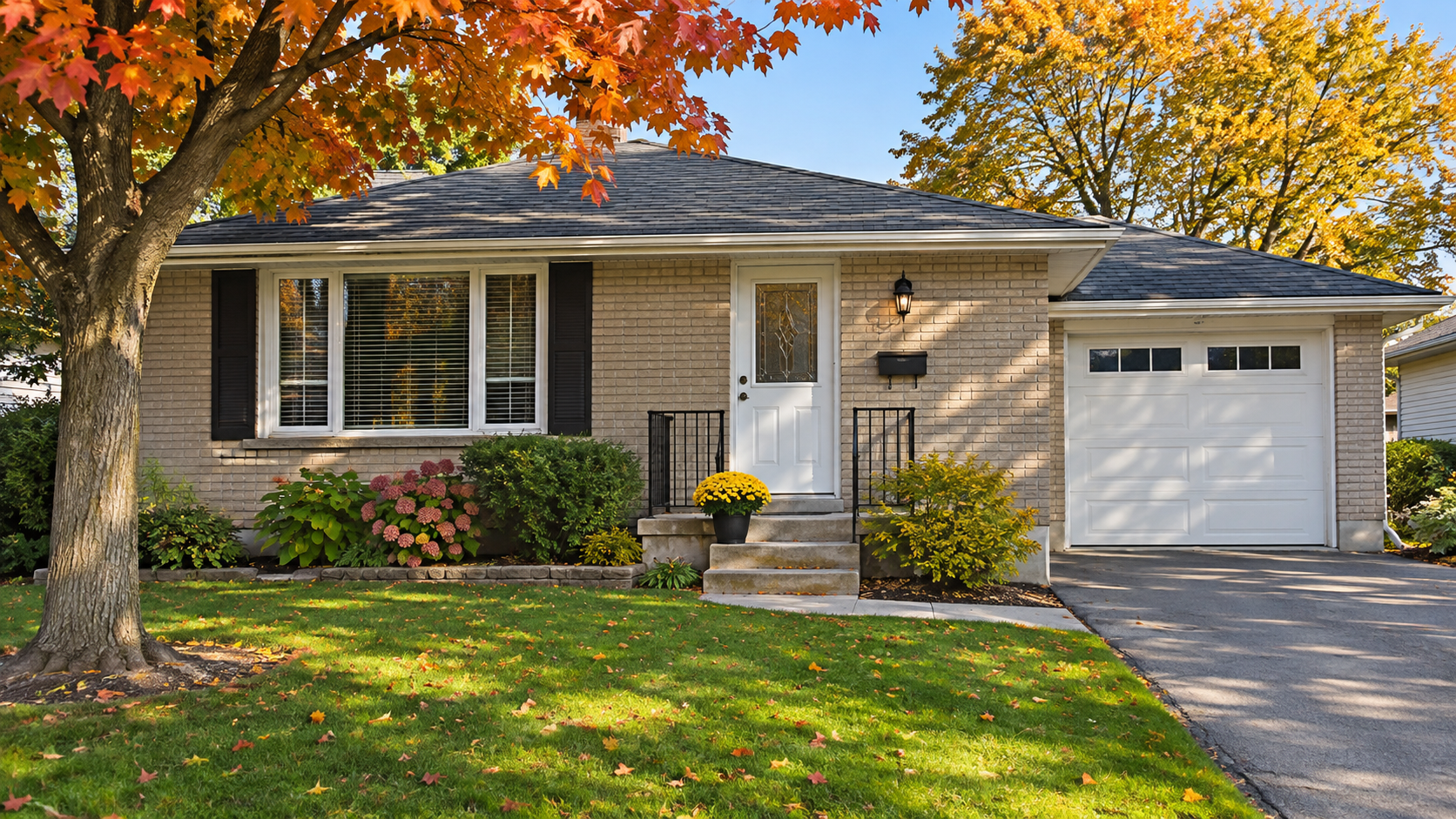
Many buyers begin their search with a detailed list of everything they want.
A detached home, a large kitchen, a finished basement, a garage, multiple bathrooms, and a spacious backyard might all be desirable.
But purchasing everything on that list may not fit the budget.
For some buyers, an older townhouse, smaller bungalow, semi-detached home, or condominium may be a more practical starting point.
Kingston and its surrounding communities offer a range of property types and price points. Buyers who are flexible about location, size, and cosmetic finishes may discover possibilities they hadn’t considered.
A home that needs painting, updated flooring, or a kitchen renovation might offer better value than a fully renovated property, as long as its major components are sound.
Recognize the difference between cosmetic improvements and expensive repairs involving foundations, roofing, electrical systems, or moisture problems.
Your first home doesn’t have to be your last home. Buying something manageable can allow you to build equity as your circumstances and financial resources change.
A condominium isn’t always the least expensive option.
Condominiums often attract first-time buyers because their purchase prices can be lower than those of comparable detached properties.
However, the purchase price and mortgage payment don’t tell the entire story.
You must include condominium fees, property taxes, insurance, utilities, and other expenses when calculating affordability.
Monthly condominium fees can increase as buildings age and operating costs rise. Insurance, utilities, maintenance contracts, and major building repairs can affect the corporation’s budget.
Older buildings may face additional expenses involving elevators, roofs, windows, parking structures, balconies, or mechanical systems.
And then there are special assessments.
A condominium corporation may levy a special assessment when it needs additional money to address a significant expense or funding shortfall. Depending on the building and the work required, an individual owner’s share could amount to thousands or even tens of thousands of dollars.
That can create a substantial financial burden for someone who already stretched their budget to purchase the unit.
Newer condominium buildings aren’t immune. Their fees can increase as actual operating costs become clearer and reserve fund contributions change.
Before purchasing, buyers should carefully review the status certificate, financial statements, reserve fund information, and any known or anticipated major expenses.
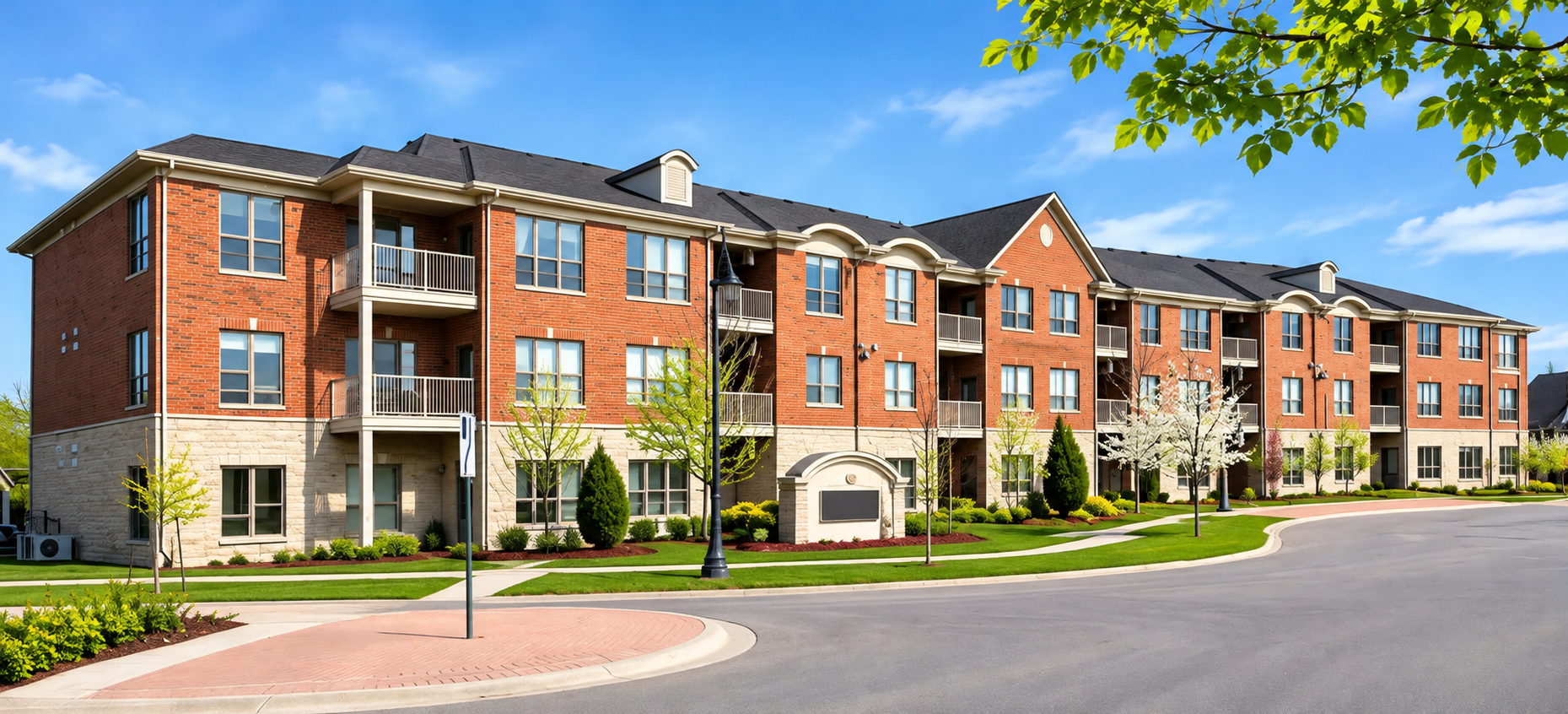
A condominium can be an excellent choice for the right purchaser, but affordability must be based on total ownership costs, not simply the asking price.
Condominium corporations operate under declarations, bylaws, and rules that can restrict what owners do with their properties
Condominium corporations operate under declarations, bylaws, and rules that can restrict what owners do with their properties. Depending on the development, the condominium corporation may not permit you to plant the garden you want, build a deck, install a fence, change exterior colours, or make other alterations without approval.
Even an outdoor area reserved for your exclusive use may legally be part of the condominium’s common elements, meaning you don’t have the same freedom to modify it as you would with a freehold property.
These restrictions extend beyond apartment-style condominiums. They can also apply to condominium townhouses and detached homes within condominium developments.
Before buying, review the corporation’s declaration, bylaws, and rules to ensure they fit your lifestyle. A condominium may offer less exterior maintenance, but that convenience can come at the expense of personal freedom over your property.
Building wealth through homeownership
Owning a home can contribute to long-term financial stability.
With a conventional repayment mortgage, part of each payment reduces the outstanding principal. Over time, that increases your equity in the property, assuming its value remains unchanged.
If the home’s market value also increases, your equity may grow further.
However, the housing market does not always appreciate. Housing markets can remain flat or decline, and property ownership involves substantial costs.
Mortgage interest, property taxes, insurance, maintenance, repairs, and buying or selling expenses all affect the financial outcome.
Renting isn’t automatically a poor decision, either. For someone who expects to move frequently or lacks the financial readiness for ownership, renting could represent the more sensible choice.
But for households planning to remain in one property for several years, purchasing an affordable home and steadily reducing mortgage debt can become an important part of building personal wealth.
That equity may provide options for moving to another property, downsizing, or investing elsewhere.
Deciding whether to rent or buy involves more than comparing monthly rent with a mortgage payment. Property taxes, insurance, maintenance, closing costs, and how long you expect to stay all affect the calculation. The National Bank of Canada’s Rent or Buy Calculator can help you compare the financial implications of both options before deciding whether to save for a home or continue renting.
Don’t overlook mortgage renewal savings.
For existing homeowners, one of the largest opportunities to reduce expenses may occur when their mortgage comes up for renewal.
It’s convenient to sign the renewal offer received from your current lender. However, that doesn’t guarantee you’re getting the most competitive rate or the most suitable terms.
Comparing mortgage renewal offers from different lenders or consulting a mortgage broker could save you money over the next mortgage term
Even a fraction of a percentage point can matter on a substantial mortgage balance.
Rates aren’t the only consideration. Prepayment privileges, penalties, portability, and other mortgage terms can be equally important.
Switching lenders may involve qualification requirements or additional costs, depending on the mortgage and circumstances.
For homeowners who can afford it, making additional principal payments may reduce total borrowing costs and shorten the time needed to pay off the mortgage.
The savings from a carefully managed mortgage can be far more significant than eliminating a few cups of coffee.
Could an investment property be your next step?
Once you’ve established financial stability and built equity, purchasing an income property may become an option.
A duplex, a house with a legal basement apartment, or a separate rental property can provide opportunities to earn rental income while building equity through mortgage repayment.
For some buyers, an owner-occupied property with a second residential unit can be especially attractive.
Living in one unit while renting the other may help offset the costs of homeownership.
However, rental income needs to be evaluated realistically.
For buyers considering this approach, my article Buying a House with a Basement Apartment in Kingston and Area covers legal secondary suites, in-law suites, financing, tenant rights, and the expenses associated with owning rental accommodation.
Rental income isn’t the same as profit.
Consider a hypothetical two-bedroom rental apartment generating $2,300 monthly.
That’s $27,600 in annual gross rental income.
It sounds attractive until you consider mortgage payments, property taxes, insurance, maintenance, repairs, utilities where applicable, and periods when the unit is vacant.
If the property is a condominium, you must also consider monthly condo fees and the possibility of special assessments.
A major repair or several months without rental income can transform the financial picture.
Landlords also have responsibilities under Ontario’s Residential Tenancies Act. If a tenant stops paying rent, the landlord must follow the required legal process. Recovering possession of the unit or collecting outstanding rent can take time.
Purchasing a rental property without adequate financial reserves can be risky.
In Kingston, rental demand and achievable rents vary by neighborhood, property condition, unit size, parking availability, and proximity to employment or educational institutions.
A two-bedroom apartment near Queen’s University or downtown may appeal to a different tenant market than one in Bayridge, Amherstview, or another surrounding community.
Prospective investors should examine actual rental comparables and calculate expenses before deciding what a property is worth.
The Canada Mortgage and Housing Corporation (CMHC) also explains how lenders can use rental income when assessing mortgage applications.
A good rental investment depends on the numbers working, not simply on the expectation that property values will continue rising.
Making financial decisions as a household
For couples and families, saving for a home works best when everyone understands the objective.
One person may be diligently transferring money into savings, while another doesn’t realize how much a particular expense affects the household budget.
Regular discussions about income, spending, debt, and future goals can help prevent misunderstandings.
These conversations don’t need complicated spreadsheets or rigid budgets.
Understanding how much is coming in, where it’s going, and what needs to be saved is a practical starting point.
If buying a home is the priority, agreeing on a realistic price range and a comfortable monthly payment is as important as saving for the down payment.
Remember that the amount a lender is prepared to approve isn’t necessarily the amount you should spend.
Homeownership should leave room for maintenance, unexpected expenses, retirement savings, and enjoying life.
Saving for a home is about choices, not sacrifices.
Returning to the avocado toast joke, buying a coffee or enjoying breakfast at a restaurant isn’t what’s preventing most people from becoming homeowners.
Housing affordability is far more complicated than that.
Small choices can help you save for a home, especially when combined with larger financial decisions
Choosing a reliable used vehicle instead of constantly upgrading, keeping a cellphone longer, reviewing subscriptions, reducing high-interest debt, and saving automatically can all help build financial flexibility.
That flexibility can become a down payment, an emergency fund, or an opportunity to purchase when market conditions offer buyers more choice.
For existing homeowners, managing mortgage costs and building equity can create opportunities for future investments.
For those considering rental property, understanding the expenses and risks is essential before taking that next step.
Whether you’re saving for your first home in Kingston, planning a move within the region, or considering an investment property in Frontenac, Lennox & Addington, or Leeds & Grenville, the most important decisions begin long before you make an offer.
You don’t have to give up avocado toast. You need to make sure your money is helping you build the future you want.
Frequently asked questions about saving for a home.
How much money should I save before buying a home in Kingston?
The amount depends on the purchase price, your mortgage financing, and your eligibility for available programs. In Canada, eligible buyers can purchase certain homes with a minimum down payment of 5%. For a $450,000 home, that would be $22,500. Buyers also need money for closing costs, moving expenses, and an emergency fund. A larger down payment can reduce borrowing costs.
Is it better to pay off debt or save for a down payment?
High-interest debt deserves priority because interest charges can consume money that could otherwise go toward savings. However, eliminating debt doesn’t mean you should abandon your emergency fund. A balanced approach may involve reducing expensive debt while maintaining accessible savings and taking advantage of eligible home buyer programs.
Is 2026 a good time to buy a home in Kingston?
The October 2026 market figures show increased inventory, fewer sales than a year earlier, and a modest decline in the benchmark price. These conditions can give prepared buyers more opportunities to compare properties and negotiate. Whether it’s a good time for you depends on your finances, housing needs, mortgage costs, and plans for the property.
Should I wait until I have a 20% down payment?
Not necessarily. Eligible buyers may purchase with less than 20% down, although mortgage default insurance is required. A longer wait gives you more time to save for a home, but home prices and interest rates may change. Compare the costs of buying sooner with those of continuing to save before deciding.
Are condominiums more affordable than houses in Kingston?
Some condominiums have lower purchase prices than detached homes, but buyers need to compare total monthly expenses. Condominium fees, property taxes, insurance, utilities, and special assessments can increase ownership costs. A less expensive condominium isn’t automatically the more affordable property.
Can owning a home help me build wealth?
Yes. As you repay mortgage principal, your equity can increase. Property appreciation can raise your equity, but the price does not always increase. Maintenance, taxes, mortgage interest, and other ownership expenses also affect the financial outcome. Purchasing within your means and maintaining the property are important parts of building long-term wealth.
Is it a smart investment to buy a house with a basement apartment?
It can be. Rental income may help cover ownership expenses while the owner builds equity. However, buyers need to verify the apartment’s legal status, investigate financing requirements, and calculate ongoing expenses. They also need to consider tenant-related risks, vacancies, repairs, and changes in rental income.
Can I use rental income to qualify for a larger mortgage?
Some lenders consider rental income when assessing mortgage applications, particularly for owner-occupied properties containing a second residential unit. The amount they recognize depends on the lender, property, and financing program. A mortgage broker can explain how anticipated or existing rental income may affect your qualification.
Can I change my garden, patio, or deck if I buy a condominium?
Not without checking the condominium’s rules. Some corporations restrict landscaping, fencing, decks, and exterior alterations. The corporation may control even areas designated for your exclusive use as common elements. Review the declaration, bylaws, and rules before purchasing if having the freedom to modify your outdoor space matters to you.
Don’t miss these guides
Exploring Home Buyer Programs in Ontario, 2027
Discover government programs, tax credits, and financial assistance that can help you save for a home and make your first purchase more affordable.
Understanding the Home Buying Process
Once you begin to save for a home, understanding mortgage pre-approval, property searches, offers, conditions, and closing costs can help you prepare for your purchase.
A Guide to In-Law Suites and Secondary Units in Kingston and Area
Looking beyond traditional properties? Learn how legal secondary units and rental income can help you save for a home, manage ownership costs, and build equity.
Multigenerational Living in Kingston and Area
Sharing housing expenses with family can help you save for a home. Explore property layouts, privacy considerations, and the benefits of bringing multiple generations under one roof.
Match Your Home to Your Budget
Learning to match your home to your budget is just as important as finding ways to save for a home. Understand how mortgage payments, property taxes, maintenance, and every day expenses affect what you can comfortably afford.