


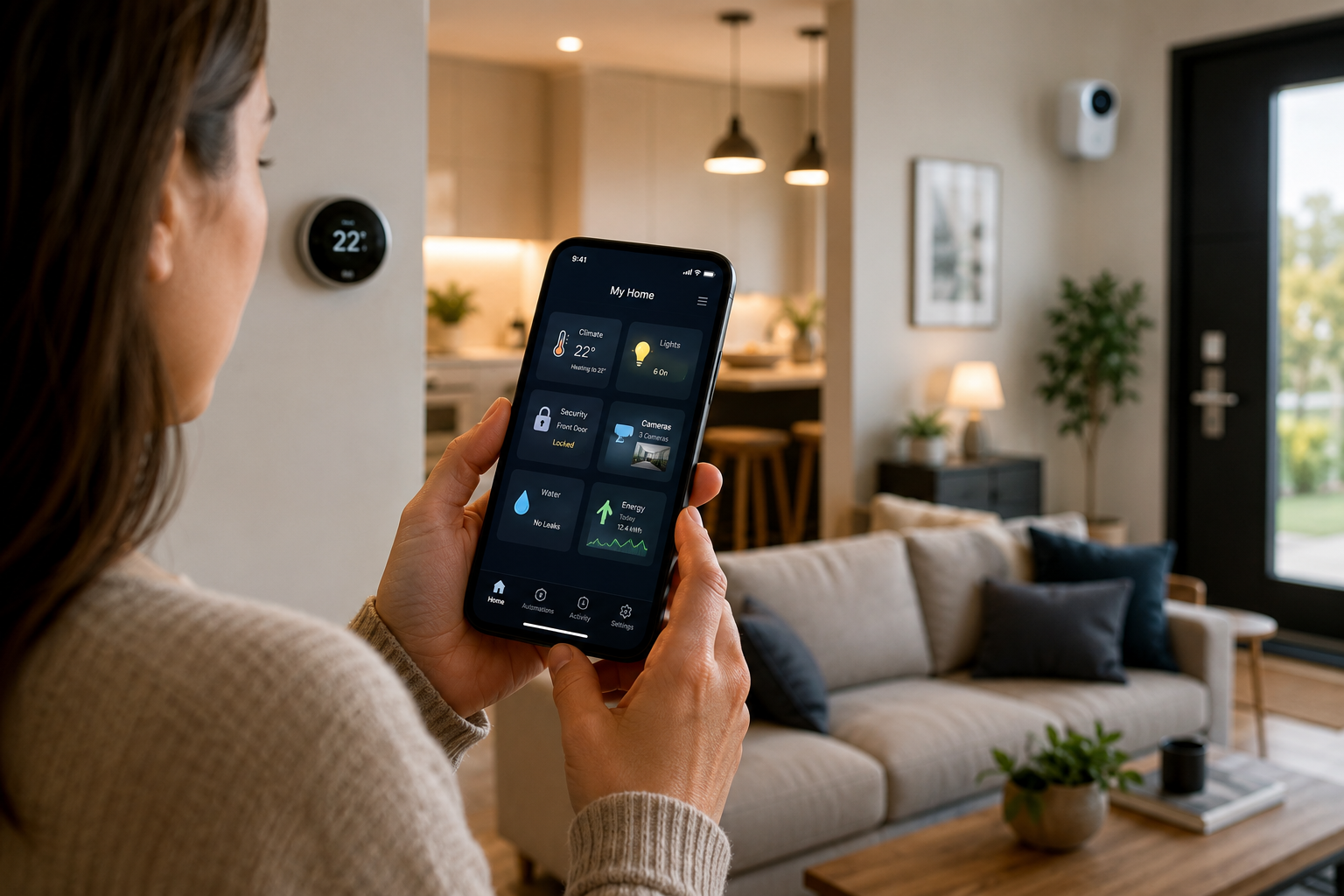
Sales people and the internet tout the benefits of smart homes and smart appliances. Walk through any home improvement store today, and it quickly becomes clear that almost everything is becoming “smart.” Homeowners can now connect thermostats, doorbells, locks, appliances, light bulbs, garage doors, and even electrical outlets to the internet, controlling them via a smartphone.
Some of these technologies are genuinely useful. Others are impressive demonstrations of what technology can do, but offer little practical benefit once the novelty wears off.
For homeowners throughout Kingston and the surrounding area, the challenge is deciding which smart home technologies are worth the investment and which are simply expensive gadgets. As with many home improvements, the answer often comes down to one simple question:
What problem does this solve?
The smartest homes are not necessarily the homes with the most gadgets. They are the homes where technology quietly works in the background, improving security, reducing energy costs, preventing damage, and making life a little easier.
What exactly are smart homes?
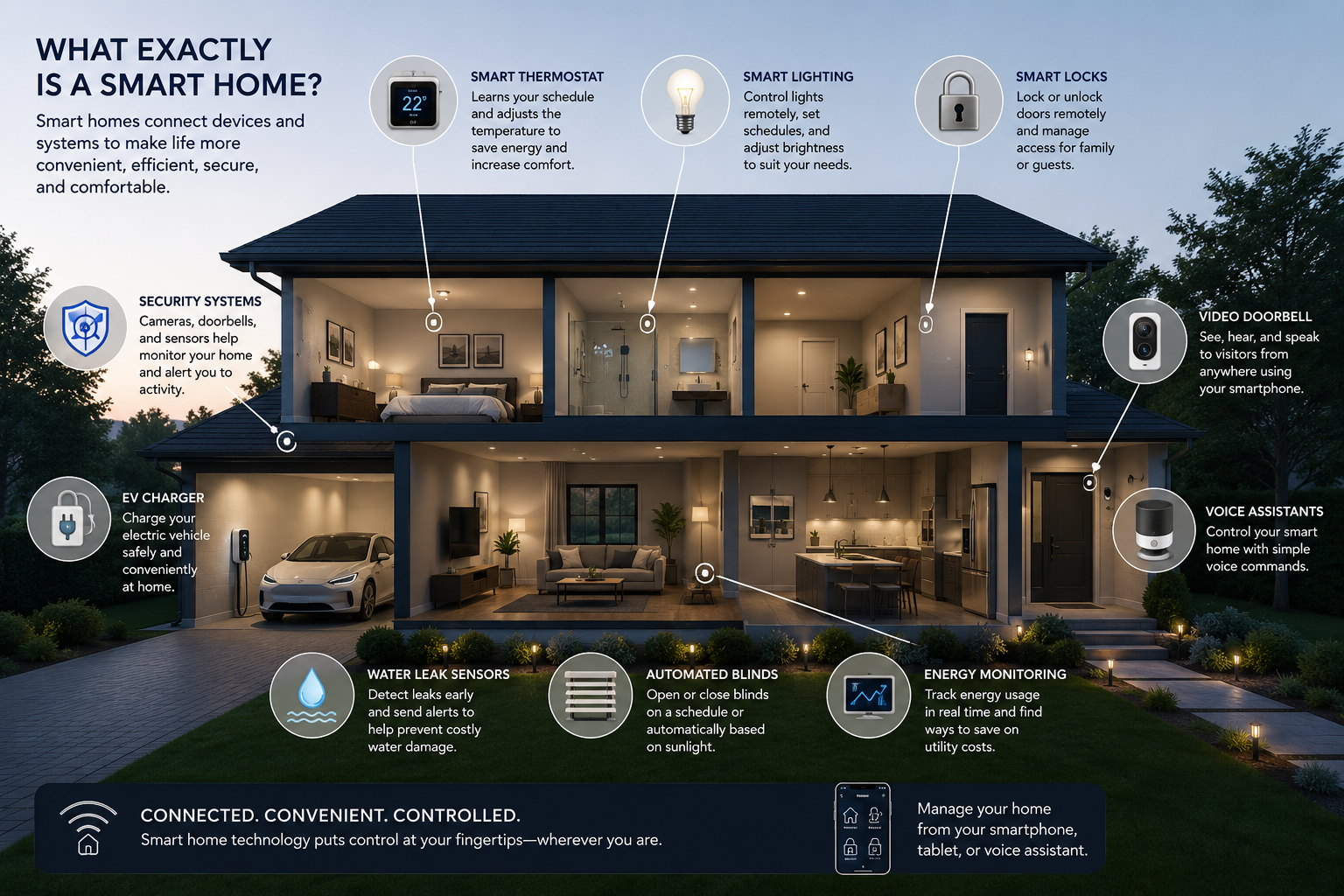
The term “smart home” means different things to different people.
A smartphone-controlled thermostat may be all some homeowners need. For others, it could mean an entire network of connected devices controlling lighting, security, heating, cooling, entertainment systems, and appliances.
Most smart home systems have common traits. Remote monitoring, task automation, and inter-device connectivity are all possible. Many times, they can also send notifications when something requires attention.
This ability to monitor and react is where smart home technology becomes truly valuable. A traditional smoke detector sounds an alarm when it detects smoke. Smart smoke detectors add another layer of protection by sending alerts directly to your phone, even when you’re away from home. Thermostats have undergone a similar evolutionary process. Rather than relying entirely on manual adjustments, modern smart thermostats can learn household routines, make automatic temperature changes, and notify homeowners if temperatures drop unexpectedly during the winter.
Instead of emphasizing the technology itself, focus on how the information it provides and the problems it helps prevent deliver real value to homeowners in Kingston and beyond.
Starting small: smart plugs and simple automation
Many homeowners assume smart home technology requires a major investment. In reality, one of the easiest ways to experiment with automation is through a simple smart plug.
These devices plug into a standard electrical outlet and allow lamps, coffee makers, fans, holiday decorations, and other appliances to be controlled remotely or placed on schedules.
A homeowner who wants lights to turn on automatically while away for the weekend can accomplish that with a smart plug. Someone who wants a coffee maker ready first thing in the morning can do the same.
Smart plugs are popular because they allow homeowners to automate existing devices without replacing them. They also provide a low-risk introduction to smart home technology before investing in larger systems.
For many households, this may be all the automation they ever need.
Security and safety technologies worth considering
Security is one area where smart home technology has made significant advances.
Video doorbells and security cameras have become increasingly common throughout Kingston and the surrounding area. People are rapidly making what was once a luxury feature mainstream.
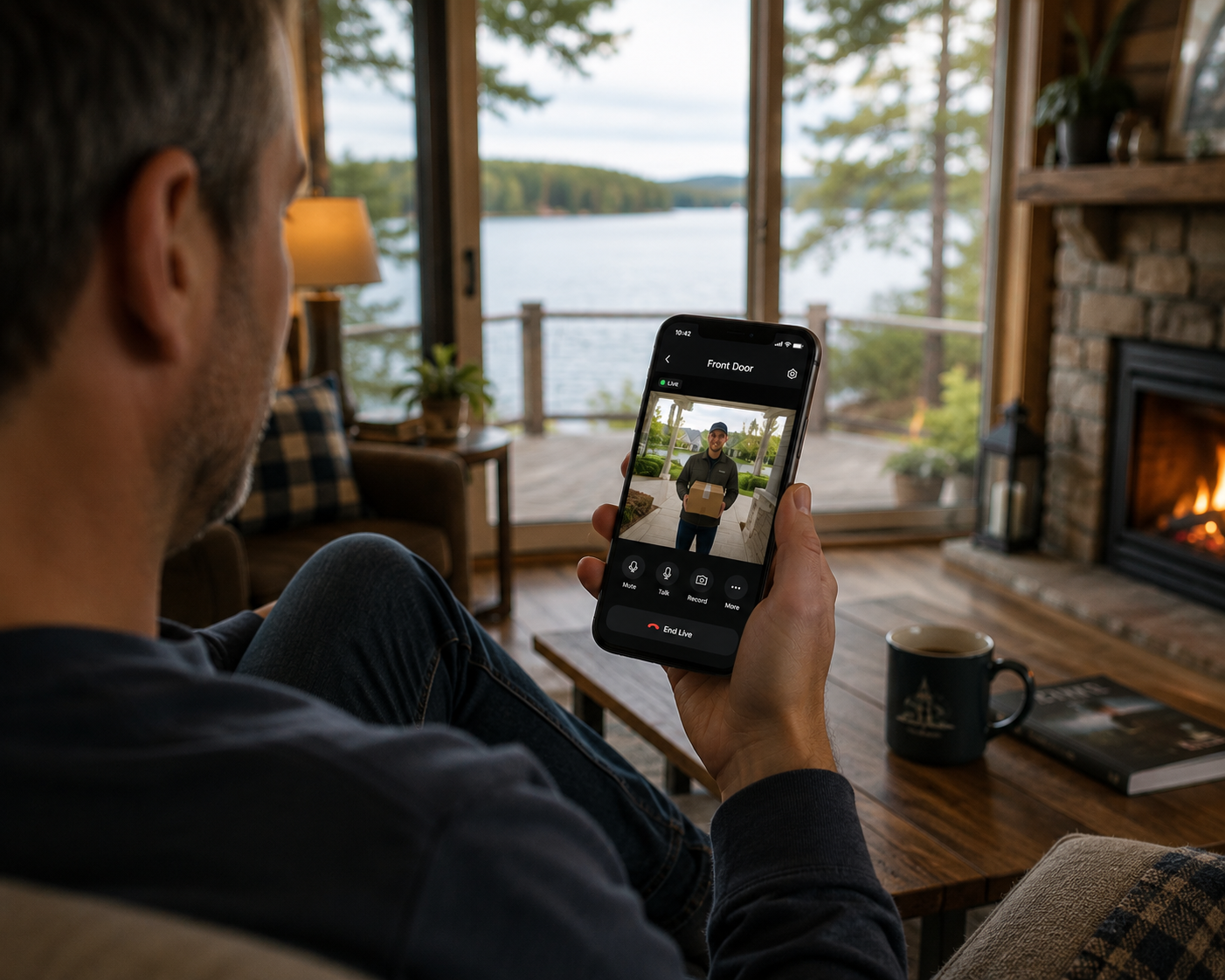
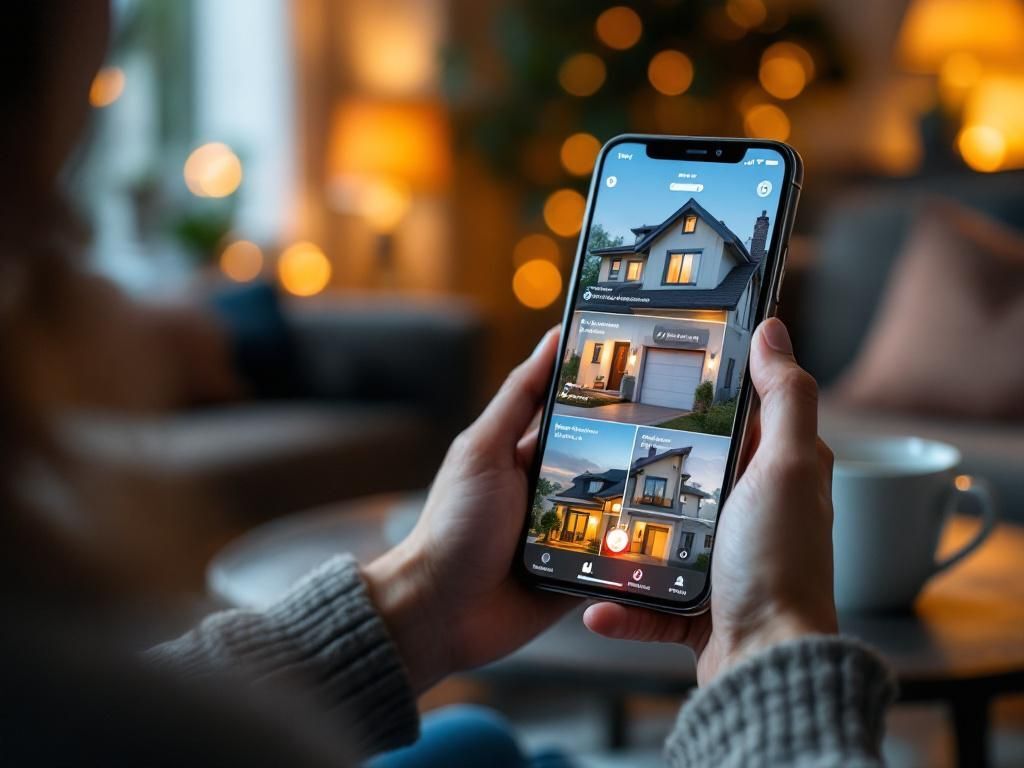
The appeal is easy to understand. Homeowners can monitor visitors, receive package delivery notifications, and check on their property from almost anywhere with an internet connection.
Imagine spending two weeks exploring Mexico, visiting family in another province, or simply enjoying a long weekend away. Modern security systems allow homeowners to view camera feeds, receive alerts when a door opens unexpectedly, or get notified when glass-break sensors detect a potential intrusion.
Integration with professional alarm monitoring is available for many systems. Homeowners, monitoring centers, or emergency contacts can receive notifications, depending on the configuration.
For Kingston-area residents, remote monitoring is not just useful when travelling abroad. Many homeowners divide their time between a city home and a cottage, a seasonal property, or a campground. The ability to keep tabs on one property while enjoying another can provide considerable peace of mind.
A homeowner spending a weekend at the cottage may appreciate receiving an alert if someone approaches the front door back in Kingston. Likewise, someone staying in the city can monitor a seasonal waterfront property during the winter months, provided internet service is available.
Smart smoke and carbon monoxide detectors offer similar advantages. Traditional alarms are effective at alerting people who are present. Smart versions extend that protection by notifying homeowners even when they are elsewhere.
These technologies do not eliminate risk but provide early information, helping homeowners feel more reassured and prepared for unexpected events.
Preventing expensive problems before they become disasters
Some of the most valuable smart home technologies receive far less attention than cameras and doorbells.
Leak detection systems are a perfect example.
Water damage remains one of the most common and expensive insurance claims faced by homeowners. A failed washing machine hose, a leaking dishwasher connection, or a malfunctioning water heater can cause extensive damage before anyone notices.
These smart devices monitor common water issue zones, sending alerts at the first sign of dampness. Some advanced systems can even shut off the home’s water supply automatically.
For homeowners who travel frequently, own seasonal properties, or spend long hours away from home, this technology can provide valuable protection.
Consider the difference between discovering a leak immediately through a smartphone notification and discovering it several days later after returning home. The outcome can be dramatically different.
The same principle applies to smart sump pump monitoring systems.
Many homes throughout Kingston and the area use sump pumps to manage groundwater and stormwater.
Homeowners receive alerts from smart monitoring devices if water levels rise unexpectedly, if there is a power failure, or if the pump cannot operate properly. For homeowners with finished basements, the ability to identify a problem early may prevent significant repair costs.
Unlike some smart home products that prioritize convenience, these technologies prioritize risk reduction. That makes them particularly attractive from a practical homeowner’s perspective.
Saving energy and managing household costs
Energy management is another area where smart technology continues to develop.
Smart thermostats remain among the most popular and practical smart home upgrades available today.
With Nest and EcoBee systems, homeowners can set schedules, remotely adjust temperatures, and monitor their energy usage year-round. Some models can even learn household routines and automatically make adjustments based on occupancy patterns.
In the Kingston area, where homeowners experience both long heating seasons and increasingly warm summers, energy efficiency remains an important consideration.
The benefits extend beyond convenience. A homeowner heading to the cottage for the weekend can lower the temperature remotely. Someone returning home early can adjust settings before arriving. A seasonal property owner can monitor indoor temperatures during the winter to help avoid freezing issues.
Unlike many smart home gadgets, smart thermostats address a cost that most homeowners already face every month.
That practical value helps explain why they remain among the most widely adopted smart home technologies.
Home energy monitoring, EV chargers, and battery backup systems
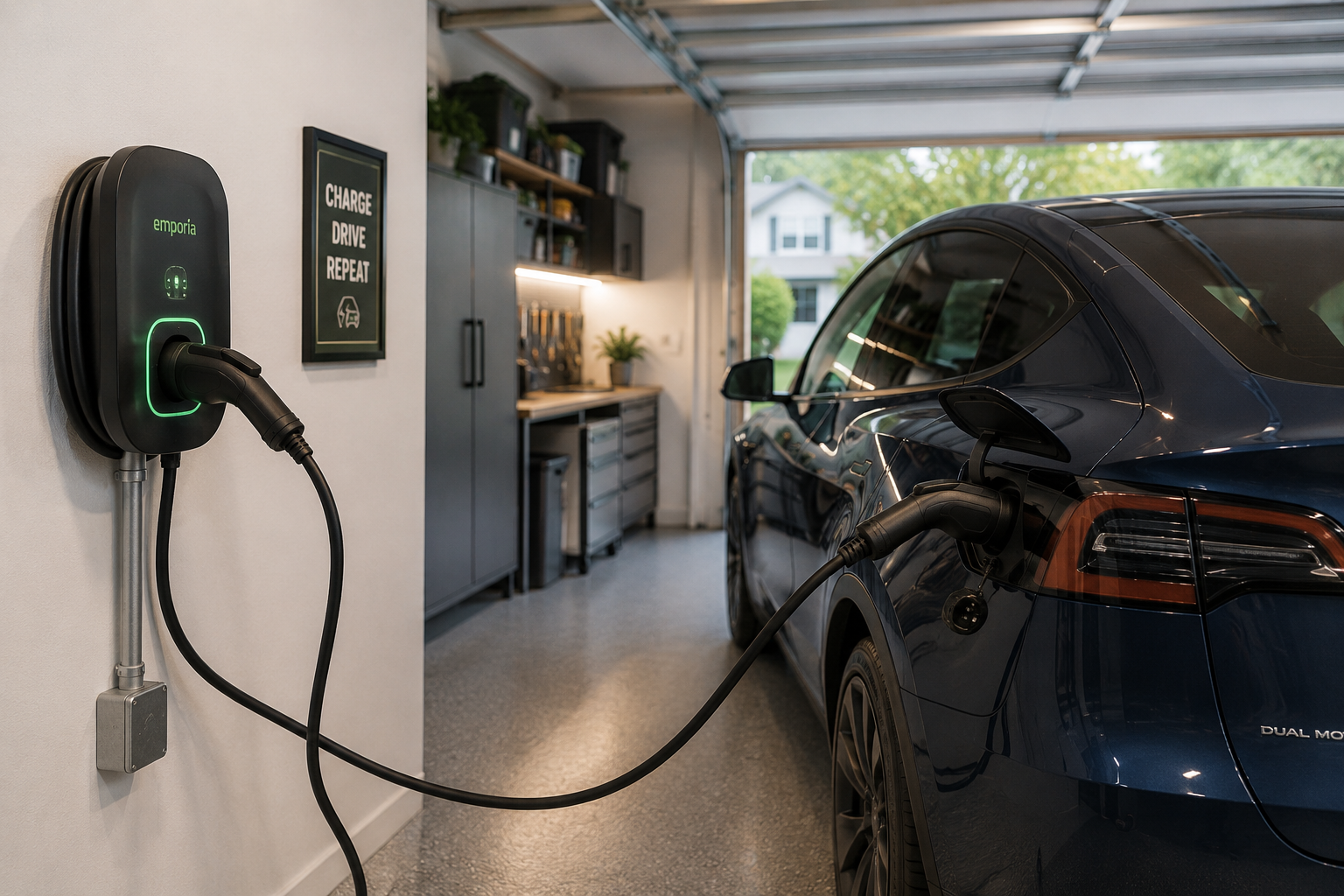
Because the cost of electricity remains a significant concern for many households, homeowners are paying closer attention to home energy use.
Tracking real-time electricity use and identifying power-use locations are possible with home energy monitoring systems. Sometimes the results are surprising. An older appliance, an inefficient freezer in the garage, or a piece of equipment that runs continuously may account for a larger share of the monthly hydro bill than expected.
Electric vehicle ownership has also increased significantly over the past decade. While many EV owners start with a standard charging solution, dedicated smart chargers offer greater flexibility. Scheduling charging for off-peak hours, remote monitoring, and integration with comprehensive energy management solutions are all possible.
Battery backup systems are receiving increasing attention as part of the broader smart home conversation. After all, a home filled with connected devices is only as reliable as its power supply. While still a significant investment, battery systems can provide emergency power during outages, helping keep internet equipment, security systems, lighting, and other essential devices running. As technology continues to improve and costs gradually decline, these systems may become an increasingly practical option for some homeowners.
For more information on portable power stations for emergency use, visit EcoFlow
For many homeowners, these technologies are less about convenience and more about resilience. The ability to monitor energy use, manage charging costs, or maintain essential systems during a power outage can provide practical benefits long after the excitement of a new gadget has faded.
Voice assistants and smart home routines
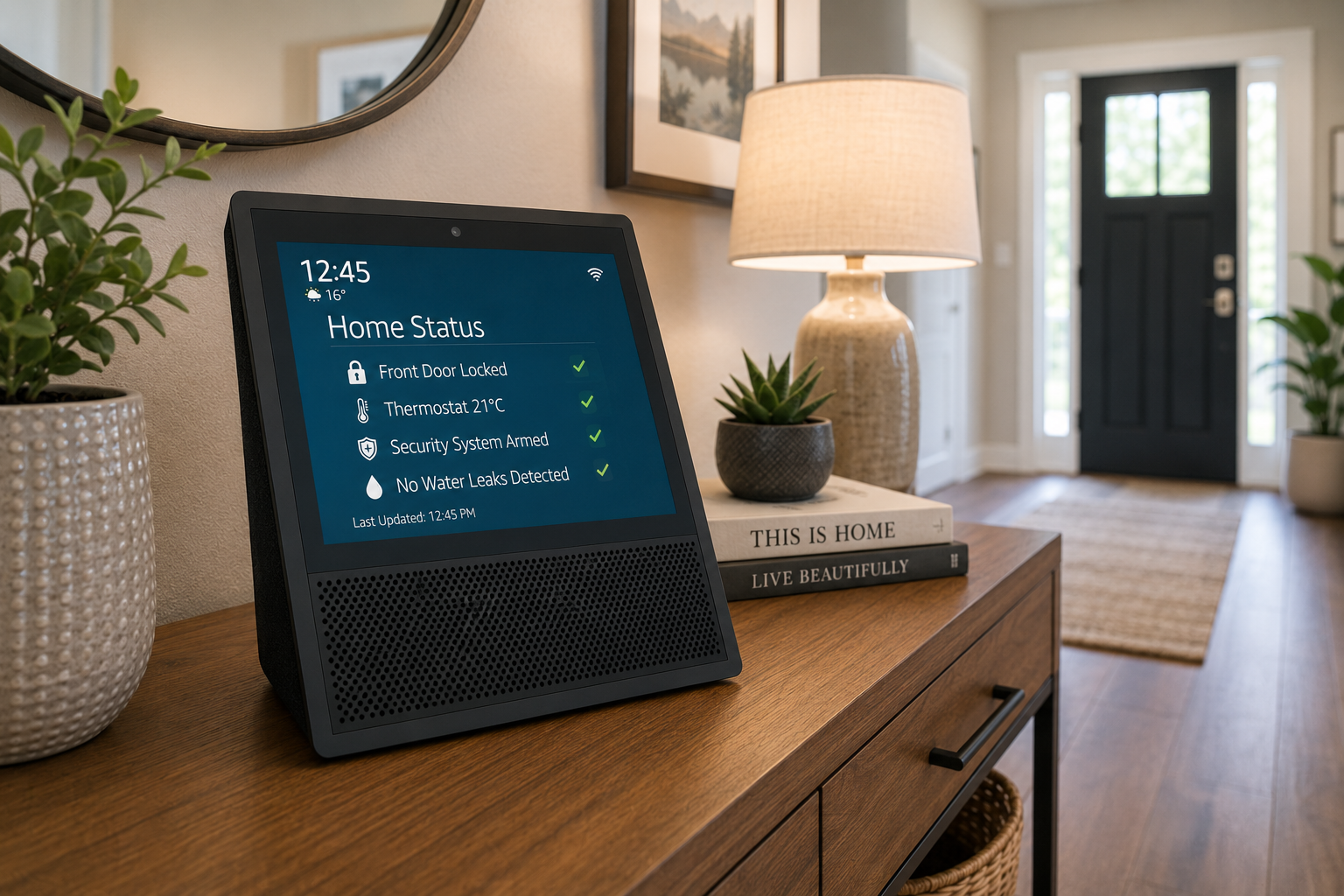
For many people, the first smart home device they encounter is a voice assistant such as Alexa, Echo, Siri, or Google Assistant.
Voice assistants can answer questions, play music, provide reminders, and control compatible smart home devices. Their real value, however, often comes from automation rather than voice commands.
A homeowner might create a morning routine that gradually turns on lights, adjusts the thermostat, and starts a coffee maker connected to a smart plug. An evening routine could lock doors, lower the thermostat, turn off selected lights, and activate a security system.
Some homeowners quickly embrace these features. Others discover they are perfectly happy using traditional switches and controls.
That difference highlights an important point. Smart home technology is not about replacing everything you already do. It is about finding opportunities where automation genuinely improves convenience or solves a recurring problem.
Smart homes in Kingston and the surrounding areas
One reason smart home technology is difficult to evaluate is that every property is different.
A downtown condo, a century home in Williamsville, a rural property in South Frontenac, and a waterfront cottage on Sharbot Lake may all benefit from different technologies.
Older city homes often present unique challenges. Thick plaster walls, older wiring, and multiple renovations over the years can sometimes complicate installation and connectivity. In these situations, homeowners may find that simpler smart devices provide the best balance between functionality and practicality.
Rural properties often have very different priorities. Long driveways, detached garages, workshops, and larger lots can make security and monitoring systems particularly valuable. Homeowners who experience occasional power outages may also place greater importance on battery backup systems, generators, and remote monitoring.
Waterfront and seasonal properties present another set of considerations. Many cottages and seasonal homes remain unoccupied for extended periods throughout the year. Smart cameras, temperature monitoring systems, leak detectors, and smoke alarms can help owners identify problems before they become major repairs.
A homeowner opening a cottage in the spring would much rather receive a notification about a temperature issue in January than discover the consequences months later.
The hidden costs nobody talks about
The conversation around smart homes emphasizes capabilities over enduring factors.
Software support is one of the biggest examples.
A roof may last thirty years. A furnace may last twenty years. Many appliances remain in service for fifteen years or more.
Will the developers continue to support the app controlling those devices a decade from now?
Many smart home products depend on software updates, cloud services, internet connectivity, and manufacturer support. If that support disappears, some smart features may disappear with it.
Privacy is another important consideration.
Video doorbells, security cameras, voice assistants, and connected devices often collect information and store data online. Homeowners must now understand how companies use and protect the information collected.
Privacy concerns can also arise during the sale of a home.
Security cameras and video doorbells have become common, but sellers should remember that buyers expect a reasonable level of privacy while viewing a property. Actively monitoring showings to listen to conversations can create concerns. Discuss this with your REALTOR® before listing.
Cybersecurity is becoming part of home ownership as well. Strong passwords, software updates, and two-factor authentication may not be as exciting as installing a new gadget, but they can be just as important.
Smart technology and aging in place
One of the most practical uses of smart home technology has little to do with gadgets.
Many homeowners hope to remain in their homes as long as possible, and certain technologies can help make that easier.
Voice assistants can provide reminders, control lights without requiring someone to cross a dark room, and allow hands-free operation of compatible devices. Smart locks can provide temporary access for trusted family members or caregivers. Smoke detectors, carbon monoxide alarms, leak sensors, and security systems can provide additional peace of mind for both homeowners and their families.
For older homeowners, the goal is rarely to create a futuristic home.
The goal is to maintain comfort, independence, and safety.
When viewed through that lens, smart home technology becomes much more than a novelty.
Smart appliances: useful or just expensive?
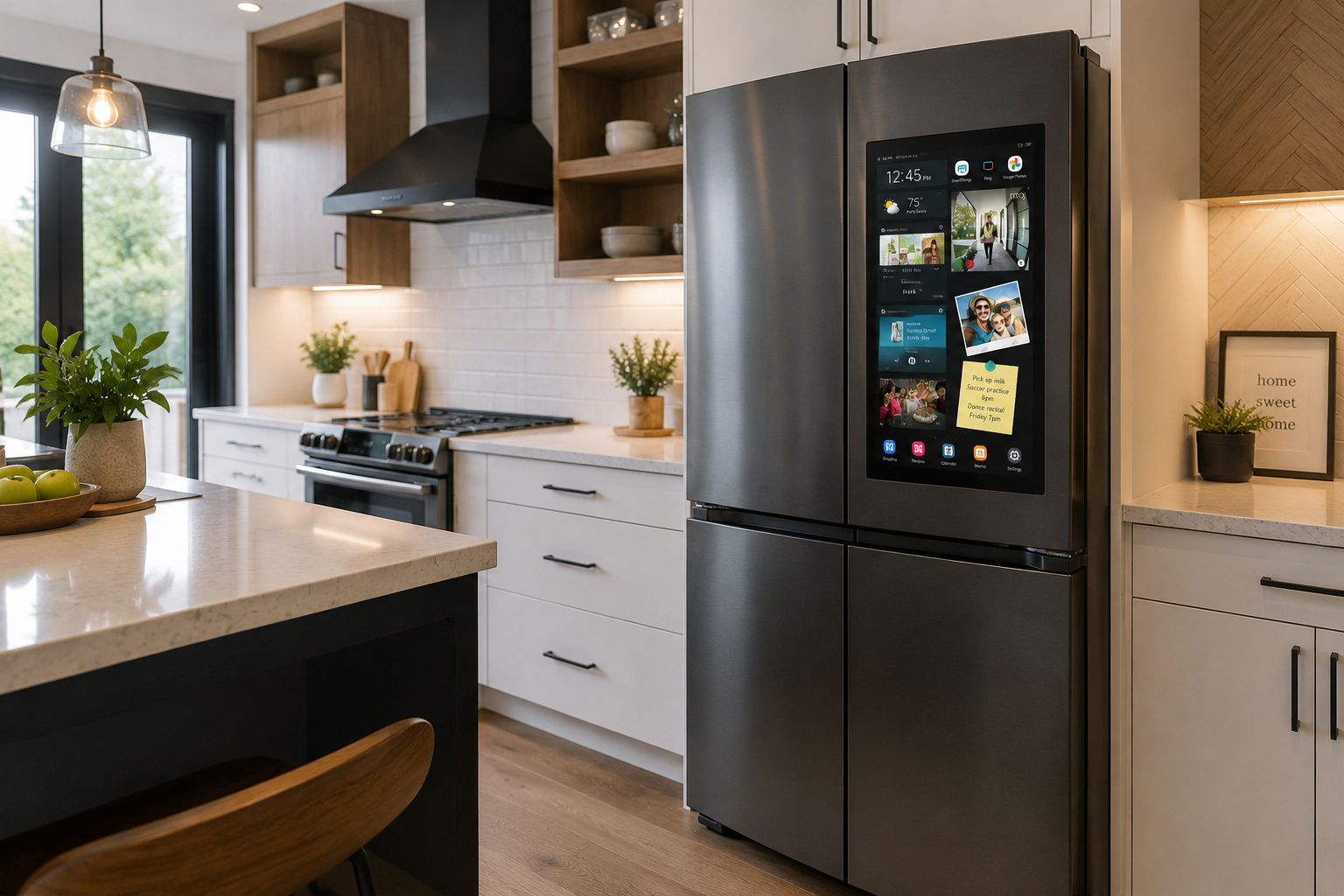
Manufacturers continue to introduce refrigerators, ovens, dishwashers, washing machines, and dryers packed with connected features.
Some refrigerators can display recipes, browse the internet, stream music, manage calendars, and display social media feeds.
That is certainly impressive.
Whether it is useful is another question.
Looking up a recipe while preparing dinner may be helpful. Spending twenty minutes scrolling social media while the garlic bread turns black in the oven may be less productive.
Most buyers remain more interested in reliability, energy efficiency, storage space, and expected lifespan than whether a refrigerator can browse the internet.
Technology should solve a problem, not create a distraction.
Smart homes and resale value: what buyers actually notice
After discussing cameras, thermostats, leak detectors, EV chargers, voice assistants, automated blinds, and internet-connected appliances, an obvious question remains.
What do buyers actually care about?
My experience showing homes throughout Kingston and the area has revealed a fairly consistent pattern. Buyers find technology appealing when it resolves familiar problems.
A smart thermostat is easy to appreciate because most people pay heating and cooling bills every month. A video doorbell provides visible security benefits. Leak detection systems and smart smoke alarms help protect the home from costly damage or dangerous situations. EV charging equipment is becoming increasingly attractive as electric vehicle ownership grows.
The benefits of these technologies are easy to explain and easy to understand.
More specialized systems can be a different story.
A homeowner may spend a significant amount of money creating a fully automated home complete with integrated lighting, touchscreen control panels, automated blinds, voice-controlled entertainment systems, and customized routines. While some buyers may find these features impressive, many will not place a dollar-for-dollar value on the investment.
Spending money and adding value are not always the same thing. Home theatres, luxury aquariums, custom wine cellars, elaborate outdoor kitchens, and highly customized smart home systems can all be wonderful features. The person who paid to install them often enjoys them the most.
That does not mean homeowners should avoid these upgrades. They should install them because they enhance their enjoyment of the property, not because they expect a future buyer to reimburse every dollar spent.
Smart home technology should make life easier, not more complicated. If your home requires a manual, a tutorial, and a phone call to your children or grandchildren to turn on the lights, many buyers will not consider that a feature.
The best smart home systems are simple, reliable, and easy to use. Before investing in highly customized technology, consider whether future owners can operate it without extensive training. Systems dependent on unique hardware, various subscriptions, or software nearing obsolescence can transform from assets into liabilities.
Often, straightforward technology that solves a practical problem has broader appeal than a complex system that attempts to automate every aspect of daily life.
Smart home technology follows the same rules as most other home improvements. Practical upgrades have broader appeal than highly personalized ones.
Technology that improves safety, efficiency, convenience, and peace of mind will usually attract more interest than technology designed primarily to impress visitors.
Technology should solve a problem.
The smartest homes are not necessarily the homes with the most gadgets.
A leak detector that prevents thousands of dollars in water damage may provide more value than a refrigerator that can browse the internet.
A smart thermostat that reduces monthly energy consumption may have a greater impact on daily life than motorized blinds that impress guests for a few minutes.
A camera system that alerts you to a problem while you’re at the cottage may prove more useful than a complicated automation system that requires a manual to operate.
Before investing in any smart home technology, ask a simple question:
What problem does this solve?
If the answer is clear and meaningful, the technology may be worth considering.
If the answer is simply that it looks impressive, it may be wise to think carefully before opening your wallet.
The most successful smart home technologies are often the least flashy. They quietly work in the background, helping homeowners save money, prevent damage, improve security, and simplify daily life.
Looking ahead
Smart home technology will continue to develop over the coming years.
Artificial intelligence is playing a larger role in home automation. Future systems may identify maintenance issues before they become serious problems, automatically optimize energy use, or learn household patterns with even greater accuracy.
Energy management is likely to become increasingly important as electric vehicles become more common and homeowners look for ways to manage rising utility costs.
Insurance companies are also paying closer attention to technologies that reduce risk. Leak detection systems, smart smoke alarms, and monitoring devices may eventually become more common recommendations as insurers look for ways to reduce claims.
Homeowners should expect continued discussions about privacy, cybersecurity, software support, and data collection. As homes become more connected, understanding how these systems operate will become just as important as understanding how to use them.
The challenge will remain the same as it is today.
Choose technology that provides practical benefits, solves real problems, and fits the way you actually live.
Frequently Asked Questions
What is the best smart home upgrade for most homeowners?
For many homeowners, a smart thermostat is one of the easiest upgrades to justify. It offers practical benefits, potential energy savings, and relatively simple installation. Smart plugs are also an affordable way to experiment with home automation before investing in larger systems.
Do smart home features increase property value?
Some smart home features can enhance buyer appeal, particularly smart thermostats, security systems, leak-detection devices, and EV charging equipment. However, smart home technology is better viewed as a lifestyle enhancement than as a guaranteed way to increase your home’s value.
Are smart home devices worth it for cottages and waterfront properties?
Many can be valuable. Security cameras, smart smoke alarms, temperature-monitoring systems, leak detectors, and smart locks can help owners monitor seasonal properties when they are unoccupied.
What smart home technology is most useful for rural properties?
Rural homeowners often benefit from security cameras, driveway monitoring, smart locks, leak detection systems, battery backup systems, and technologies that help monitor properties during power outages or extended absences.
Are voice assistants like Alexa, Siri, and Google Assistant worth it?
For some homeowners, voice assistants become a useful part of daily life. Others use them occasionally while continuing to rely on traditional controls. Their value often depends on the other smart home devices connected to them.
What are the biggest drawbacks of smart home technology?
Software support, subscription fees, privacy concerns, cybersecurity risks, and compatibility issues are among the most common concerns. Homeowners need to know a device’s operation, expected support duration, and any recurring costs before buying.
Can smart home devices work without internet service?
That depends on the device. Some products continue performing basic functions locally, while others rely heavily on internet connectivity and cloud services. Homeowners should review product specifications before purchasing.
What smart home technologies are becoming common in 2026?
Smart thermostats, video doorbells, security cameras, smart smoke alarms, EV charging equipment, and leak detection systems are becoming increasingly common in homes throughout Ontario.
What smart home technologies do people still consider luxury features?
Automated window coverings, whole-home automation systems, centralized control panels, integrated audio systems, and some smart appliances remain more closely associated with luxury homes than with mainstream housing.
What should homeowners consider before buying smart home technology?
Start by identifying the problem you are trying to solve. The best technology investments usually offer clear, practical benefits. These benefits might include improved security, lower energy costs, greater convenience, or protection against water damage.
What is the price of smart home technology?
Smart home technology includes inexpensive devices installable in minutes and major systems needing professional installation. Among the most affordable options, you’ll often find smart plugs, smart bulbs, and basic sensors. Smart thermostats, security cameras, and video doorbells typically represent a more moderate investment, while solar systems, battery backup systems, and whole-home automation can involve significantly higher costs.
Don’t Miss These Guides
Smart home technology is only one part of creating a safer, more efficient, and enjoyable home. These related guides explore energy-saving renovations, home security, outdoor living improvements, and other upgrades that can help homeowners throughout Kingston and Area get more from their property.
Eco-Friendly Home Renovations in Kingston and Area
Energy efficiency and sustainability continue to influence homeowner decisions. This guide explores practical renovations that can reduce operating costs, improve comfort, and appeal to environmentally conscious buyers.
Landscaping Ideas for Outdoor Entertaining
Outdoor living spaces remain one of the most popular home improvement projects. Learn how lighting, patios, decks, outdoor kitchens, and landscaping can transform your backyard into a space for relaxing and entertaining.
Discover the features many buyers are looking for in today’s market, from energy-efficient homes and EV charging capability to security systems, flexible spaces, and technology that adds genuine value rather than unnecessary complexity.
Home Security Guide: Protect Your Kingston Property
Explore practical strategies for protecting your home, including locks, lighting, security systems, cameras, and seasonal property monitoring.
Home Upgrades That Boost Value
Discover which renovations and improvements offer the best balance of homeowner enjoyment, energy efficiency, and potential resale appeal. From heat pumps and insulation to kitchens, bathrooms, and curb appeal, this guide explores upgrades that can make a meaningful difference.
A Kingston Area Guide to Wells and Septic Systems
Many smart monitoring systems are now available for rural properties. This guide explains the basics of wells, septic systems, and rural homeownership throughout Kingston and the surrounding area.