

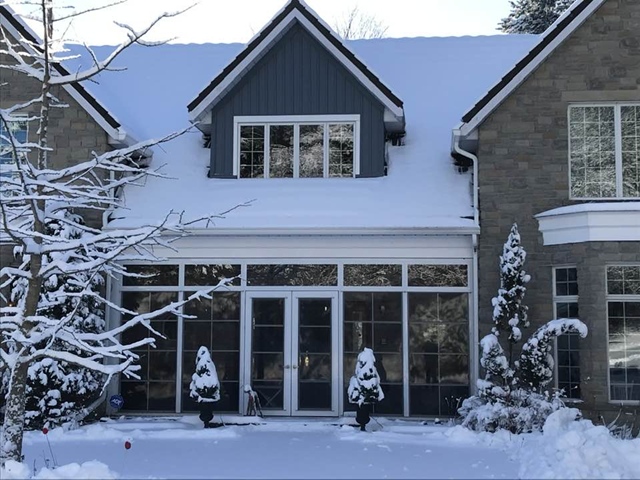
As energy costs climb, our eco-conscious community sees more value in eco-friendly renovations to make homes more sustainable.
There was a time when buyers walked into a home and noticed the kitchen first. That still matters, but it is no longer the whole story. Today, they are just as likely to ask what it costs to heat the place in January, whether the windows hold up in a wind off Lake Ontario, and how predictable the monthly bills will be.
Across Kingston and the surrounding areas, that shift is clear. Rising energy costs, tighter lending, and a more cautious buyer have changed what “value” really means. A home that looks good but performs poorly is no longer competing on equal footing with one that is efficient, comfortable, and reliable month to month.
Quietly, eco-friendly renovations have entered that area, as a practical strategy, not just a statement. Buyers are not asking for these features to check a box. They are asking because they want control, fewer surprises, and a home that works the way it should.
These eco-friendly renovations not only improve the home’s value but also contribute to a more eco-friendly lifestyle.
Why do these upgrades carry more weight now?
Emphasising eco-friendly attributes can significantly attract eco-conscious buyers.
Kingston is not a uniform housing market. Factors like older brick homes, suburban builds, rural properties, and waterfront locations each face different conditions that shape renovation priorities and value. Recognizing these differences helps homeowners feel understood and confident in making relevant upgrades.
These eco-friendly aspects lead to a sustainable future.
As a result, buyers are paying closer attention to how a home performs. Two properties may look similar, but the one that holds heat, avoids drafts, and keeps costs predictable wins.
You can feel it during a showing. A home with uneven temperatures raises questions immediately. Conversely, a home that feels steady, well-insulated, and energy-efficient builds confidence and reassures buyers seeking reliability.
Buyers are also on the lookout for eco-friendly features that support a healthier living environment.
Performance has become part of the presentation.
Buyers do not always know exactly why one home feels better than another, but they notice it. A house with consistent temperatures, fewer drafts, and lower operating costs creates a distinct impression than one where the heating system seems to be constantly working to keep up. Before an offer is even put down, these initial feelings often sway a buyer’s confidence.
Where the real value comes from
Not every upgrade holds the same importance, even when you consider it from an eco-friendly perspective, especially in a market like Kingston where buyers prioritize cost and reliability alongside sustainability.
Many homes built in the 1960s, 1970s, and 1980s still have attic insulation levels well below current recommendations. It is not unusual to find older homes in the R-12 to R-20 range, while modern standards often target R-50 to R-60. That difference can have a noticeable impact on comfort, heating costs, and how hard a furnace or heat pump must work during a Kingston winter.
Eco-friendly improvements that affect how a home performs have the greatest impact. Insulation, air sealing, heating systems, and window quality reduce energy use while improving comfort and long-term durability.
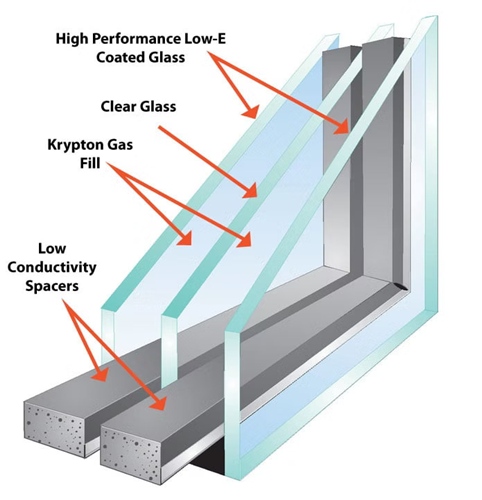
A well-insulated home holds its temperature more evenly. Efficient heating systems, including heat pumps or geothermal setups, reduce reliance on fuels like propane or oil. Updated windows limit heat loss and remove a common concern before it comes up during a showing.
These are not the most visible upgrades, but they are often the most meaningful. They improve how the home operates day to day, while also supporting lower energy consumption.
More visible eco-friendly features still have a place, but their value often depends on the property and the buyer. In contrast, performance-based upgrades carry through every season and are easier to justify when comparing homes.
How this plays out locally
The local context is important because understanding specific neighbourhood conditions helps homeowners feel understood and reassured, guiding them to make relevant upgrades that match their area’s needs and circumstances.
In central Kingston neighbourhoods, buyers expect upgrades. Older insulation or dated heating systems stand out quickly. In the west end, where homes are more comparable on the surface, efficiency becomes a quiet way to separate one listing from another.
In such settings, eco-friendly solutions can differentiate properties when buyers are considering their options.
In rural and waterfront areas, the conversation shifts again. Heating costs, insulation quality, and system reliability often carry more weight than finishes. A well-performing home in South Frontenac or along the Rideau will often outperform a more visually appealing property that is expensive to maintain.
That is why these upgrades matter here more than they might in larger urban centres. They directly affect a resident’s daily experience of their home.
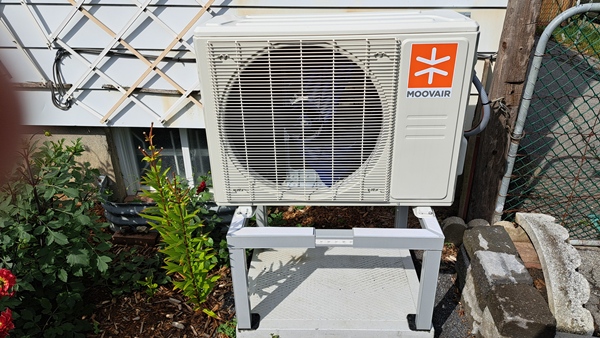
Air-source heat pumps are appearing more often across Kingston, particularly where homeowners are looking to reduce reliance on traditional fuels.
Expanding what “efficiency” means today
Efficiency is no longer just about using less energy. It is about how a home handles demand, responds to outages, and adapts to changing technology. This progress can make homeowners feel hopeful and prepared for developing energy solutions, fostering confidence in their home’s resilience.
Electric vehicle charging is becoming part of that conversation. Buyers are asking whether a home can support a Level 2 charger, even if they do not yet own an electric vehicle. It signals that the home is prepared for what is going to happen.
Specialists advise homeowners to adopt eco-friendly practices to enhance their property’s appeal.
Battery storage systems are emerging to empower homeowners, offering reliable backup and energy management that builds confidence in their home’s resilience.
In rural areas, backup power remains a practical concern. Generators continue to play an important role, particularly for homes with wells, septic systems, and electric heating. Increasingly, some properties combine approaches, using battery systems for brief interruptions and peak pricing, while relying on generators for longer outages.
For a smaller but growing group of buyers, there is also interest in partial independence. Homes that combine strong insulation, efficient systems, and some level of energy storage or generation appeal to those seeking greater control over their lives.
Some homes also incorporate renewable energy, most commonly solar panels. These can reduce long-term electricity costs and, when paired with battery storage, allow a home to store and use its own energy more effectively.
That said, solar is more situational than other upgrades. The value depends on how someone sets up the system, whether they own or lease it, and how clearly a buyer can understand the costs and savings. Sometimes, particularly where contracts or financing are involved, it can add a layer of complexity during a sale.
In the right circumstances, solar can be a strong long-term feature. In others, it is simply one part of a broader system that includes insulation, heating, and energy management. Buyers focus first on how the home performs overall, with solar as a secondary consideration.
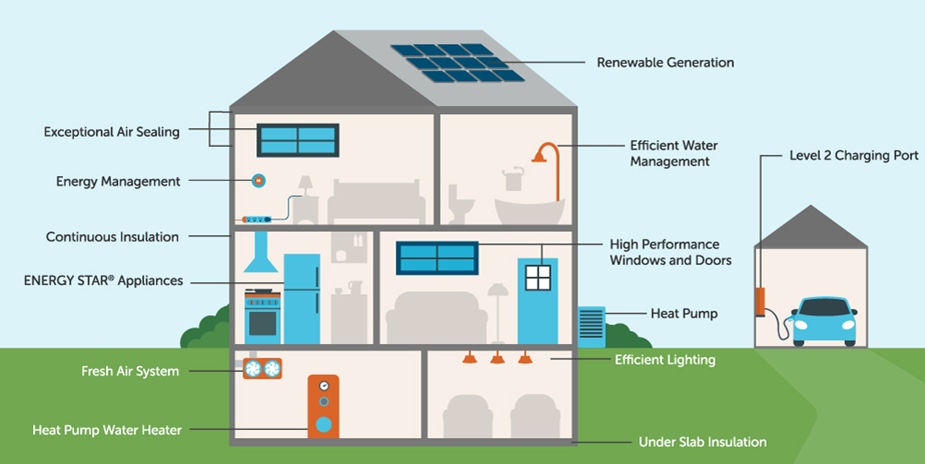
Solar can be part of the picture, but it rarely replaces the fundamentals.
Not every efficiency upgrade requires a major investment. Programmable and smart thermostats remain one of the simplest ways to reduce energy use and improve comfort. Many systems automatically adjust temperatures when the home is unoccupied. People can also control these systems remotely through a phone. While a thermostat alone will not significantly increase resale value, it reinforces the impression of a well-maintained, energy-conscious home and complements larger upgrades such as heat pumps and improved insulation.
Heating systems that shape comfort and cost
Investing in eco-friendly heating systems ensures comfort and reduces energy costs.
Not all heating systems deliver comfort in the same way, even if the thermostat reads the same temperature.
Traditional forced-air systems, including high-efficiency furnaces, remain the most common in Kingston and the area. When paired with good insulation and proper maintenance, they perform well and offer reliable heating throughout the winter.
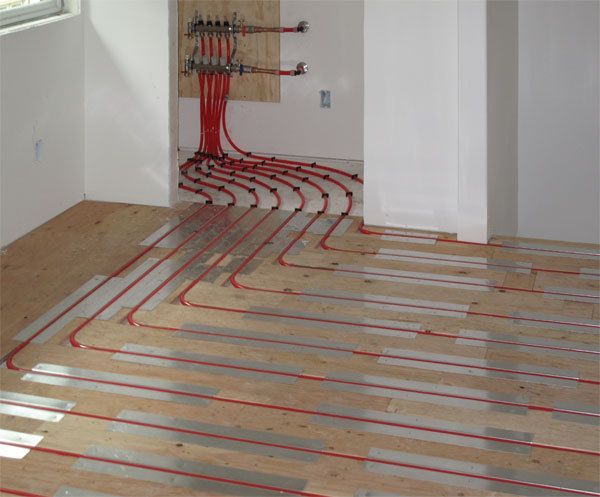
Radiant systems take a different approach. In-floor heating warms surfaces rather than the air, creating a more even and consistent temperature. Homes with radiant floors often feel quieter and more stable, with fewer drafts and less temperature fluctuation. In bathrooms and basements, this can be a noticeable upgrade in comfort.
There is also growing interest in heat pump systems. While air-source heat pumps are not yet universal, more homeowners are giving them serious consideration despite the higher initial cost, particularly as efficiency improves and incentives become more widely understood.
Ground source heat pumps, often referred to as geothermal systems, take that concept further by using the earth itself as a consistent energy source. These systems transfer heat from below the surface rather than generating it, enabling them to operate efficiently year round.
Geothermal systems provide eco-friendly heating solutions that are efficient year-round.
In the right setting, they can significantly reduce reliance on traditional fuels. In one local example, a homeowner who switched from propane to a geothermal system reduced their propane use to a small fraction of previous levels, keeping it mainly for a fireplace rather than primary heating. With propane prices where they are, that kind of reduction can have a meaningful impact.
Installers more frequently use these systems in rural areas or on larger properties, as they can effectively install them there. They are unnecessary for every home, but they appeal to buyers who are thinking long term and looking for stable, predictable operating costs.
Managing energy costs, not just reducing them
Utilising eco-friendly energy systems can lead to substantial savings.
In Kingston, electricity pricing depends on when people use it, not just on how much they use.
Utilities Kingston uses a time-of-use system where rates change throughout the day. During the summer, electricity is most expensive in the middle of the day, when demand is highest. Early morning and early evening fall into a mid-range, while evenings, overnight hours, and weekends are the least expensive.
Kingston’s electricity rates, and those for most of Ontario in Hydro One areas, adhere to the provincial time-of-use system. While exact hours shift slightly between seasons, the overall pattern remains consistent.
This structure changes how efficiency works.
A home battery system can store electricity when it is cheapest and use it later when rates are higher. Charging electric vehicles overnight is possible instead of during peak periods. Users can manage heating and cooling more effectively through smart controls.
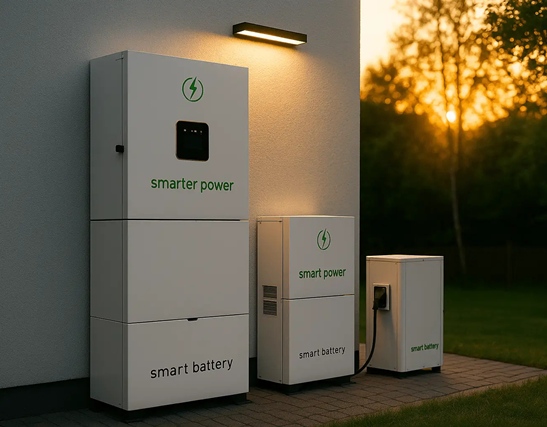
Most systems are compact and installed along an exterior wall or in a utility space, designed to operate quietly and without ongoing input from the homeowner.
The result is not just lower energy use, but better timing of that use. Instead of paying the highest rates during the busiest hours, the home is drawing on stored or more efficiently used power.
These eco-friendly strategies result in better energy management.
Kingston electricity explained
Electricity pricing in Kingston and surrounding areas served by Hydro One follows a time-of-use model.
Overnight and weekend hours are the lowest-cost periods. Early morning and early evening fall into a mid-range. Midday, particularly in summer, is the highest cost period.
Some homeowners also choose a tiered pricing plan through Utilities Kingston, which charges electricity at a set rate up to a usage threshold before increasing beyond that level. The primary aim is still to control electricity usage timing and methods, despite the distinct structure.
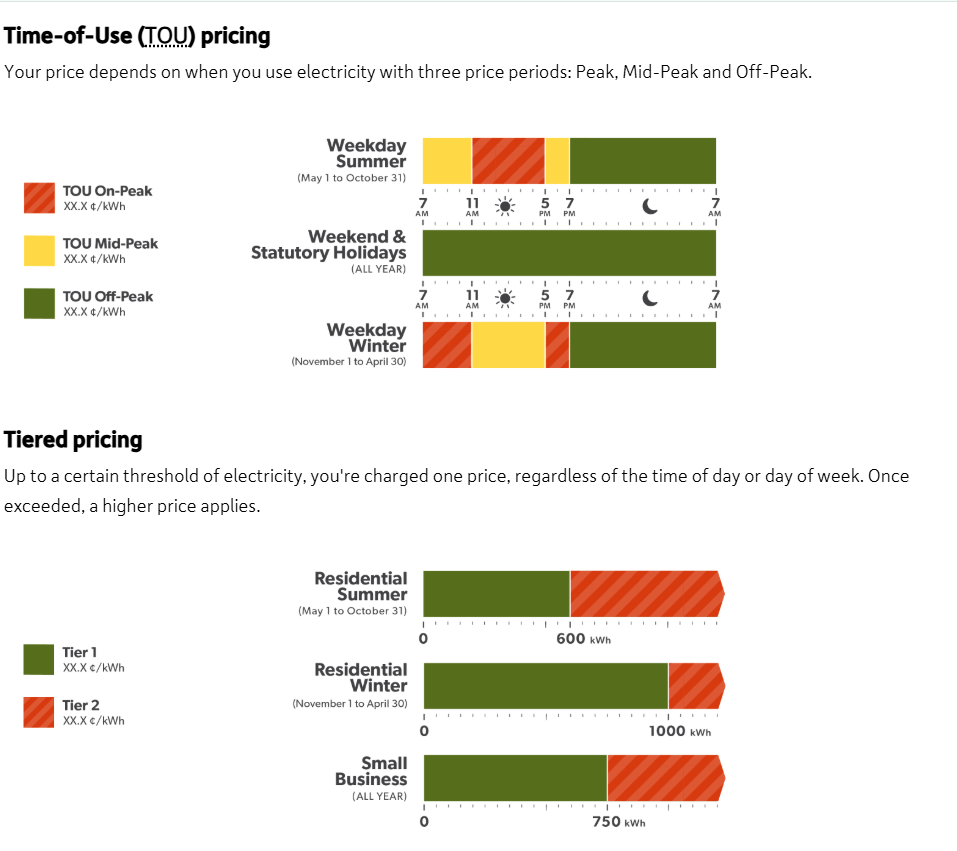
The structure is straightforward once you see it laid out. Pricing shifts throughout the day under time-of-use, while a usage threshold triggers changes in tiered pricing.
Time-of-use pricing is where many of the newer technologies come into play. Homes that can shift usage to lower-cost periods, whether through scheduling, upgraded systems, or battery storage, can reduce overall costs without changing how they live.
Materials that hold up in actual conditions
Choosing eco-friendly materials enhances durability and sustainability.
Durability is often overlooked, but it plays a direct role in how a home performs over time, especially in basements, garages, and utility areas where moisture and temperature swings are common.
People still widely use traditional drywall, but it does not always fit these environments best. It can absorb moisture, stain, and require ongoing repair if conditions are not ideal. That has led more homeowners to consider alternative materials that are better suited to these spaces.
Products like Trusscore fall into a broader category of moisture-resistant wall systems. These panels handle damp conditions, clean easily, and resist mould or damage. In the right setting, they can reduce maintenance and provide a more durable finish than drywall.
There are several alternatives within this category, each suited to different applications. Fiberglass reinforced plastic panels may be found in utility areas and garages because they offer good water resistance and are quite affordable. Metal panels offer durability and a clean, industrial finish, often used in workshops or high-use areas. People can still choose moisture-resistant drywall for finished spaces that require a good appearance, as long as they properly control the area.
Users sometimes use other materials, such as plywood or oriented strand board, when strength and fastening flexibility are more important than finish. Decorative PVC panels and slat wall systems offer a more finished look while still handling moisture better than traditional drywall.
The decision depends on the space’s intended use. In a finished basement or living area, appearance and comfort guide the decision. In a workshop, garage, or rural utility space, durability and resistance to moisture often matter more.
These eco-friendly choices ultimately contribute to reducing environmental impact.
From a resale perspective, these upgrades fall into the category of practical improvements. Buyers may not ask for specific materials, but they notice when a space feels solid, clean, and built to last. In areas where moisture has been a concern historically, that can remove a point of hesitation before it comes up.
Incentives and programs in Ontario and Kingston
Energy upgrades are no longer always paid for entirely out of pocket, and that is changing how buyers and sellers think about renovations.
Encouraging eco-friendly upgrades is essential for a greener future.
At the provincial level, programs such as the Home Renovation Savings Program provide rebates on a range of upgrades, including insulation, windows and doors, and heat pump systems. These are practical improvements that directly affect how a home performs and what it costs to operate.
Additional Ontario programs focus on affordability and accessibility. Some offer free or subsidized upgrades for income-qualified households, while others support improvements such as draft-proofing, smart thermostats, and water-efficiency measures. The details vary, but the direction is consistent: reducing energy use and helping homeowners manage costs more effectively. See the Home Renovations Saving Program for details.
At the federal level, financing and grant programs continue to support larger upgrades. Options such as the Canada Greener Homes Loan allow homeowners to spread the cost of improvements like heat pumps or solar installations over time without interest, making more significant projects more realistic.
Locally, Kingston has taken a more direct approach. The Better Homes Kingston program, when available, offers zero-interest financing tied to the property for deeper energy retrofits. The property tax bill includes repayment, which allows improvements to carry forward with the home rather than remain with the current owner. Programs like Kingston-Frontenac Renovates and the Energy Coach Service, delivered through Sustainable Kingston, provide additional support ranging from grants for specific upgrades to guidance through the retrofit process.
Local initiatives promote eco-friendly improvements, making them more accessible.
Availability changes. Some programs reach capacity and reopen later, while others evolve or other entities replace them. Buyers and sellers care that support exists at multiple levels, and many times they can combine programs.
For buyers, this reduces the barrier to making improvements after purchase. For sellers, it strengthens the case for upgrades already completed and makes the home easier to position in a market where operating costs matter more than they once did.
Assess the investment’s returns and inherent risks.
By the time buyers reach this stage, they are no longer looking at the home in isolation. They are thinking about how it will perform through a Kingston winter, what it will cost to run, and how predictable those costs will be.
That is where certain upgrades consistently stand out.
Improvements tied to insulation, air sealing, heating systems, and overall efficiency carry the strongest value because they affect daily living. A home that holds heat, works well with time-of-use electricity pricing, and avoids reliance on expensive fuels like propane preemptively addresses concerns.
Other upgrades depend more on the property and the buyer. Solar, battery storage, EV charging setups, or geothermal systems can be very attractive, particularly in rural areas or for buyers thinking long term. Not every home requires them, and not every buyer will fully value them.
The decision comes down to alignment. The upgrade needs to fit the home, the location, and how that property is likely to be used. In Kingston and the surrounding areas, where conditions vary from downtown lots to rural properties on well and septic, that context matters more than the upgrade itself.
These eco-friendly investments are becoming increasingly valuable to discerning buyers.
How to present these upgrades when selling
Many listings fall short at this stage, especially when they have already made strong upgrades.
Highlighting eco-friendly features in listings can significantly affect buyer interest.
Listing features does not answer the question buyers are actually asking, which is what it will feel like to live in the home and what it will cost month to month.
In this market, where buyers are already thinking about heating costs, time-of-use electricity pricing, and reliability during outages, the presentation needs to reflect that.
By focusing on eco-friendly benefits, sellers can create more interesting narratives.
Instead of describing the upgrade alone, connect it to the outcome. Improved insulation becomes more consistent temperatures and lower winter bills. A heat pump or geothermal system becomes reduced reliance on propane or oil. A battery system or generator becomes continuity during outages, not just a piece of equipment.
Many of these improvements become more important during the home inspection. Inspectors routinely comment on insulation levels, attic ventilation, window condition, and the age of major mechanical systems. Completing upgrades allows sellers to face fewer questions and buyers to have fewer reasons to negotiate based on future repair or improvement costs.
That shift turns a list of features into a clearer picture of how the home performs. Many times, that separates a listing that is simply viewed from one that is seriously considered.
The main point
Eco-friendly renovations are no longer a side consideration. They have become part of how buyers evaluate, compare, and ultimately choose homes.
For Kingston and its neighboring regions, these upgrades hold significant importance, considering the diverse housing options from historic city dwellings to rural residences with unique needs. Potential buyers are now evaluating homes based on their year-round functionality, long-term operational expenses, and durability, rather than just surface-level aesthetics.
That shift has changed what value means. A home that is efficient, well thought out, and prepared for changing energy use stands apart from one that simply looks updated.
Eco-friendly renovations have become essential in today’s real estate market; That is what buyers are paying attention to now.
FAQ
These eco-friendly questions can guide potential buyers in their decision-making process.
Do Hydro One and Kingston use the same electricity pricing?
Yes. Electricity pricing across Ontario, including both Hydro One service areas and Utilities Kingston, follows the same time-of-use structure set by the province.
While exact time periods shift slightly between summer and winter, the overall pattern is consistent. Electricity is least expensive overnight and on weekends, and most expensive during higher-demand periods during the day.
Strategies like off-peak EV charging, smart scheduling, and home battery systems apply equally in both urban Kingston and the surrounding rural areas.
Is a battery system the same as a generator?
No. When a need arises, a generator usually burns fuel to produce electricity. A battery system stores electricity in advance and supplies it when required.
Battery systems are quiet and immediate, making them useful for short outages and managing electricity costs. Generators are better suited to longer outages, particularly in rural areas where power interruptions may last longer.
Do home battery systems switch on automatically during a power outage?
In most modern installations, yes. Home battery systems detect a power outage and switch over automatically within a fraction of a second.
Often, the system transitions seamlessly, keeping the lights and internet uninterrupted, particularly when it’s configured to power essential circuits such as refrigeration, lighting, and heating controls.
Do eco-friendly renovations really increase home value?
Eco-friendly renovations cater to a growing market of environmentally conscious buyers.
They extend their capabilities, especially when you increase comfort, decrease operational expenses, or resolve specific home problems.
Upgrades like insulation, heating systems, and windows have the most consistent impact. More specialized improvements may still add value, but often depend on the buyer and the type of property.
These features often translate into higher valuations in the long term.
Can eco-friendly renovations in Kingston actually increase a home’s resale value?
Some do, some do not. Improvements that reduce operating costs and improve comfort, such as insulation, heat pumps, and windows, have the most impact. Buyers may not fully recognize more specialized upgrades.
What is a good attic insulation level for homes in Ontario?
Current recommendations typically range from R-50 to R-60. Many older homes have significantly less, which can lead to higher heating costs and reduced comfort.
This is one of the easier renovations.
Are heat pumps worth installing before selling?
Many times, yes. People widely recognize them for improving efficiency and providing both heating and cooling. They can make a home more attractive to buyers, especially where older systems are in place.
Do new windows add full value back at resale?
Not always dollar-for-dollar, but they improve comfort, appearance, and buyer confidence. That often supports a stronger sale price.
Should buyers be concerned about older insulation and systems?
Not necessarily. Time allows us to address many issues. The key is understanding the home’s condition and planning for future upgrades.
Don’t Miss These Guides
If you’re thinking about upgrades, preparing to sell, or trying to better understand how your home performs, the following guides expand on the ideas covered here and offer practical next steps.
Selling Your Home: 20 Questions to Ask Before Listing
A clear starting point for sellers looking to position their home properly before it hits the market. It helps frame decisions around timing, preparation, and pricing.
Top 13 Home Renovations That Add Value
A practical look at which upgrades most consistently add value in this market. It separates cosmetic changes from improvements that affect performance and long-term cost.
The demand for eco-friendly homes continues to rise in Kingston and beyond.
Smart Home Upgrades That Boost Resale Value
Covers modern systems and features that reflect how buyers are thinking today. Includes practical upgrades that improve both convenience and efficiency.
Pre-Listing Home Inspection Benefits
A pre-listing home inspection helps sellers understand their property’s condition before it reaches the market. Sellers can reduce surprises, support pricing decisions, improve buyer confidence, and prepare for negotiations before receiving an offer by learning how to identify issues early.
Winter Preparation: 38 Essential Tips
A practical checklist focused on heating efficiency, insulation, and protecting your home through the colder months. It highlights simple steps that reduce risk and improve performance.
Ultimately, eco-friendly preparation is essential for sustaining home performance.
Call to action
If you are considering upgrades before selling, or deciding what improvements make sense for your home, I can help you focus on what actually matters in this market.
Incorporating eco-friendly strategies can enhance home value and appeal.
We can walk through your property, review your options, and decide where your time and budget will have the greatest impact.
For those looking to make eco-friendly choices, the options are plentiful.