


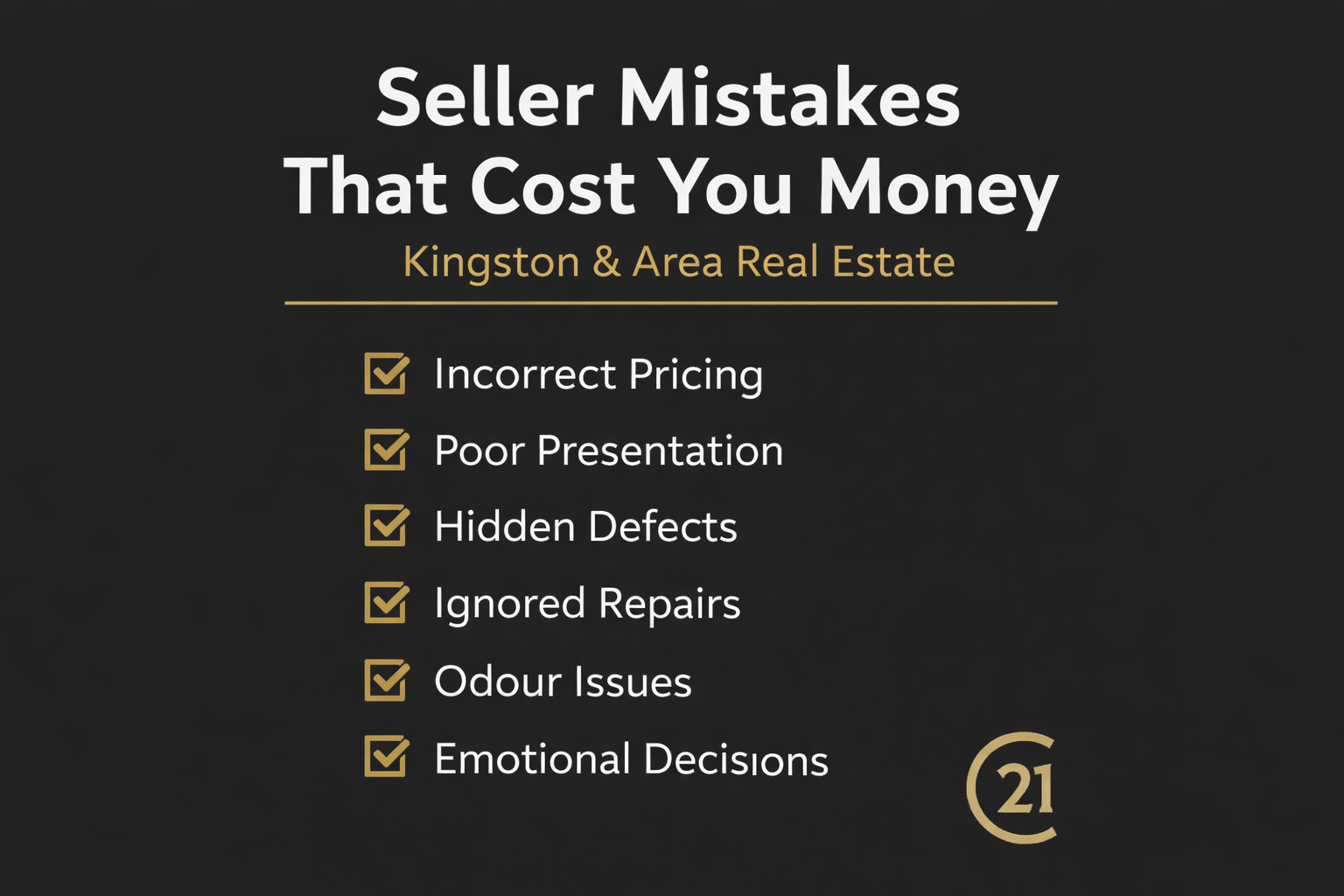
Common seller mistakes demand avoidance. If you’re thinking about selling your home, let’s have an honest conversation about what actually gets results and what quietly costs you money before you even receive an offer. Understanding seller mistakes can help you navigate the process more effectively.
I’ve worked with many sellers across Kingston and the surrounding area, and the mistakes I see most often are not dramatic. They are decisions that feel reasonable. Pricing based on what a neighbour got. Skipping minor repairs. Assuming buyers will not notice a smell and staying quiet about something because nobody asked.
The right guidance can help avoid many seller mistakes. I’ve worked with many sellers across Kingston and the surrounding area, and the mistakes I see most often are not dramatic. They may seem reasonable, but they can lead to significant seller mistakes.
In today’s market, those small decisions can have real financial consequences.
Here is what I see most often, and how to avoid it.
Recognizing common seller mistakes is the first step to a successful sale.
An Incorrect Starting Price
One of the biggest seller mistakes is setting an incorrect starting price.
The list price is the first major decision you make as a seller, and it is often the most painful mistake to correct later.
It’s crucial to avoid common seller mistakes related to pricing to prevent financial losses.
You attach importance to your home. The enhancements that you funded. That place brings back recollections, such as the narrative about what a neighbour down the street allegedly received. Add in online estimates that can swing widely, and it becomes difficult to separate emotion from market reality.
Kingston is not one uniform market. A three-bedroom on a quiet west-end street behaves differently from a student rental near Queen’s. A rural property in South Frontenac follows a distinct pattern from that of a midtown bungalow.
A home that is priced too high remains on the market. Buyers notice the days on the market. They question what the problem is. When prices drop, offers come in lower because buyers feel pressure to bid.
These days, the most prevalent seller mistakes revolve around pricing strategies.
When sellers underprice a home in a balanced market, it may sell quickly, but they risk leaving money on the table.
Proper pricing leads to stronger early interest, better negotiating leverage, and a cleaner overall process. I rely on current MLS® data, the Home Price Index, recent comparable sales in your specific area, and broader market forces affecting buyer confidence and affordability. That combination keeps emotion out of the decision and brings clarity to it.
Seller Mistake: Failing to Prepare for Showings
Preparation can make the difference between success and common seller mistakes.
The way you live in your home and the way you market your home are not the same thing.
Most first showings happen on a screen. If the photos do not connect, buyers scroll past.
Preparation does not require a full renovation. It requires discipline. Decluttering so rooms feel open. Packing away personal photographs so buyers can imagine their own lives there. Fixing the loose handle, a leaky faucet, or chipped trim that might otherwise plant doubt. Cleaning beyond the surface level so the home feels cared for.

Small, unfinished details create larger questions. Buyers rarely say it out loud, but they think it. If the seller ignored this, what else did they ignore?
Staging is not always necessary. Some homes need only a deep clean and thoughtful rearranging. Others benefit from light professional staging. I will always tell you honestly which category your home falls into.
Professional photography, floor plans, and proper digital presentation are essential in Kingston’s current market. That is the first showing now.
Proper presentation can prevent many seller mistakes that lead to poor first impressions.
Ignoring Curb Appeal
Buyers form an opinion before they step inside.
Sellers often overlook curb appeal, which results in common mistakes.
If the exterior looks tired or neglected, the showing starts on uneven footing. It is difficult to recover from a poor first impression.
Curb appeal does not require a major investment. It requires attention. Clean walkways. A trimmed lawn. Working lights. A front entrance that feels maintained rather than forgotten. These details communicate care before a word is spoken.
Attention to detail can help you avoid the seller mistakes that lead to a lack of interest.
In established Kingston neighbourhoods where buyers compare similar homes, those small exterior details can influence whether a showing feels promising or disappointing.

Not Disclosing Material Latent Defects
Transparency regarding defects can prevent serious seller mistakes down the line.
Material latent defects are not theoretical. When parties know about them and do not disclose them, consequences can surface long after the keys change hands.
A material latent defect is something not visible during a normal walkthrough that significantly affects the home’s value or safety. Its significance is not superficial, nor is it minor wear and tear; rather, it is a serious matter with which you are already familiar.
I once worked with a buyer who, a couple of days after closing, took a bath in their new home. Instead of relaxing, they ended up with raw sewage backing up through the shower and sinks in the basement.
What made it worse was that the drain appeared to function properly during the home inspection. Running water from a tap during an inspection produces a limited volume. Releasing a full tub of water all at once is a very different test. That surge exposed an improper T-joint drain connection in the basement that could not handle the flow.
The seller brought sewage issues to the city’s attention through complaints. The city informed the seller that the issue was within the house, not the municipal line, and the seller did not disclose that information during the sale.
It resulted in a lawsuit and a cash settlement.
Understanding legal obligations can help avoid seller mistakes that could cause litigation.
It was not the defect itself that created the legal problem. It was failing to disclose known information.
In Ontario, sellers are legally required to disclose known material latent defects. The safest path is transparency. Disclose what you know. Document it properly. Price accordingly if necessary. Buyers are far more willing to work through a known issue than to discover one after possession.
Disclosure is key to avoiding common seller mistakes that could negatively affect your sale .
If you are unsure whether something qualifies as a material latent defect, that is a conversation we should have before the listing goes live.
Overlooking Odours
Few things end a showing faster than an unpleasant smell.
Addressing odours proactively can prevent common seller mistakes during showings.
I have opened the front door for clients and watched them stop at the threshold; they did not step inside. A wall of cigarette smoke hit us before the showing began. In a different situation, the powerful odour of cat urine prompted the showing to end immediately; the husband refused to enter, and the wife and I, after briefly going inside, quickly left.

Those homes may have had strong layouts, and the seller may have priced them correctly. It did not matter.
Homeowners often stop noticing odours because they live with them every day. Masking the issue rarely works. Heavy air fresheners raise suspicion. The solution is addressing the source.
If you are unsure, ask someone with fresh senses to walk in honestly. I will also give you a direct answer if you want one. It is better to handle it before listing than to lose buyers at the door.
Letting Emotions Drive the Process
Selling a home is personal. Years of life happened there.
Keeping emotions in check can help prevent seller mistakes during negotiations.
Where emotion becomes costly is in pricing and negotiations.
Holding firm to a number the market does not support can cause extended time on the market and a weaker outcome. Reacting defensively to an initial offer can shut down a deal that may have come together with steady negotiation.
When those moments arise, I provide clarity, context, and calm so that decisions remain informed rather than reactive.
Final Thoughts
Reflecting on common seller mistakes ensures better outcomes in future transactions.
Every mistake outlined here is avoidable.
When sellers ground pricing in current Kingston market data, present the home properly, handle disclosures responsibly, and keep negotiations strategic, they protect both their equity and their peace of mind.
If you are considering selling in Kingston or the surrounding area, let’s have a straightforward conversation about what your home is worth and how to position it properly from day one.
Let’s discuss how to avoid seller mistakes and achieve the best outcome for your home.
No pressure. Just clear advice.
Seller Mistakes: Frequently Asked Questions
What is a material latent defect in Ontario?
A material latent defect is a hidden problem that is not visible during a normal inspection and significantly affects the property’s value or safety. If a seller knows about it, the seller must disclose it.
Do sellers in Kingston have to disclose past water or sewage issues?
The seller must disclose a recurring issue that affects safety or value, especially one they know is internal to the home. Failing to do so can cause legal action after closing.
Should I renovate my Kingston home before selling?
Some updates improve marketability. Others do not deliver strong returns. Before investing in renovations, it is best to review current comparable sales and neighbourhood pricing trends.
What hurts a home sale the most?
Incorrect pricing, poor presentation, undisclosed defects, and strong odours are among the most common issues that reduce buyer interest and the final sale price.
Identifying and acknowledging seller mistakes can lead to a more successful sale.
Don’t Miss These Guides
If you are preparing to sell, you may also find these helpful:
7 Essential Ways to Maximize Curb Appeal in Every Season
Practical strategies to improve exterior presentation year-round and strengthen first impressions before buyers step inside.
Selling an Estate Property in Ontario: What You Need to Know
A practical look at timelines, probate considerations, property preparation, and common legal issues that arise when selling an estate property in the Kingston area.
Buyer’s vs. Seller’s vs. Balanced Markets
An explanation of how different market conditions affect pricing strategy, negotiation leverage, and the speed at which homes sell.
Difference Between a Home Appraisal and a Current Market Assessment
A clear breakdown of how bank appraisals differ from professional market evaluations and why that distinction matters when setting your list price.
Acknowledging potential seller mistakes is an essential part of the selling process.