


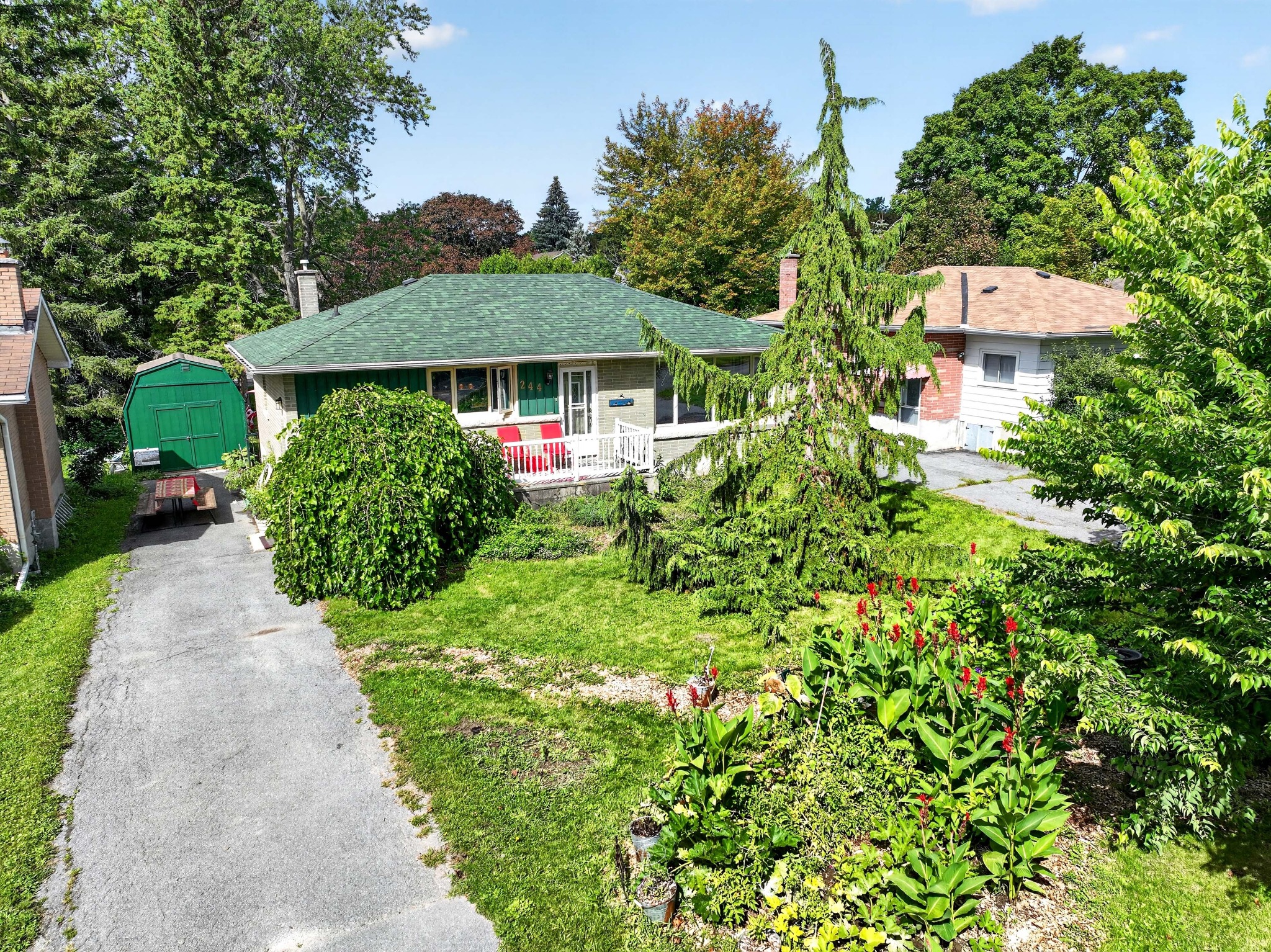
The August market report for Kingston and area shows a housing market that remained relatively steady overall, but the overall numbers still hide important differences between locations and property types.
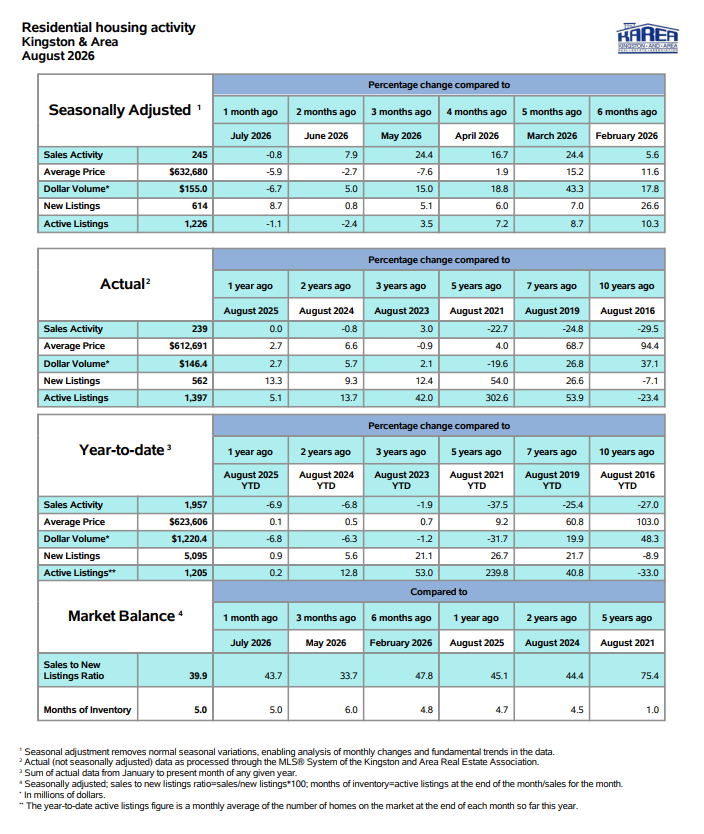
In August, the region sold 239 residential properties, matching the total from August 2025. The average selling price was $612,691, up 2.7% from a year earlier, while the median price was $568,000, down slightly by 0.8%.
The bigger change was the supply. In August, sellers listed 562 new properties, a 13.3% increase from a year ago, and active listings at month-end reached 1,397 properties, up 5.1%.
Months of inventory reached 5.8, compared with 5.6 in August 2025. The median time on the market also increased from 29 to 34 days.
Taken together, those numbers describe a market where buyers have more time and more choice, while sellers face more competition.
What the August market report tells us about prices.
Despite slower conditions, there is still little evidence of a broad decline in home values.
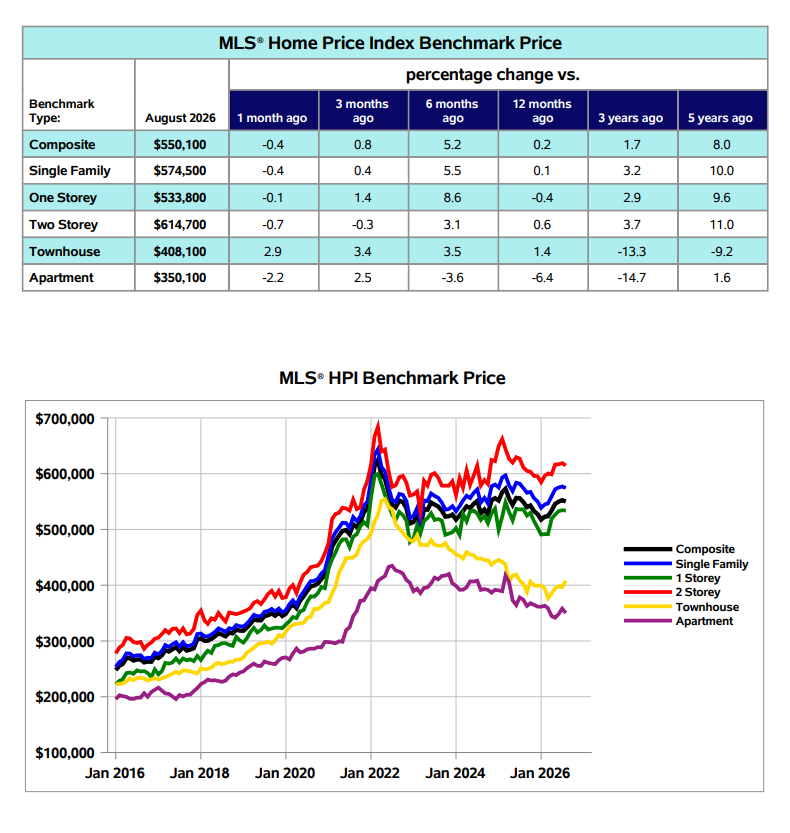
The MLS® Home Price Index composite benchmark price for Kingston and area was $550,100 in August, up only 0.2% from a year ago.
The single-family benchmark was $574,500, up just 0.1%. The townhouse benchmark increased 1.4% to $408,100, while the apartment benchmark fell 6.4% to $350,100.
That difference between property types is becoming increasingly important.
Someone selling a detached home may experience a very different market from someone trying to sell an apartment condominium. Location matters as much. Conditions within Kingston can differ considerably from those in Frontenac, Loyalist, Greater Napanee, Stone Mills, Gananoque, and the other communities that make up the broader market area.
Single-family homes continued to perform reasonably well.
Single-family homes remained the strongest of the major residential property categories during August.
There were 202 single-family sales across Kingston and the area, up 3.1% from August 2025. The average selling price was $638,305, up 1.4%, while the median price was $582,500, down 1.7%.
Inventory remained ample: 1,122 active single-family listings produced 5.6 months of inventory, up from 5.3 months a year earlier.
That means buyers still have considerably more opportunity to compare homes than they did during the tight markets earlier this decade.
A well-priced house in a desirable location can certainly sell quickly, but sellers cannot assume that simply listing a property will create competition.
August market report: Townhouse sales slowed sharply.
Townhouses had a noticeably weaker month.
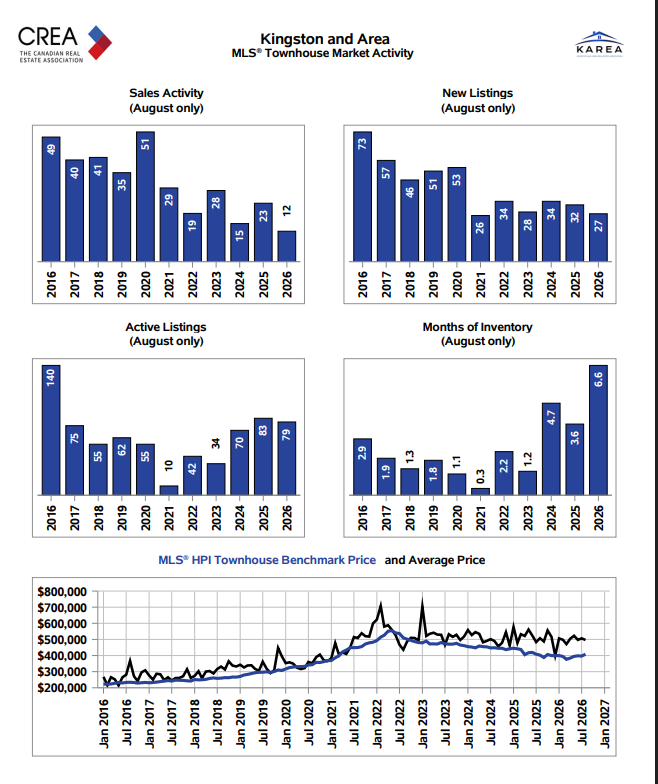
Only 12 townhouse sales occurred across Kingston and the area during August, compared with 23 a year earlier. That represents a 47.8% decline.
Months of inventory climbed to 6.6 from 3.6 last August, while the average townhouse sale price declined 2.2% to $496,386. The median price fell 3.1% to $ 513,750.
Because monthly transactions are relatively few, no one should use a single month to determine a trend. Still, fewer sales and higher inventory clearly gave townhouse buyers more room to negotiate in August.
Condo apartments remain a buyer-friendly segment.
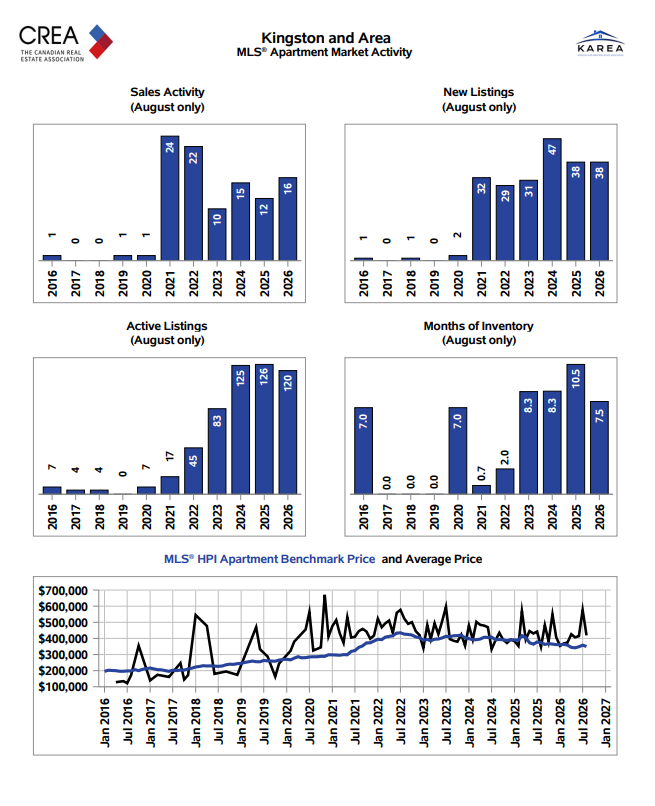
The apartment condominium market also deserves special attention. The August market report shows why apartment condominiums need to be considered separately from the broader residential market.
There were 16 apartment sales across Kingston and area during August, compared with 12 a year earlier. That was an improvement in sales activity, but 120 apartment properties remained actively listed at the end of the month.
That worked out to 7.5 months of inventory.
The August average apartment sale price was $419,013, up substantially from a year ago. Still, monthly averages in a relatively small market can move dramatically depending on which properties sell. The benchmark price tells a different story, with apartment values 6.4% below August 2025.
For condo sellers, building-specific information matters most. Condo fees, parking availability, location, condition, amenities, the condominium corporation’s financial status, and recent sales in the same building can significantly affect value.
Buyers currently have enough selection that an individual condo must compete on both price and the overall package it offers.
The surrounding communities are not moving together.
Looking beyond the regional average makes the August market more interesting.
The City of Kingston recorded 123 residential sales during August, slightly below the same month last year. Prices remained relatively steady, and inventory sat at about 4.7 months.
South Frontenac had a stronger month for sales, with 29 transactions and 4.6 months of inventory. Prices, however, were softer than a year ago.
The Loyalist area also saw slightly more sales than last August, although inventory remained above five months.
Other markets were noticeably slower. Greater Napanee recorded only 14 sales during August and had over ten months of inventory. Gananoque also carried over eight months of inventory.
That’s why I am reluctant to describe the entire region as simply a buyer’s market or a seller’s market.
A subdivision home in Kingston, a rural property in South Frontenac, a waterfront home farther north, and a condo apartment can all be competing in very different markets at the same time.
Rural markets are especially difficult to judge by averages because individual properties vary so much. Acreage, waterfront, wells, septic systems, outbuildings, road access, and condition can all significantly affect both price and marketing time.
More choice is changing buyer behaviour.
One of the clearest differences in 2026 is that buyers know they have alternatives.
There were 13.3% more new listings across Kingston and the area this August than a year ago, while sales did not increase at all.
That changes how people shop for homes.
Buyers can compare several properties, review recent sales, consider condition and location, and decide whether an asking price makes sense before making an offer.
Financing conditions, inspections, insurance, and other forms of due diligence have also returned as normal parts of many transactions.
None of that prevents an attractive, competitively priced property from selling quickly. It simply means buyers don’t feel the same pressure to compromise as they did when inventory was extremely limited.
Sellers need to price against today’s competition.
For sellers, one of the most important numbers may be how many other homes are currently for sale.
A property competes against what buyers can purchase today, not what a similar house sold for during a much tighter market three or four years ago.
That is especially important with condos, townhouses, and properties in areas carrying six months or more of inventory.
An ambitious asking price may encourage buyers to look at the next property.
Price reductions can eventually generate interest, but the strongest exposure normally comes when a listing is new. Starting close to where buyers see value can make a significant difference.
The 2026 market remains slower, not dramatically cheaper.
Overall, the August market report points to a slower, more selective market, rather than one experiencing a broad decline in home values.
Through the end of August, 1,957 residential properties had sold across Kingston and area, down 6.9% from the first eight months of 2025.
Yet the year-to-date average selling price was $623,606, almost identical to last year. New listings were also virtually unchanged year to date.
That remains one of 2026’s defining features.
The number of transactions has fallen much more than prices have.
Instead of a broad drop in home values, the adjustment has largely come from more inventory, longer selling periods, and increasingly selective buyers.
As we move into the fall market, I will watch sales activity and inventory at least as closely as average prices. If supply declines while sales remain steady, conditions could tighten. If inventory remains elevated, buyers should continue to have an excellent selection.
Most importantly, there is no single “Kingston and area market.” The value and marketability of an individual property depend much more on its location, property type, condition, price range, and current competition than on one regional average.
For comparison, you can also read my July 2026 Kingston and Area market report to see how sales, prices, and inventory changed from the previous month. I’ll also be publishing a three-quarter 2026 market report shortly, with a broader look at how the market has performed through the first nine months of the year.