


Some home improvements seem like fantastic ideas. They look impressive online, appear constantly in renovation shows, and often feel modern or luxurious during the planning stage. But not every popular home improvement upgrade improves daily life, and some features that feel trendy today can quickly become frustrating, dated, or expensive to maintain later. Considering how these home improvement choices will feel over time can help homeowners make more confident, lasting decisions.
Consider how ongoing costs, maintenance, and practicality might affect your budget and lifestyle before proceeding, helping you make more informed choices. What initially seemed clever or stylish sometimes becomes inconvenient, expensive to maintain, awkward to live with, or dated far sooner than expected. Given the enduring nature of home improvement features, such as classic design and robust materials, homeowners should avoid regret when making choices.
Home Improvements: Make Practical Choices
When considering home improvements, it’s essential to evaluate the long-term value and practicality of your choices.
That does not mean people should never personalize their homes—quite the opposite. If you plan to stay long term, your home should absolutely reflect your lifestyle and priorities. But there is a difference between upgrades that genuinely improve everyday living and upgrades driven mostly by trends, social media, or short-term design fashions. Making practical choices can help you feel more secure and satisfied with your home investment.
Certain home improvements, especially those that align with personal needs, can transform your living space while maintaining its value.
Some renovations quietly improve a home for decades, while others age surprisingly fast, so understanding trend longevity helps homeowners choose wisely.
Home Improvements: Kitchen follies
One of the clearest examples is open shelving in kitchens. For years, it became one of the most copied kitchen trends online. In professionally staged photos, open shelving creates a clean, airy, modern appearance. Everything looks organized and minimalist. But real life is not professionally staged. Dust collects quickly, cooking grease settles on dishes and glasses, and every item placed on the shelves suddenly becomes part of the room’s visual clutter. Many homeowners eventually realize they gave up highly practical storage space for something that mainly looked good in photographs.
Kitchens may be the best example of how quickly home renovation trends can change. Few rooms in a home receive more attention, more renovation dollars, or more emotional focus from homeowners and buyers alike. In real estate, kitchens consistently rank near the top for return on investment because buyers notice them immediately. A bright, functional, updated kitchen can make an entire home feel more appealing, while a tired or awkward kitchen can quickly drag down enthusiasm.
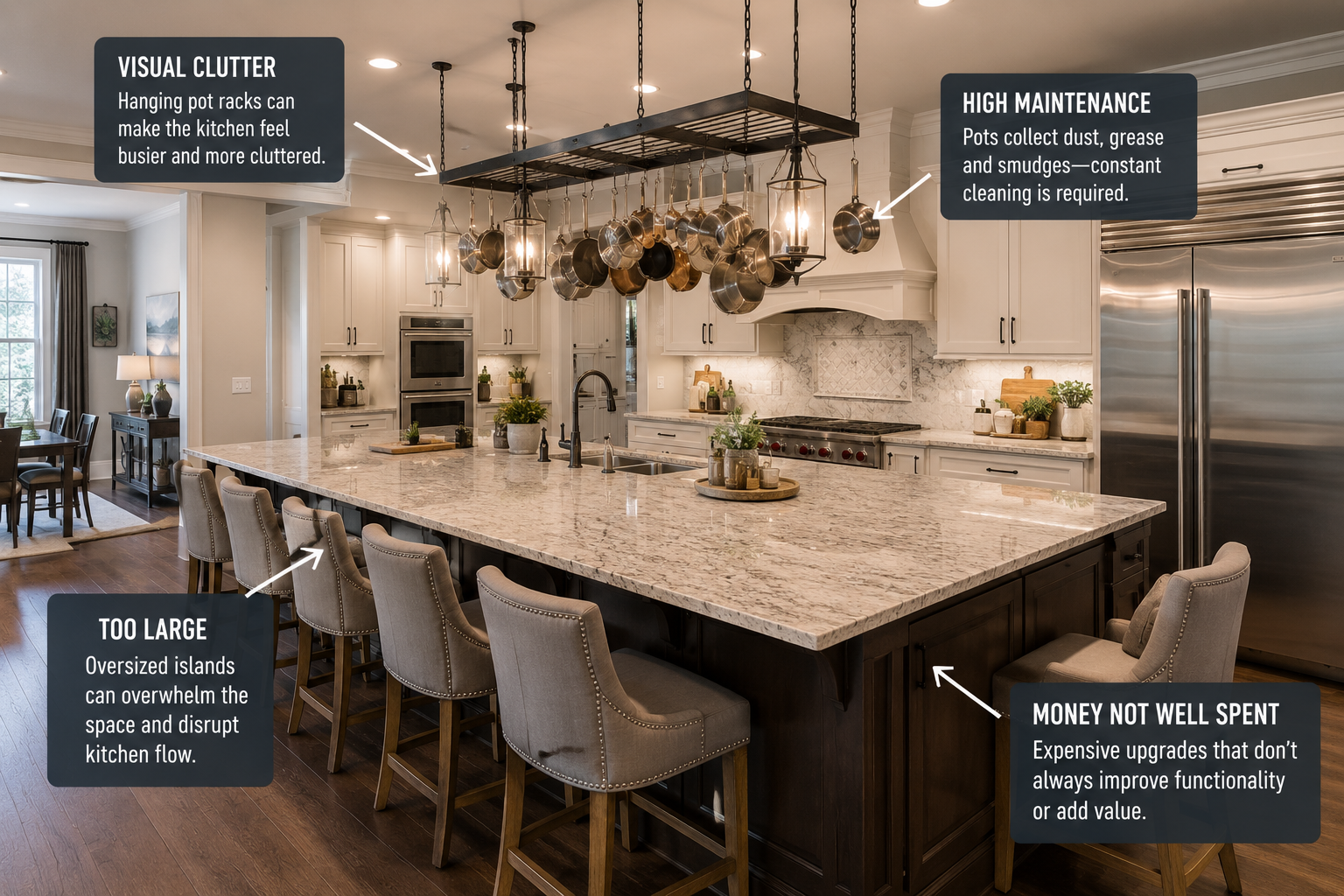
The challenge is that kitchen trends often move far faster than homeowners expect. Features that feel innovative during a renovation can begin looking dated only a few years later. Over the years, homeowners have chased everything from dark espresso cabinets to ultra-modern glossy finishes, oversized waterfall islands, open shelving, appliance garage cabinets, pot fillers, mixed metals, barn-style pantry doors, and highly minimalist layouts. Some trends survive because they remain practical. Others become strongly tied to a particular design era and suddenly feel outdated.
Investing in functional home improvements ensures your kitchen remains a desirable feature in your home for years to come.
Open shelving is a perfect example of a home improvement trend that photographs beautifully and creates a clean, airy look in model homes and online photos. But daily life is less forgiving. Dust, cooking grease, fingerprints, and visual clutter quickly become part of the reality. Many homeowners eventually realize they traded away highly functional storage space for a trend that mostly looked attractive online.
Appliance garage cabinets followed a similar path. The idea sounded clever at the time: hide the toaster, coffee maker, or blender behind retractable or folding doors to keep counters looking cleaner. Many homeowners later discovered these setups often consumed some of the most valuable workspace in the kitchen. Once opened, the doors themselves could become awkward obstacles, especially in smaller kitchens where usable counter space matters every day.
When evaluating home improvements, it’s important to consider the balance between aesthetics and practicality.
Even office nooks built into kitchens or hallway areas sometimes create unintended problems. While they initially seem like efficient uses of space, many gradually become clutter zones where mail, chargers, paperwork, backpacks, and miscellaneous household items accumulate. Instead of creating organization, they can sometimes create a permanent visual reminder of unfinished tasks and household chaos.
Kitchen trends also cycle back, though usually in updated forms. Years ago, brightly coloured appliances in avocado green, harvest gold, turquoise, sunset orange, and other bold colours were stylish. Eventually, they became so dated that many homeowners rushed to replace them with white, black, or stainless steel appliances. More recently, coloured appliances have reappeared again in upscale kitchens, including matte finishes, retro-inspired refrigerators, and even bold colours like red or deep green.
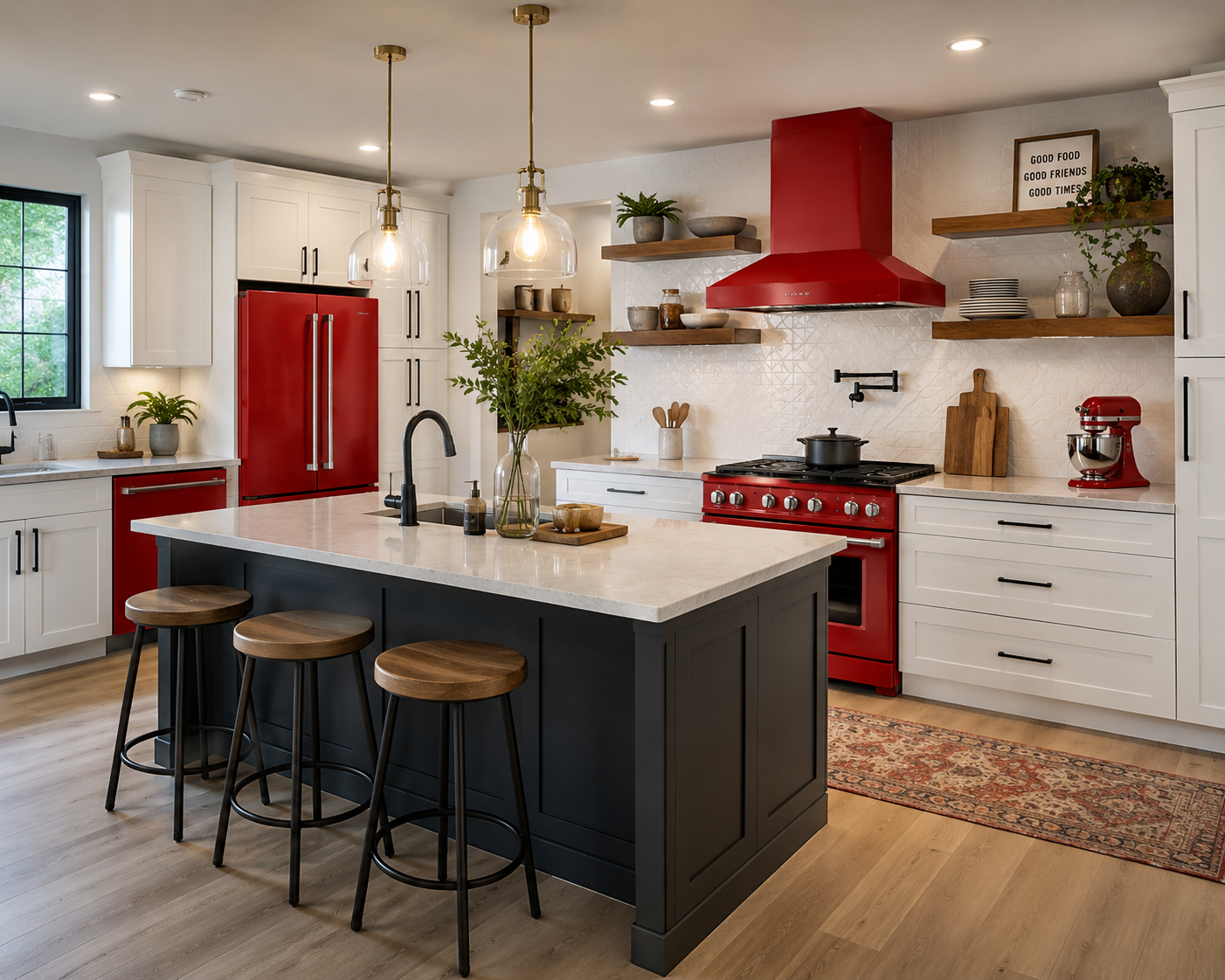
Coloured appliances are not necessarily a poor choice just because of this. Design trends often return. Be mindful that kitchens heavily influenced by trends can sometimes significantly date a home. What feels fresh and exciting today may feel dated much sooner than expected once the trend cycle moves on again.
Large kitchen islands remain many homeowners’ most desired kitchen features, but some renovations have taken the idea too far by eliminating dedicated dining space. Oversized “mega islands” may look impressive in renovation shows and builder photos, but families still gather for meals, holidays, homework, and conversation around actual tables. In some homes, the island gradually takes over so much floor space that the kitchen becomes less flexible and functional. A good island should complement the kitchen, not completely replace a practical gathering space.
The more permanent and expensive the feature, the more carefully homeowners should consider it before fully committing to a strong trend. Paint colours and cabinet hardware are relatively easy to update later. Custom cabinetry, luxury countertops, and specialized appliances are much more expensive to reverse once tastes change.
Some regrets are less about style and more about maintenance. Marble countertops remain beautiful, but many homeowners underestimate how delicate they can be in active kitchens. Red wine, cooking oils, acidic foods, scratches, and normal family use can leave marks surprisingly quickly. What looked timeless during installation can become stressful once people realize they are constantly trying to protect the surface from everyday wear and tear.
The takeaway isn’t that homeowners should skip kitchen renovations; a well-executed kitchen renovation can absolutely improve both daily living and resale appeal. It’s crucial to distinguish between practical advancements and features based on fleeting trends. Good lighting, sensible layouts, quality cabinetry, durable countertops, and timeless finishes usually hold up far better than highly customized or aggressively trendy designs.
Home Improvements: Bathroom errors
As with kitchen home improvements, people should contemplate bathroom upgrades to enhance usability and value.
Certain bathroom trends have also aged poorly. Freestanding tubs looked luxurious and spa-like when they exploded in popularity again over the past decade. They photographed beautifully in model homes and renovation magazines. But many homeowners eventually discovered that they rarely used them. Cleaning around them is awkward, they take up substantial floor space, and getting in and out of them is not always comfortable.
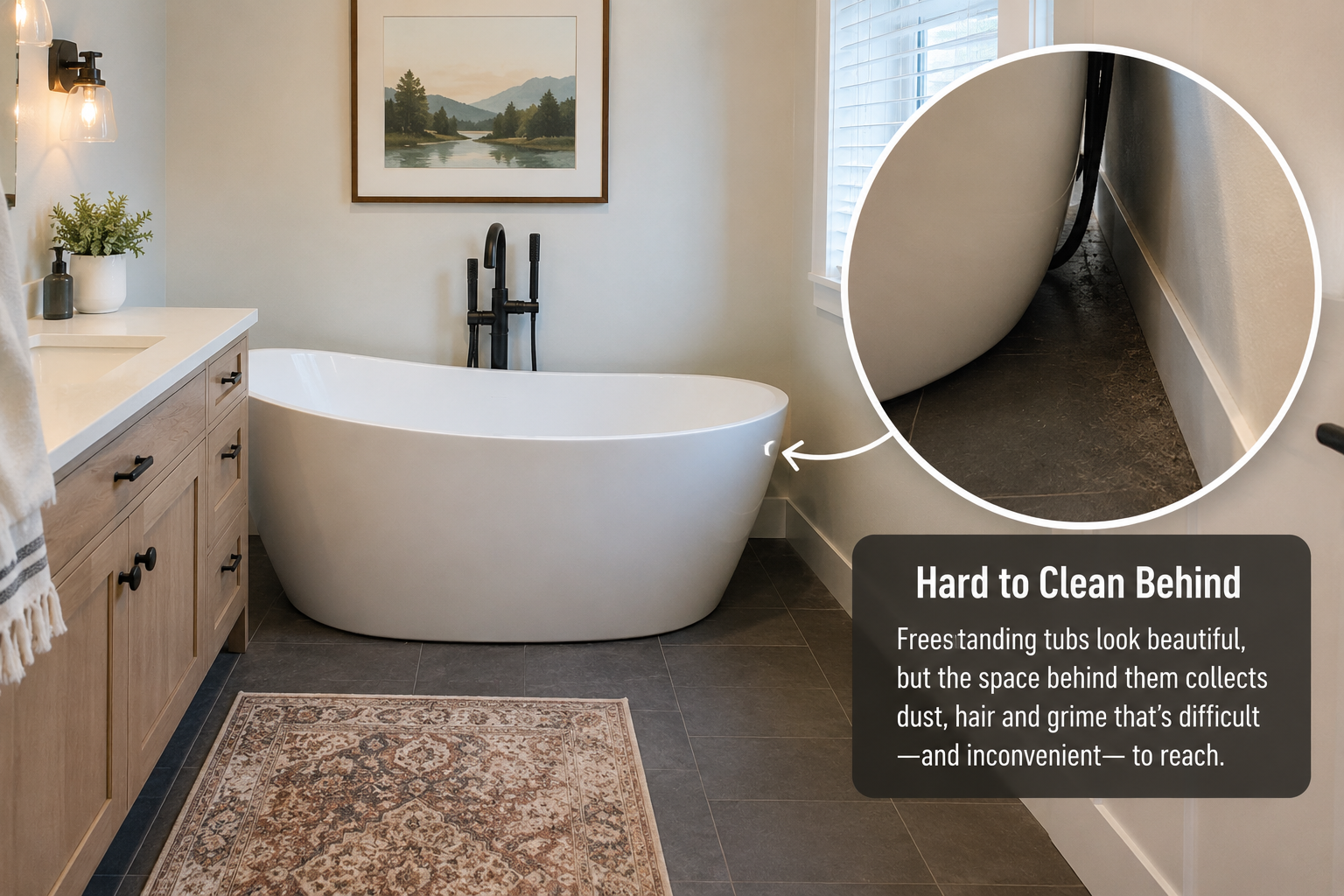
In some ways, the trend almost came full circle. Long before built-in tubs became common, homes often featured freestanding clawfoot tubs. Over time, many homeowners moved away from them for practical reasons, including difficulty in cleaning, space efficiency, and accessibility. Today’s modern freestanding tubs may look sleeker, but many of the same practical concerns still exist.
Large jetted tubs followed a similar pattern years earlier. Suburban residences and fancy en-suites once featured jetted tubs as a mark of high-end luxury. Today, many sit unused while occupying enormous amounts of bathroom space. Homeowners often discover that they take a long time to fill, use substantial amounts of water, and require far more maintenance than expected.
Over time, some owners encounter issues with clogged jets, low water pressure, and maintenance needs. To avoid these, consider practical options like large walk-in showers that are easier to maintain and more suitable for everyday living.
One bathroom trend that deserves careful thought is removing the last remaining bathtub in the house. Large walk-in showers are extremely popular right now, especially in primary en-suites, and many homeowners genuinely prefer them for daily use. The problem comes when every tub disappears entirely.
Families with young children, dog owners, buyers with mobility concerns, or even people who enjoy soaking in a hot bath during a Kingston winter may see the lack of any bathtub as a drawback.
I dealt with a young couple who had one small child and another on the way, who turned down a house that fit almost all the boxes because the current owners had removed all the bathtubs. A large shower can absolutely be a smart upgrade, but many homes still benefit from keeping at least one practical tub somewhere in the layout.
Before making any home improvements, consider the needs of future occupants and how each upgrade contributes to overall comfort.
Other Update Regrets
Finding the right balance in home improvements can lead to a more enjoyable living environment while preserving property value.
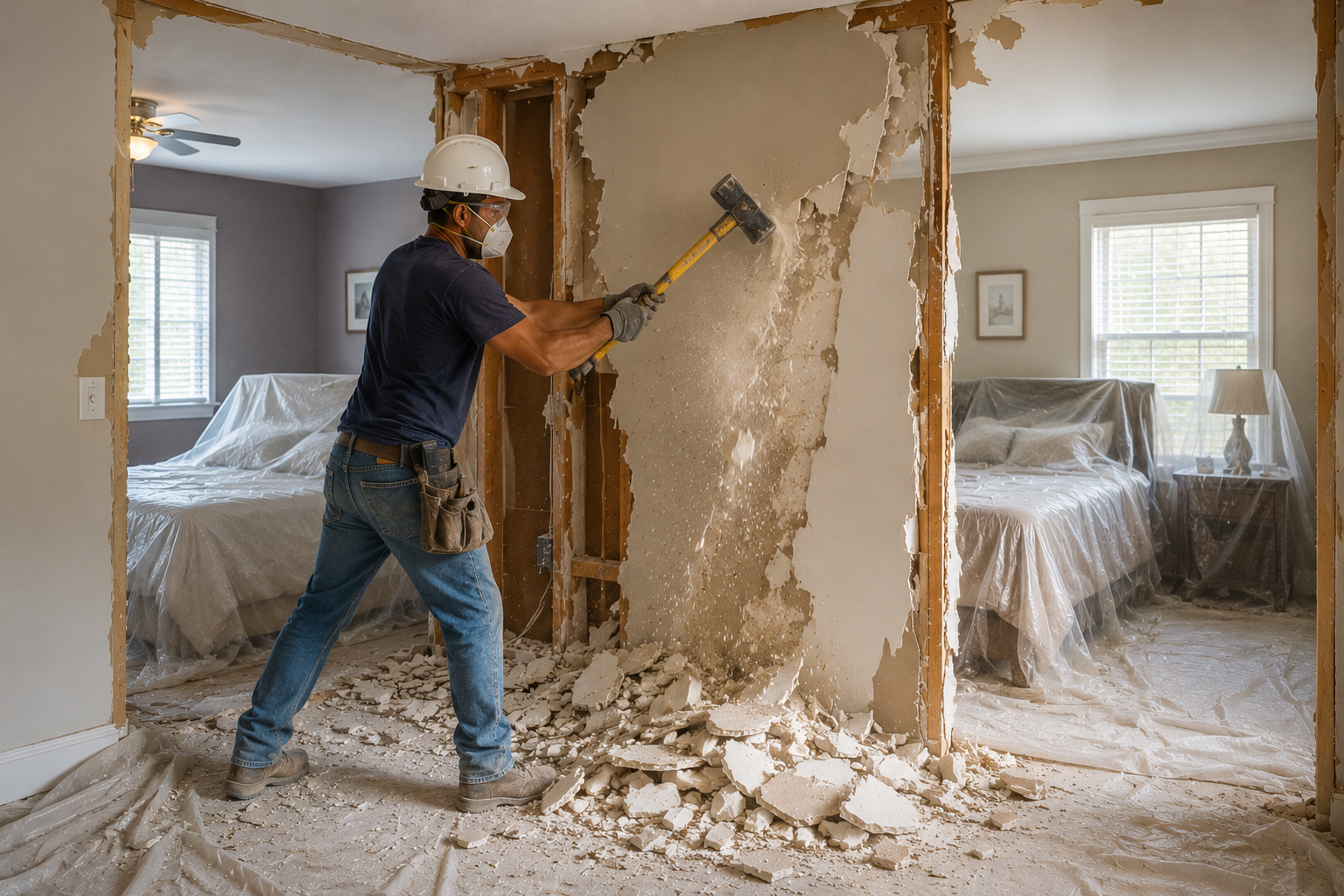
Open concept layouts followed a similar path. For years, the more walls removed, the more modern the home improvements appeared. Builders and renovation shows encouraged homeowners to create a single, open living area. Then lifestyles changed. Families started working from home. Children needed quiet places to study. People discovered that hearing the dishwasher, television, conference calls, and conversations all at once was not always relaxing.
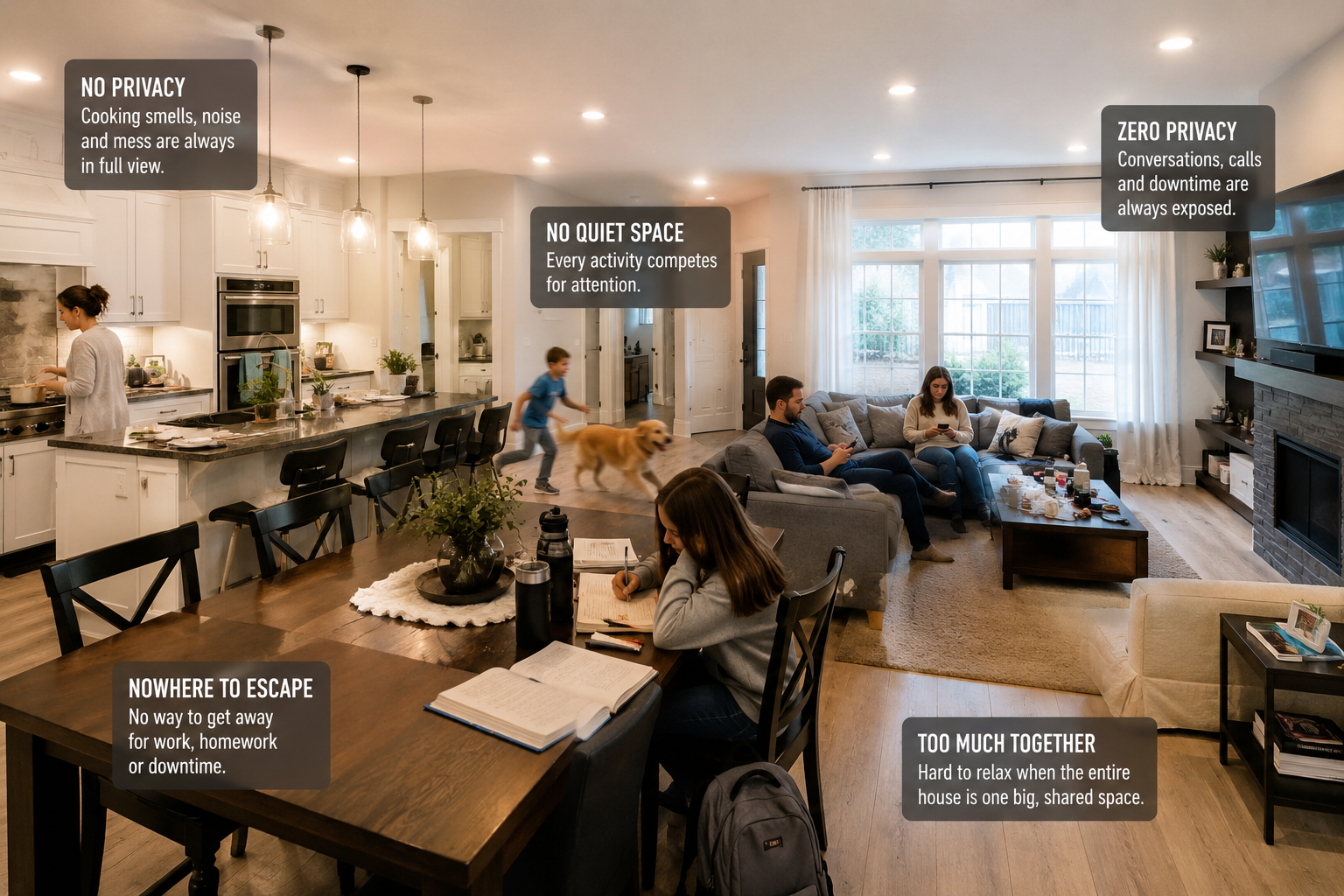
In larger homes, open layouts can still work beautifully. In smaller homes, however, removing room separation can sometimes make a house feel chaotic rather than spacious. Buyers today are increasingly appreciating layouts that still provide some flexibility, privacy, and sound separation.
Another renovation homeowners sometimes regret is removing bedrooms to create oversized living areas, dressing rooms, or expanded primary bedrooms. While these layouts may feel luxurious for current owners, bedroom count still matters heavily in real estate because buyers often search online using bedroom filters first. A four-bedroom home converted into a three-bedroom home may unintentionally drop into a different pricing category, even if the renovations themselves are expensive. Many times, homeowners later discover they reduced flexibility and narrowed their future buyer pool without realizing it.
Ultimately, thoughtful home improvements should enhance the overall functionality of a property.
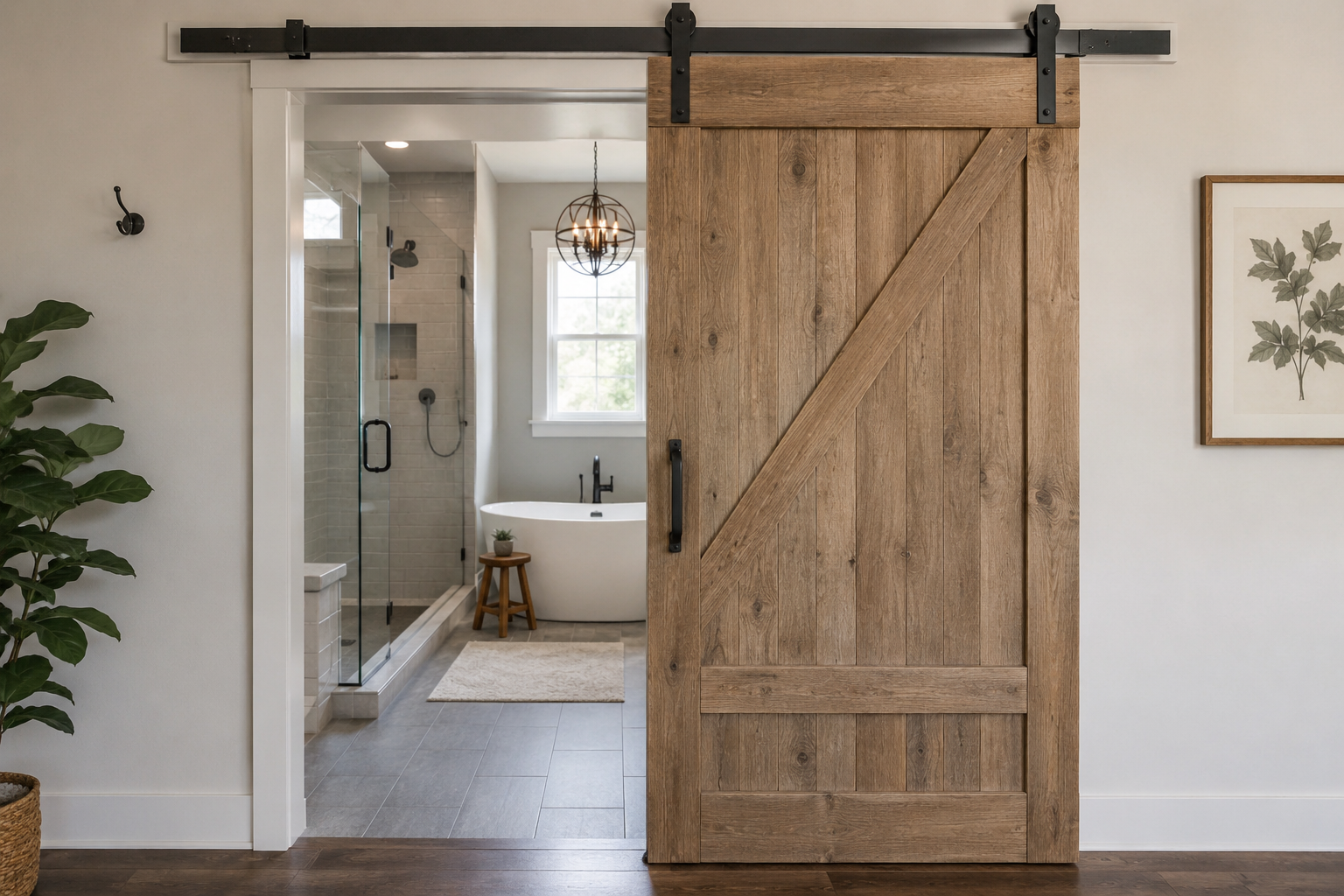
Barn doors are another example of trend fatigue arriving quickly. For a period, they appeared everywhere, from bathrooms to bedrooms to offices. They felt modern, rustic, and stylish. Then homeowners began living with them daily. Many discovered they offered poor sound privacy, did not seal properly, and often felt more decorative than functional. Already, many buyers associate them with a very specific design trend that may not age gracefully.
The goal of home improvements is to create spaces that meet the needs of the occupants while also appealing to future buyers.
Outdoor kitchens and oversized backyard entertainment spaces often create similar feelings. Initially, they seem perfect for entertaining. But in Ontario, where outdoor use is seasonal, many homeowners eventually realise they have spent tens of thousands on home improvements they use only occasionally. Weather exposure, moisture, insects, fading materials, and maintenance slowly begin taking the shine off the project.
Pools remain one of the most debated upgrades of all. Some families absolutely love them and use them constantly. Others discover that reality includes chemicals, maintenance, insurance, repairs, opening and closing seasons, and ongoing costs. Above-ground pools, especially older ones, are unattractive and rarely add significant value to a property.
Homeowners often make a costly mistake by over-enhancing their property beyond the neighbourhood’s standards. Years ago, one of my instructors in real estate school said it is usually better to own the more modest home in a high-value neighbourhood than the most over-improved home in a modest one. That advice still holds today.
Neighbourhoods establish a comfortable value range. Once a property pushes too far beyond its surroundings through luxury additions, highly customized renovations, or oversized projects, it can become difficult to recoup the investment. Buyers still compare the home to nearby sales.
Sometimes the property feels out of place rather than impressive. Years ago, one of my instructors in real estate school said it is usually better to own the more modest home in a high-value neighbourhood than the most over-improved home in a modest one. That advice still holds today.
Last word on your home improvements.
Even the best renovation ideas can lose their appeal if the workmanship is poor. Crooked tiles, uneven flooring, sloppy trim, or visible patchwork quickly catch buyers’ attention. In older Kingston and area homes, especially, visible shortcuts often make buyers wonder what other problems may hide behind the walls.
ome renovation trends fade surprisingly quickly, especially in heavily renovated or flipped homes where design choices can become tied to a specific era. For another perspective on trends that may already lose favour, see BuzzFeed’s article on outdated flipped-home design trends: BuzzFeed – Flipped Home Design Trends to Retire
Kitchen trends also cycle over time, including the return of bold appliance colours in modern kitchens. For an interesting look at the renewed popularity of colourful appliances, visit: Fuse Specialty Appliances – Colourful Kitchen Appliances
The homes that age best are usually not the trendiest ones. They are the homes that continue to feel practical, comfortable, functional, and easy to live in years after the renovation excitement fades.
That is often the actual test of a successful upgrade.
FAQ
Ultimately, successful home improvements combine style and functionality to create lasting value.
Do trendy home improvements hurt resale value?
Not always, but some trends age quickly. Buyers may view heavily trend-focused renovations as dated or highly personal only a few years later. Neutral, practical upgrades usually appeal to a wider range of buyers.
Are freestanding tubs going out of style?
Freestanding tubs are still popular in some luxury homes, but many homeowners later discover they are less practical than expected. Large walk-in showers are becoming more desirable for many buyers because they are easier to clean and use daily.
Why are open concept homes becoming less popular?
Many people still like open layouts, but completely open homes can feel noisy and lack privacy. Working from home, family schedules, and changing lifestyles have increased interest in homes with at least some room separation.
Are pools a poor investment in Ontario?
Pools can be enjoyable lifestyle features, but they do not always deliver strong resale returns in Ontario because of seasonal use, maintenance costs, insurance concerns, and buyer preferences. Some buyers love them, while others avoid them entirely.
Which home improvements usually hold the most value?
Practical improvements age better than trendy ones. Updated kitchens, durable flooring, efficient windows, modern lighting, improved insulation, functional bathrooms, and sensible landscaping usually provide longer-lasting appeal.
Why do homeowners regret some renovations so quickly?
People often choose renovations for their appearance rather than their long-term usefulness. Features that look impressive online or in show homes may become frustrating once homeowners live with them daily.
Don’t Miss These Guides
Some renovations are expensive, and trends change faster than many homeowners expect. These related guides can help Kingston and Area homeowners make smarter long-term renovation and resale decisions.
Eco-Friendly Home Renovations in Kingston and Area
Explore practical upgrades that improve comfort, efficiency, and long-term operating costs without relying on short-lived design trends.
Top 13 Home Renovations That Add the Most Value
A closer look at renovations that consistently provide stronger long-term appeal and better return on investment for homeowners.
Should You Renovate Your Kitchen Before Selling?
Kitchens remain one of the most important rooms in any home, but not every upgrade delivers the same return. Learn which improvements buyers actually notice and appreciate.
Preparing Your Home for Sale: Presentation, Privacy, and Security
Minor details often matter more than expensive renovations. Learn how presentation, cleanliness, lighting, and organization influence buyer impressions.
Working with a Kingston REALTOR®
Local market knowledge can help homeowners avoid costly renovation mistakes, over-improving for the neighbourhood, or investing heavily in trends that may not hold long-term value.