


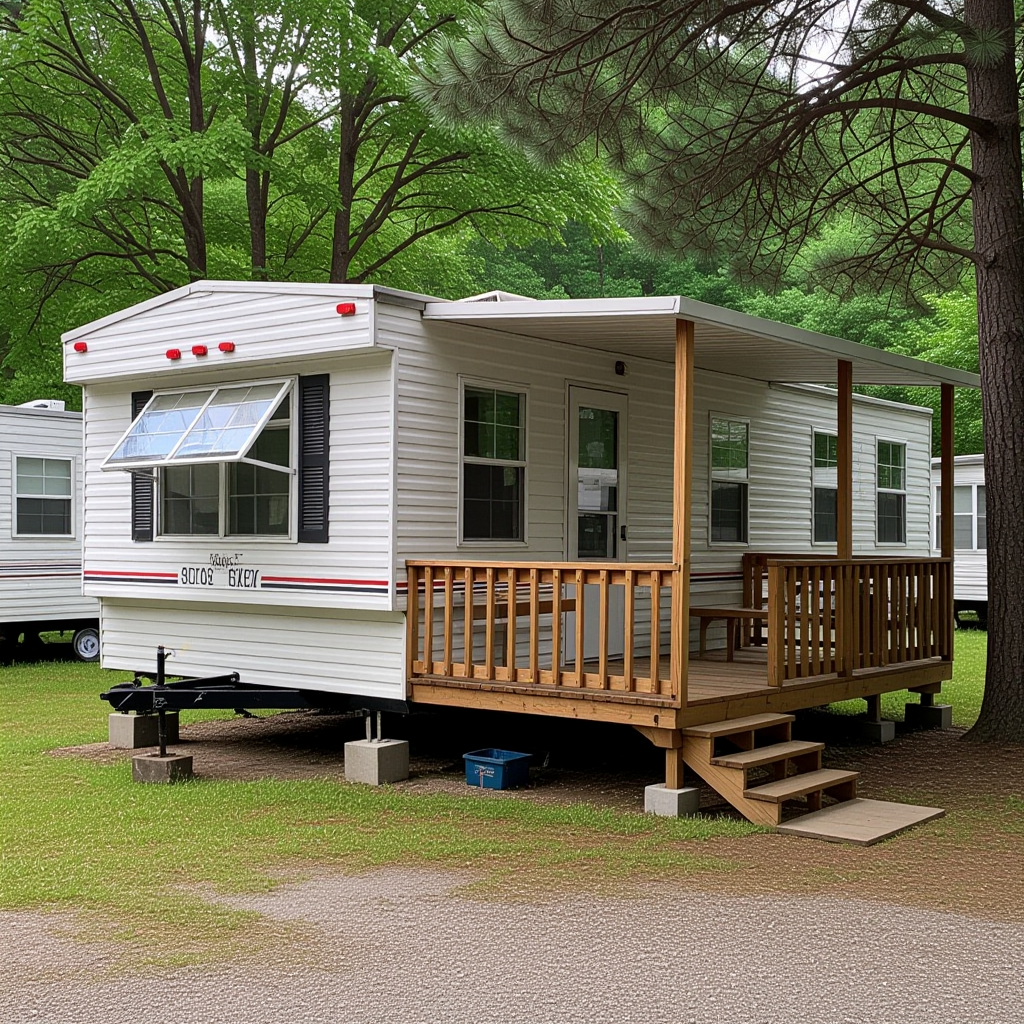
Mobile homes in this area can catch a buyer’s attention for one obvious reason: the price. When detached houses, townhomes, and even condominiums are beyond a buyer’s budget, seeing a mobile home listed for considerably less can suddenly make homeownership feel possible.
In the right circumstances, it can be. Mobile homes can provide comfortable housing, smaller spaces to maintain, and communities that appeal to first-time buyers, retirees, and people looking to simplify their lives.
However, comparing a mobile home’s asking price with a conventional house’s asking price can be misleading. Financing may be more difficult; you may not own the land underneath the home; monthly site fees can add considerably to ownership costs, and selling the property later may present challenges that don’t normally apply to a conventional freehold home.
The advertised price is only the beginning of the calculation.
Mobile homes in Ontario are not all the same.
The terminology itself can be confusing. People sometimes talk about mobile homes, manufactured homes, mini homes, modular homes, and land lease homes as if they are interchangeable. Still, lenders, municipalities, insurers, and lawyers may treat them differently.
One of the first things a buyer needs to establish is exactly what they’re buying.
A manufactured or mobile home permanently installed on land included in the purchase can be very different financially from a mobile home in a park where the homeowner rents the site. A modular house built to building-code requirements on an owned lot may qualify for financing much like a conventional house.
You should not only consider what the home looks like or how the builder constructed it. You need to establish whether you own the land, how the property owner attaches the home to the land, how legal authorities categorise it, and what kind of ownership the seller conveys.
The land may not be included.
This is probably the biggest difference buyers need to understand.
Many mobile homes are in mobile home parks or land lease communities. You purchase the home but lease the site it sits on. You own the structure, but someone else owns the land.
Ontario’s Residential Tenancies Act recognises that arrangement. It considers a rented site in a mobile home park or land lease community a rental unit, even when the tenant owns the home on it. Ontario also has specific rules covering mobile home parks and land lease communities.
There will normally be ongoing monthly site or land rent, and there may also be charges for utilities, services, property taxes, or community amenities, depending on the park and agreement.
That means a $175,000 mobile home and a $175,000 conventional property are not necessarily comparable purchases. With a conventional property, the purchase price normally includes the land. With a leased-land mobile home, you may still have a substantial monthly payment simply for the right to keep your home where it is.
Include that cost when deciding how affordable the property really is.
Financing can be the biggest surprise.
This is where many buyers learn that a low purchase price doesn’t automatically mean an easy purchase.
A mobile home permanently fixed to land you own may qualify for more conventional mortgage financing, depending on the lender’s criteria.
The situation can be very different when the home is on leased land.
Some lenders will not finance these properties at all. A buyer may also need what is commonly called a chattel mortgage or chattel loan. Unlike a conventional mortgage, which is secured against real estate (the house and the land), a buyer secures a chattel loan against the mobile home itself because they may not own the land beneath it. These loans can have different down-payment requirements, interest rates, amortisation periods, and lender restrictions, which is another reason buyers should arrange financing before assuming a lower-priced mobile home will also mean lower monthly costs.
Lenders might impose tougher criteria regarding the home’s age, condition, construction, CSA certification, foundation, location, and marketability. For instance, Kokanee Mortgage currently says it will only consider lending on mobile homes on rented pads as an exception. Still, it requires the homeowner to affix the home permanently and display a valid CSA sticker. Its guidelines prefer homes newer than 15 years, with older homes considered on a case-by-case basis.
Other speciality lenders indicate down payments can be substantially higher in some situations. Citadel Mortgages states that although some qualifying purchases may involve lower down payments, 20% to 35% is required in many mobile and modular-home financing situations.
Lending programs also change. A lender that financed these properties last year may not offer the same program today. DV Capital, for example, has financed mobile homes on leased and owned land but currently states that its specific mobile-home program is on hold and it is not accepting new inquiries through that program.
For that reason, I would strongly recommend that a buyer speak with a mortgage professional who understands mobile and land lease properties before making an offer, rather than assuming that a lender will treat the purchase like any other house.
The home’s age can matter.
With many conventional houses, age alone does not prevent mortgage financing. A well-maintained 80-year-old Kingston home may be perfectly acceptable security for a lender.
Mobile homes can be different.
Lenders may consider the structure’s remaining economic life and whether the home will retain sufficient value for the full amortisation period of the loan. Older units can therefore become harder to finance even when they appear to be in reasonable physical condition.
This can affect you twice: first when you buy the home, and again when you eventually sell it.
You might purchase an older unit because you have a substantial down payment or cash available. Years later, however, your eventual buyer may have difficulty obtaining financing on a home that is now even older.
That can reduce the pool of potential buyers.
Do not overlook the park agreement and rules.
When buying a home in a mobile home park or land lease community, you are also buying into a particular living arrangement.
Ontario law gives mobile-home owners important protections. For example, the Residential Tenancies Act gives a tenant the right to sell or lease their mobile home without requiring the landlord to act as their sales agent. The legislation also addresses park rules, assignment of tenancies, rent, and other aspects of mobile-home communities.
That does not mean every park operates the same way.
Before purchasing, review the site’s tenancy or lease agreement, current monthly charges, included services, park rules, restrictions, utility arrangements, maintenance responsibilities, and the procedures for when you eventually sell the home. Some parks require buyer approval.
Also check whether the park permits year-round residency. Some properties that appear to be affordable housing options sit in seasonal parks, and the law or practical considerations prevent you from using them as a full-time residence.
Investigate those details before waiving conditions.
Park fees are part of the actual monthly cost.
When you lease the land, the purchase price tells only part of the story. Mobile home owners usually pay a monthly site or park fee in addition to any financing payment on the home itself.
Before buying, find out exactly what that fee includes. Depending on the park, charges may cover or exclude water, sewage, garbage collection, road maintenance, snow removal, property taxes, utilities, or common amenities.
The current fee also matters less than many buyers realise if they have not looked at how it may change. A mobile home that appears considerably less expensive than a condominium or small freehold property can look quite different once you add a substantial monthly land lease.
Mobile home parks near Kingston
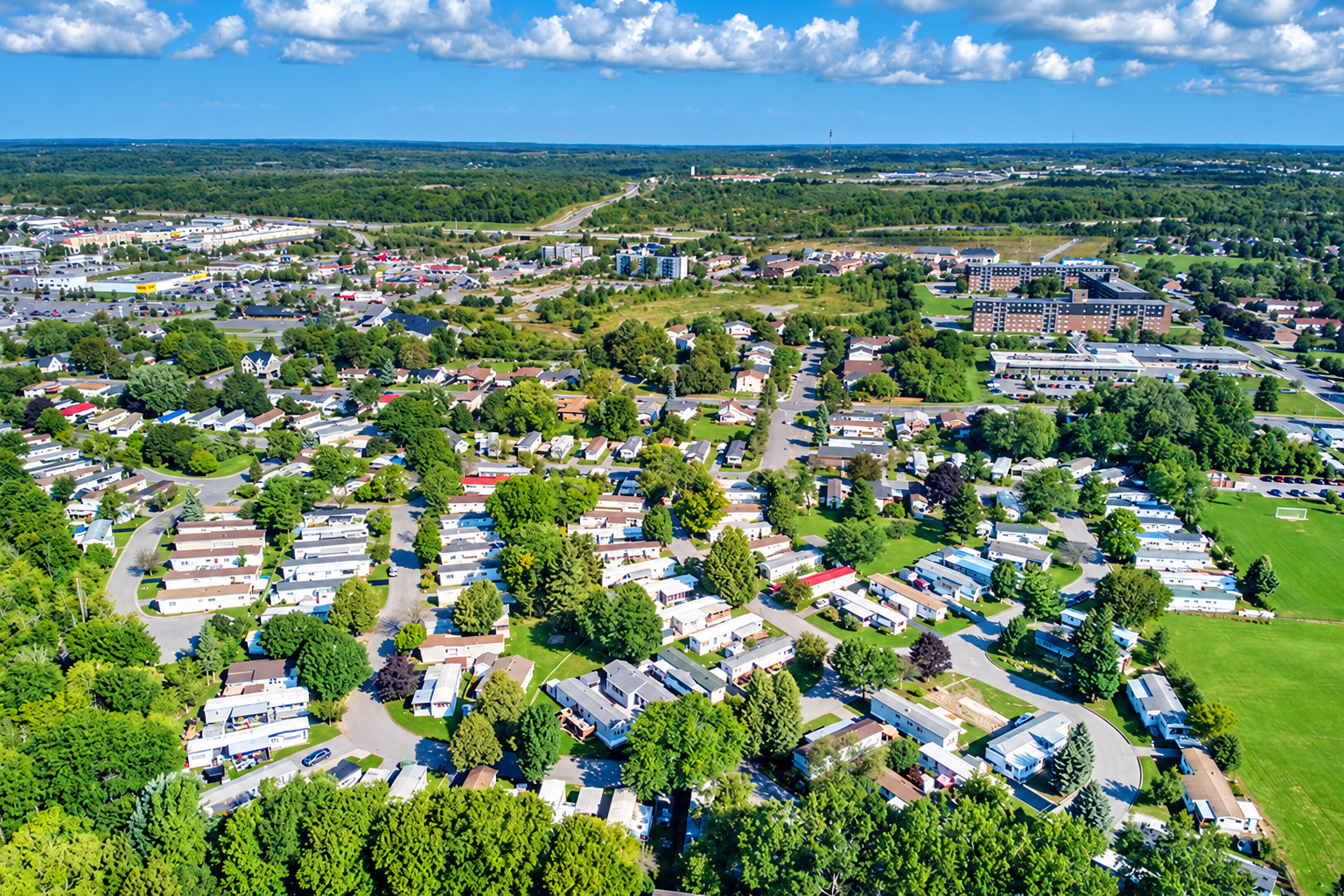
Several mobile-home and land-lease communities are in and around Kingston, including Worthington Park in Kingston, Sunpark Estates near Millhaven, Pine Ridge Village near Seeley’s Bay, and communities in the Greater Napanee area.
The costs and rules can differ from one community to another. At Pine Ridge Village, for example, a current listing shows monthly land rent of $469.07, including taxes and water. Buyers need to factor that ongoing housing cost into the purchase price and any financing payment.
Sellers often make seasonal parks look similar when they advertise a trailer or park model for sale. Rideau Acres, north of Highway 401 near Highway 15, is one local example. It advertises seasonal trailers for sale on individual sites, but it is a campground, not a year-round residential mobile-home community.
This distinction matters. A buyer may spend tens of thousands of dollars purchasing a trailer or park model and still have an ongoing seasonal site fee. Owning the trailer does not mean you own the land beneath it.
Buyers should verify whether the park allows year-round occupancy, the duration of the operating season, the annual or seasonal site cost, what the fee covers, how the park manages increases, and what rights they have if they decide to sell the unit later.
A low purchase price can therefore be misleading unless you also understand the cost and security of the site underneath the home.
What if the mobile home park closes?
When you own the land under your house, no other risks arise, though the park could close, or the landowners might sell it for redevelopment.
Ontario’s Residential Tenancies Act provides special rules for these situations. Where applicable, the law applies redevelopment provisions to terminate a mobile home owner’s tenancy, requires landlords to set the termination date at least one year after the notice is served, and may impose compensation requirements.
That gives an owner time, but it does not solve the problem.
Moving a mobile home can be costly and complicated. The owner must find a willing and able park to accept the home, ensure an appropriate site is available, acquire permits and utility connections if required, and engage specialised contractors to disconnect, transport, and reinstall the structure.
Age can make the problem even greater. Some older homes may be difficult to move safely, and another park may not accept a unit beyond a certain age or condition.
So although these properties are called “mobile homes,” buyers should not assume that moving one is easy. In some circumstances, losing the leased site underneath the home can become a major financial issue.
Insurance might need a bit more research.
Insurance is another item worth investigating early, particularly with an older mobile home.
Insurers can consider the home’s age, electrical system, heating system, roof, foundation or support system, previous renovations, and whether builders properly constructed additions such as porches, decks, sunrooms, or extra rooms.
Do not assume that because the current owner has insurance, you will automatically be able to obtain equivalent coverage at a similar cost.
As with financing, obtaining an insurance quote before committing to the purchase can prevent an unpleasant surprise.
What happens when you want to sell?
Always consider affordability on the way in alongside marketability on the way out.
Mobile homes certainly do sell, and in areas where conventional housing is expensive, they can attract significant interest. However, the potential buyer pool can be smaller.
A future purchaser may need specialised financing. An older home may no longer meet a lender’s requirements. Higher site fees may affect affordability. Changes to a park or community can influence desirability. Buyers who want to own the land beneath their home may exclude leased-land properties from their search.
None of those factors automatically make a mobile home a poor purchase. They mean that resale deserves more consideration than simply assuming the property will behave like a conventional freehold house.
Look at the total cost, not just the asking price.
Consider a mobile home priced at $200,000, while conventional houses in the area go for $450,000 or more. At first glance, the difference seems enormous.
But a better comparison includes the required down payment, financing rate and terms, monthly land rent, property-tax arrangements, utilities, insurance, maintenance, and the expected resale market.
Then compare that total monthly cost with alternatives such as a condominium, a small freehold home, or another type of property.
The mobile home may still come out ahead. The point is to find that out before buying rather than discovering it afterwards.
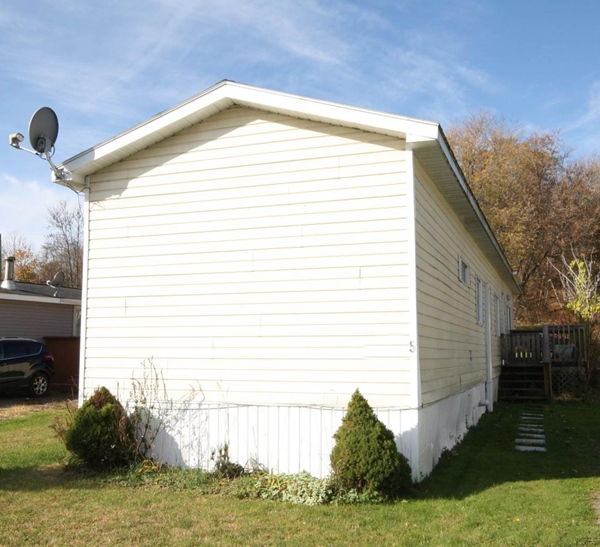
A mobile home can still be the right choice.
Some buyers find a mobile or manufactured home makes excellent sense.
Someone purchasing with cash may be far less concerned about financing limitations. A retiree looking for a smaller home in a quiet community may consider land rent a reasonable trade-off for a substantially lower purchase price. A newer manufactured home on owned land may present few of the issues associated with an older home on a rented site.
The mistake is not buying a mobile home.
The mistake is buying one because it looks inexpensive without understanding why.
If you are considering a mobile home in Kingston, Frontenac, Lennox and Addington, Leeds and Grenville, or elsewhere in Eastern Ontario, investigate the ownership structure, financing, insurance, site costs, and resale considerations before deciding how good a deal it really is. A lower asking price can be attractive, but the proper measure of affordability is the total cost and the conditions that come with owning the property.
Frequently asked questions about mobile homes
Can you get a mortgage on a mobile home in Ontario?
Yes, but financing can be more difficult than with a conventional house. A mobile home on owned land may qualify for traditional mortgage financing, while a home on leased land may require specialised financing or a chattel mortgage. The home’s age, condition, location, CSA certification, and remaining economic life can also affect financing.
What is a chattel mortgage on a mobile home?
A chattel mortgage is financing secured against the mobile home itself rather than the land beneath it. This is more common when the home is located on a leased site in a mobile home park. Interest rates, down-payment requirements, and amortisation periods may differ from a conventional mortgage.
Do you own the land when you buy a mobile home?
Not always. Some mobile home sellers include the land in the sale, while others place the homes in mobile home parks where the homeowner owns the structure but leases the land. Buyers should confirm the ownership arrangement before comparing the price with other homes.
What are mobile home park fees?
Park or site fees are ongoing charges for using the land beneath the home. Depending on the community, the fee may also include some combination of water, sewage, property taxes, road maintenance, snow removal, garbage collection, or other services. Buyers should verify exactly what the fees include and how they might change.
What happens if a mobile home park closes?
Ontario law offers protections and requires notice when a mobile home park closes or undergoes redevelopment, but moving the home can still involve high costs and complications. Another suitable site must be available, the receiving park must accept the home, and transportation, permits, utility connections, and installation can add significant expense.
Are mobile homes cheaper than houses?
The purchase price often is, but that does not mean the total cost of ownership is lower. When comparing a mobile home with a condominium, townhouse, or freehold house, include financing costs, park fees, insurance, maintenance, and resale considerations.
Can you live year round in every mobile home park?
No. Some parks are year-round residential communities, while others are seasonal campgrounds. Buyers should confirm whether permanent occupancy is permitted before assuming they can live full time in a trailer or park model.
Do you pay land transfer tax when buying a mobile home in a park?
If you are buying the mobile home but leasing the land underneath it, Ontario land transfer tax will not normally apply to the home itself because you are not acquiring the land. If the purchase includes an interest in the land, land transfer tax may apply. Your lawyer should confirm the tax treatment based on the ownership and lease structure.
Don’t miss these guides
If you are comparing a mobile home with other housing options, these guides can help you look beyond the asking price and understand some costs and risks that may affect your purchase.
8 Hidden Costs of Buying a Home in Ontario
A useful companion to this article because a lower purchase price does not mean lower overall housing costs.
Mortgage Pre-approval vs. Pre-qualification
Especially relevant here because financing a mobile home can differ significantly from financing a conventional freehold house.
Match the home you buy to your budget
A good fit for buyers comparing mobile homes with condos, townhomes, or smaller freehold properties.
Kingston and Area Home Buyers Guidebook
A broader resource for buyers weighing different housing types in Kingston and the surrounding area.