



Multi-generational living is becoming more common across Kingston and the surrounding areas. The province has made it easier to add second units many times. This has helped increase interest in this type of setup. You can review the provincial guidelines here.
This arrangement can reduce costs and provide support across generations. However, it can also create challenges if people do not plan the details carefully.
It can reduce costs, provide support across generations, and make better use of a property. It can also create challenges if people do not think through the details.
The difference comes down to how the home functions day to day.
Why families are choosing multi-generational living
For many households, the decision comes down to practicality.
Different living arrangements can bring unique benefits and challenges, which families should address collaboratively.
Overall, the key to success in multi-generational arrangements is effective communication.
Therefore, multi-generational living is a viable option for many households.
Families benefit from the shared responsibilities and support that come with living close to one another.
Many multi-generational households find their arrangements enhance their quality of life.
This practicality helps some families feel more connected while providing independence.
Living close together offers built-in support for children or ageing parents, fostering a sense of connection and making daily routines feel more manageable. Many families value the increased closeness and the opportunity to stay connected without sacrificing independence entirely.
It also creates flexibility. A space used for families today may become a rental unit later, or return to single-family use.
The benefits are real. So are the adjustments.
Pros and cons, where the idea meets real life
Multi-generational living sounds great on paper. It works very well for some families and creates friction for others.
On the financial side, sharing a home can reduce costs across the board. Sharing a home can also reduce costs across the board financially. That can make a real difference, especially with today’s housing costs.
Money can become a source of tension. It’s challenging to address questions concerning renovation expenses, utility cost sharing, and the duration of arrangements.
Many families value the increased connection and have the chance to stay close without sacrificing independence entirely.
Lifestyle benefits are significant. Living close together offers built-in support for children or ageing parents, making daily routines smoother.
This proximity brings drawbacks too. Privacy diminishes, and noise can become a constant in everyday living.
Prospective buyers appreciate the flexibility that multi-generational living can offer.
Even in well-designed homes, you are still sharing a property. Homes with well-designed, self-contained units often attract strong interest and can carry added value.
Poorly designed or non-compliant setups have the opposite effect. Buyers see risk, cost, and future work.
Daily logistics sit somewhere in the middle. Shared responsibilities can lighten the load, but coordinating routines and expectations takes effort.
Layout matters more than size.
Focusing on privacy and clear boundaries helps families feel secure and comfortable in multi-generational homes. A larger home does not automatically make multi-generational living easier. What matters is how they divide the space.
Separate living areas, defined boundaries, and many times separate entrances make the biggest difference. Homes that were designed or properly adapted for multiple households function well. Homes that were not designed this way often rely on shared hallways, staircases, or living spaces. That can work short-term, but over time, it can feel crowded.
Balancing shared space and private space is one of the most important design decisions.Several common methods exist for setting up multi-generational living within a home. Some use a basement suite, others spread living space across multiple levels, and some divide the home side by side.
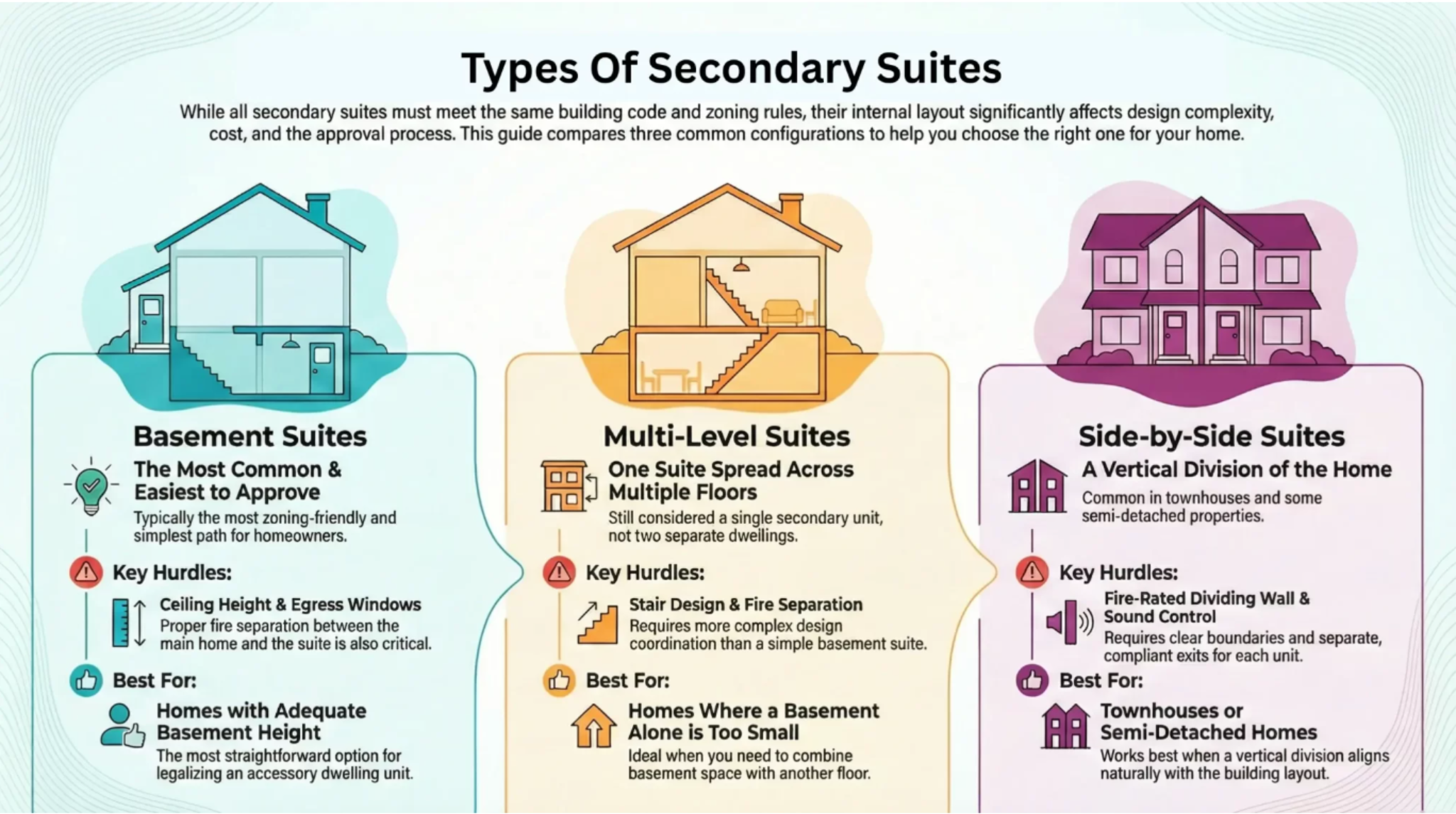
Each approach can work, but the layout affects privacy, sound, and how the space functions day to day.
Sound and layout are important in older homes.
Many homes in Kingston and the surrounding area date back to a time before people commonly practised multi-generational living
In these homes, sound control often causes discomfort and disrupts daily routines, highlighting the importance of addressing it to improve overall living quality.
Lath-and-plaster construction, common in older homes, can block sound better than modern drywall because of its density. However, the issue often lies not in the material itself but in what has changed.
Ageing plaster, broken keys, and empty wall cavities can transform what should be a solid barrier into an echo chamber. Sound travels through gaps, framing, and floor systems more easily than expected.
Floor systems are another major factor. In many older homes, sound travels directly through joists from one level to another. Footsteps, movement, and even normal conversation travel between floors.
What feels like a normal daily activity to one household can become a constant source of noise for another. Many renovations fail at this point.
Finishing a basement or adding a secondary unit often focuses on appearance first. People pay attention to flooring, paint, kitchens, and bathrooms, and they treat sound separation as an afterthought. That approach can lead to a space that looks complete but does not function well.
To effectively reduce noise, consider installing resilient channels or applying soundproof drywall, which can significantly cut vibrations and sound transfer through walls and ceilings.Adding dense insulation like mineral wool or specialised soundproofing foam, sealing gaps around outlets, baseboards, and door frames, and using mass-loaded vinyl can improve sound control during renovation.
When planning soundproofing, weigh options such as keeping existing plaster with added layers versus opening walls for new insulation and drywall, considering factors like cost, time, and disruption to your home. Even minor changes, like sealing gaps or upgrading doors, can empower homeowners and renovators, making a noticeable difference in sound control and overall comfort. Solid-core doors reduce sound transfer compared to hollow-core doors. Sealing gaps under doors or around frames can limit how sound moves between spaces.
Sound does not just travel directly through walls. It also moves around them through floors, ceilings, ductwork, and even small openings in the structure.
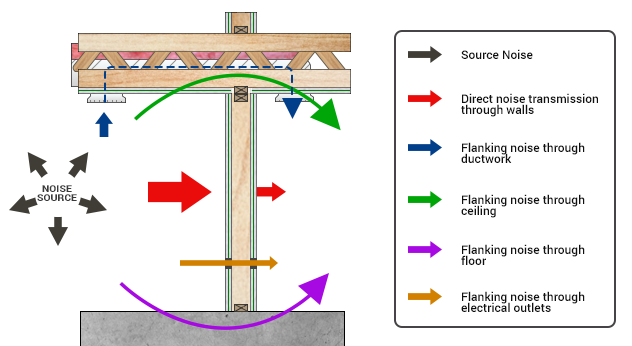
So homes that seem well separated visually can still carry significant noise between living spaces.
A simple test is to stand in a dark room with a light on in the hallway. Any place where light comes through is also a place where sound passes.
Older homes can work very well for multi-generational living, but they need to be approached differently. Ignoring sound and layout during renovation can lead to frustration later, but early planning reassures homeowners that their space will meet their needs and function well.
Addressing it early creates a space that not only looks finished but actually works for the people living in it.
Privacy and daily routines
Privacy is not just about having separate rooms. It is about how the home functions throughout the day.
Different schedules can create friction. One household may be up early, another may keep later hours, or work shifts. In homes without sound separation, those differences become noticeable quickly.
Older homes, especially in Kingston, carry sound between floors. Footsteps, televisions, and everyday movement can travel more than expected.
Outdoor space is another factor. Shared driveways, decks, and yards work best when expectations are clear.
A well-designed secondary unit is not just about finishes. Layout, access, and separation all play a role in how the space actually functions.
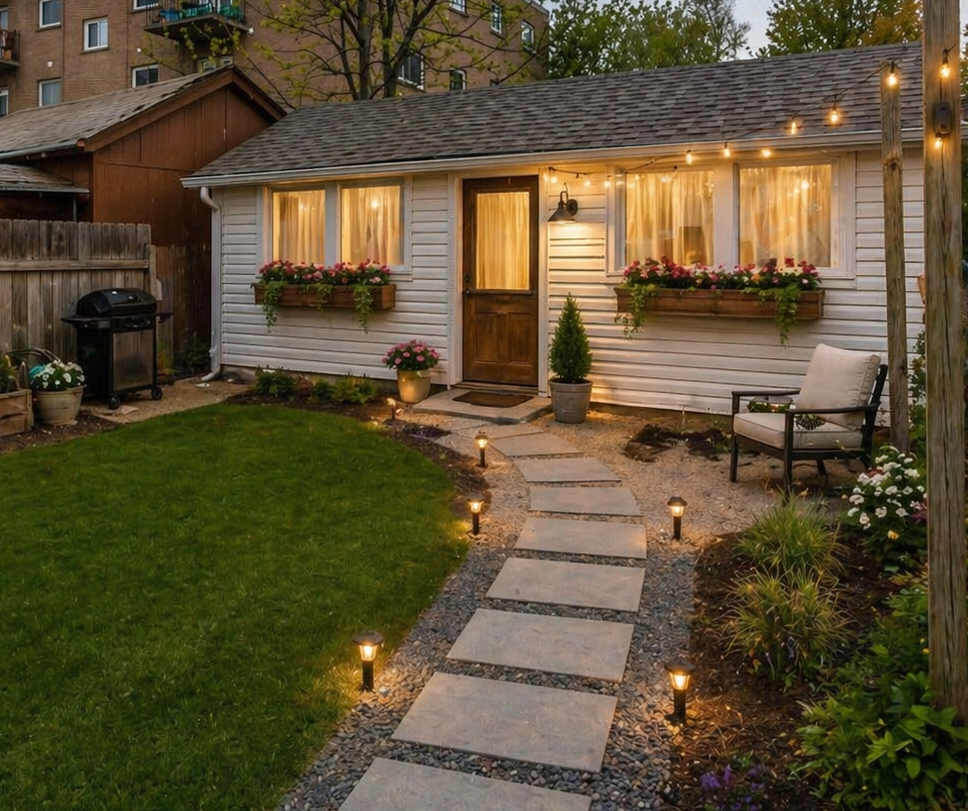
A backyard unit like this creates separation and privacy that is much harder to achieve inside the primary structure.
The homes that work well include privacy in the layout from the start, not as an addition later.
Heating, cooling, and shared systems
Most multi-generational homes still operate on a single heating and cooling system.
One furnace, one air conditioner, one thermostat.
That works fine for a single household. It becomes more complicated when two households share the same system.
Temperature preferences are rarely the same. One person feels comfortable, another feels too warm or too cold. In a single-family home, that is a minor change. In a multi-generational setup, it can become a daily source of friction.
Older homes amplify the problem. Heat rises, so upper levels often feel warmer while basements stay cooler. Air conditioning can have the opposite effect depending on airflow and ductwork.
Usage patterns also change. One household may be home during the day while another is out. The system cannot respond to two different schedules, as heating and cooling demands are no longer consistent.
Without separation, a single thermostat controls everything. That means one household’s comfort directly affects the other.
Zoning systems or separate HVAC setups can address this, but they are not common in older homes and can be expensive to retrofit. Designers never designed the ductwork for divided use many times.
Even smaller details become noticeable. People’s use of doors, airflow between rooms, and insulation differences all affect comfort.
“Temperature comfort is personal. What feels right to one person can feel completely off to someone else, especially across generations.”
It may not seem like a major issue at first. Over time, it becomes one of the most common day-to-day challenges in multi-generational homes.
Responsibilities, urban and rural
In rural areas, the workload increases, making shared responsibilities even more crucial to define early.
In urban settings, responsibilities often include garbage collection, parking, snow clearing, and shared outdoor spaces.
Establishing clear responsibilities early helps everyone feel valued and reassured about their role in the shared living arrangement.
When multiple households share a home, establishing clear responsibilities helps everyone feel valued and reassured about their role in the shared living arrangement.
In urban settings, that usually includes garbage collection, parking, snow clearing, and shared outdoor spaces. These are manageable, but they still require clear agreement to prevent confusion. Assumptions should not determine who handles what, how often tasks are completed, or what standard is expected.
In rural areas, particularly in places like Loyalist Township or South Frontenac, the workload increases, which makes shared responsibilities even more important to define early.
Driveways are longer, and snow removal is not a quick task. People often need a snowblower or tractor and must complete the task early in the day before work or appointments. What seems manageable on paper can feel very different in practice during the winter months.
Maintenance becomes ongoing rather than occasional. Tasks such as well and septic maintenance, property grading, and seasonal work may seem daunting, but understanding that they are manageable with planning can help everyone feel better prepared and more confident in maintaining the property.
These systems are not passive. Knowing how they operate, when they need service, and what warning signs to watch for can make everyone feel more capable and in control, preventing costly problems.
When people define roles early, they help prevent conflicts and misunderstandings by sharing responsibilities effectively or avoiding tension. This proactive approach can make everyone feel more in control and confident in their shared living arrangement.
In many situations, one household takes on heavier work, such as snow removal, equipment use, or maintenance, while the other contributes financially or handles lighter responsibilities, like gardening or general upkeep. There is no single structure that works for every situation, but there does need to be agreement on what each household handles.
Clear roles matter more than equal roles because emphasising fairness helps community members feel respected and reduces potential conflicts, creating a more harmonious living environment.
What matters is that the arrangement feels fair to everyone involved and reflects the actual workload required to maintain the property.
Without that clarity, minor issues can escalate into larger problems over time, so explicitly defining responsibilities helps maintain harmony and smooth living arrangements.
Planning for ageing and accessibility
Main-floor living becomes increasingly important as stairs may eventually become a limitation.
Planning for accessibility needs should happen early, especially when multi-generational living includes ageing parents.
When multi-generational living includes ageing parents, planning for accessibility needs to happen early, not later. This approach helps homeowners feel empowered to create a safe, adaptable space for the future.
Even if people don’t need to use assistive features now, it’s best to include them from the prevent difficult and rushed changes later.
Main-floor living is becoming increasingly important. If a secondary unit is in a basement or upper level, stairs may eventually become a limitation. That is not always avoidable, but it should be part of the decision.
Also, consider doorways, hallways, and bathrooms. Wider openings, minimal thresholds, and layouts that allow for easier movement can make a significant difference later.
Bathrooms are among the most common areas that need changes. Features like step-free showers, space for support bars, and simple access in and out of the room are much easier to include during renovation than to add later.
Lighting and general layout also play a role. Clear paths, fewer obstacles, and well-lit spaces reduce risk and make daily living easier.
These decisions are not just about today. They help ensure the home remains functional and supportive five or ten years from now, giving homeowners confidence in their long-term planning.
A setup that works now may not work later without planning. Homes that adapt best are the ones where people considered accessibility from the beginning.
Access to medical care
Early on, factor access to medical care into decisions.
Location plays a major role in access to medical care, particularly in multi-generational living situations involving ageing parents.
Location plays a major role in access to medical care, and it should be part of the decision early on, especially when multi-generational living involves ageing parents or ongoing health needs.
Within Kingston, access to hospital care is close and consistent. The city serves as the region’s central hub, offering emergency services, surgery, diagnostics, and specialised care. For families living in the city, this level of access is a significant advantage.Outside Kingston, travel time becomes a factor.
To the west, Napanee offers a full-service hospital with a 24-hour emergency department, providing an important option for residents of Loyalist Township and surrounding areas. To the east, residents in and around Lansdowne may find that Brockville is closer for hospital care than Kingston, depending on their exact location.
North of Kingston, particularly toward Highway 7 and into South Frontenac, services become more spread out. Primary care may be available locally through clinics and family health teams, but access to a full-service hospital typically requires travel.
For day-to-day care, local clinics support many smaller communities. Areas such as Gananoque, Deseronto, Sydenham, Verona, and Sharbot Lake all provide access to primary care services. These handle routine needs, but more advanced care still centres around Kingston or Napanee.
Urgent care options in Kingston can help with non-emergency situations, but they still require the ability to get there, which is where the practical side of location becomes clear.
For families planning multi-generational living, especially with older relatives, the key questions are simple:
How far is the nearest hospital in an emergency?How easy is it to access regular care, especially without driving?
Whether future needs will require more frequent trips to Kingston.
A property may offer more space and privacy outside the city, but longer travel times can become a challenge as needs change.
For many buyers, the difference between a short drive and a longer one does not seem significant at first. Over time, especially with regular appointments or unexpected situations, that difference becomes very real.
A home that works well from a layout perspective still needs to work day to day. Access to medical care is part of that equation.
Expectations matter more than space.
The goal is to address and mitigate minor issues before they escalate.
With clear expectations, families are better prepared to navigate the realities of multi-generational life.
Families should strive not for perfect alignment but for mutual understanding.
Work schedules and lifestyle differences also affect daily functioning.
Understanding roles in snow clearing, maintenance, and general upkeep is crucial.
Financial clarity reduces anxiety and fosters control.
This includes discussions on privacy, finances, responsibilities, and daily routines.
Clear expectations around responsibilities can significantly impact the arrangement’s success.
Having open conversations about household functions can foster confidence and preparedness.
The success of a multi-generational home hinges not only on layout or location but also on managing expectations.
The success of a multi-generational home is not just about layout or location.
It comes down to expectations.
Before anyone moves in or renovations begin, having open conversations about household functions can make everyone feel more confident and prepared.
That includes privacy, finances, responsibilities, and daily routines.
Some families approach this informally, assuming things will sort themselves out. Others set very clear rules from the beginning.
Most successful arrangements fall somewhere in between, where people openly discuss expectations without becoming overly rigid.
Finances are one of the most important areas to address early because a clear understanding can reduce anxiety and foster a sense of control.
Clearly understand who pays for utilities, maintenance, groceries, and unexpected repairs. These costs rarely split evenly, and assuming without discussing them in advance can quickly lead to tension.
Responsibilities also need to be defined.
So that each household understands its role, people should agree on tasks like snow clearing, maintenance, and general upkeep.
Daily routines should be part of the overall plan.
Work schedules, sleep patterns, and general lifestyle differences affect how the home functions. Even slight differences can create friction if people do not acknowledge them early.
The important thing is that you do not have to align everything perfectly.
What matters is that everyone understands how they should operate the household.
Without that understanding, even a well-designed home can become difficult to live in.
With it, families are better prepared to handle the day-to-day realities of shared living.
The goal is not to avoid all challenges.
It is to prevent minor issues from becoming ongoing problems.
Legal secondary suite requirements
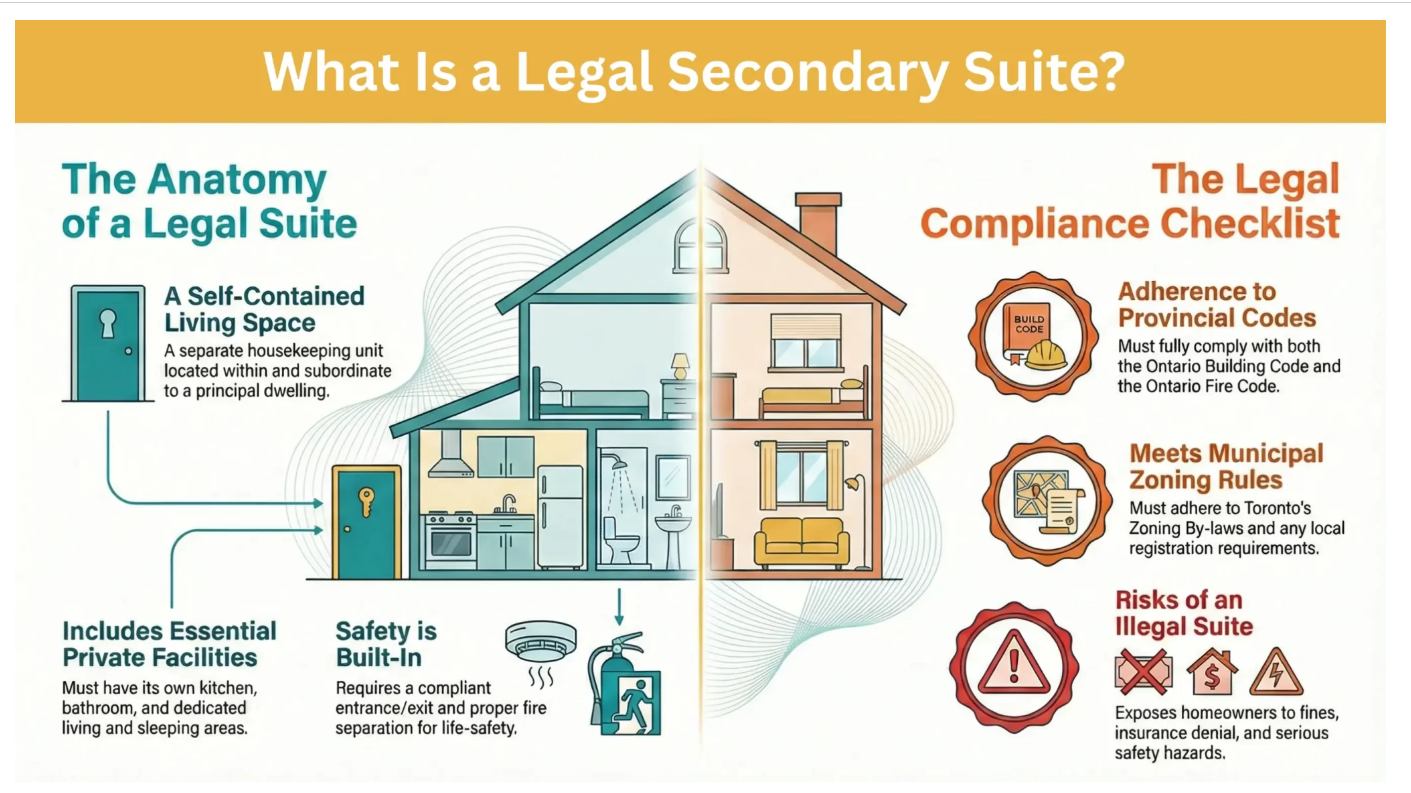
Not every multi-generational setup involves a legal secondary unit, but when it does, there are specific requirements that need to be met.
A proper secondary unit is more than just a finished space. It must function as a self-contained living area and meet building code and zoning standards.
Creating a functional suite for multi-generational living is where many setups run into issues, especially when a space looks complete but was never approved or built to code.
Cohabitation: What’s effective and what leads to conflict.
Multi-generational living often looks straightforward at the planning stage. The actual test comes from how those plans hold up in daily life.
When ageing parents move into a secondary unit, the focus is usually on independence and long-term care.
It is easy for adult children to step in too often, especially when they are close by. Establishing clear boundaries, like knocking before entering and respecting private space, helps maintain independence and reduces tension.
Simple boundaries, like knocking before entering or respecting private space, make a noticeable difference.
Accessibility also becomes part of daily living.
Features like step-free showers, wider doorways, and easy access throughout the home are not just design choices. They affect how comfortably someone can live in the space.
As needs change, proximity often leads to one person becoming the default decision-maker.
Conversations around medical care, finances, and long-term planning are easier when they happen early, rather than during a crisis.
When adult children move back into the family home, the dynamic shifts differently.
There is often a change in the control of the space. Parents may still see it as their home, while adult children are trying to live independently within it.
Clear expectations around space, routines, and the use of shared areas help reduce tension.
Noise is one of the most common real-life challenges.
Older homes carry sound more than people expect. Footsteps, voices, televisions, and everyday movement travel between levels.
Add in different schedules, early mornings, late nights, or shift work, and those differences become part of daily life.
Children also change the dynamic.
Homes that were quiet for years can feel very different once there is more activity. That change can take time.
Contributions also need to work not just on paper but in the real world.
One household may contribute financially, while the other takes on more physical responsibilities like maintenance, snow removal, or yard work.
The division’s method matters less than whether everyone involved perceives it as fair.
Many families benefit from establishing simple “house rules,” including conflict resolution strategies. Regular check-ins and open communication help address disagreements early and keep shared living positive.
Multi-generational living is not just about creating space.;it is about creating a way to live together that works daily.
Homes that succeed are not perfect, but the people living in them understand them.
Strategising for evolution, not only for current circumstances.
Most multi-generational setups focus on current needs.
With future changes in mind, designers create better ones, and homeowners gain confidence in their investment.
Parents may be independent now, but require more care later. Stairs that work today may become a limitation in the future. Bathrooms, entrances, and the general layout may need to be adapted.
Thinking ahead during the initial design or renovation stage makes those changes easier to implement if needed.
A family can repurpose their living area in certain scenarios, such as leasing an accessory dwelling unit as a separate apartment, or a common area can revert to being solely for one family. What works for one stage of life may not fit the next.
Flexibility becomes part of the property’s value.
Homes that can adapt to changing needs hold their usefulness longer, both for the current owner and for future buyers. Consider layout, access, and space division, such as flexible room configurations and accessible entrances, to ensure long-term adaptability.
A well-designed setup allows for independence when needed and connection when wanted. A poorly planned one can limit both.
Planning for change does not mean predicting everything.
It means making decisions that leave options open.
The homes that work best over time are not just designed for today;
Their purpose is to change as needed.
What this looks like in Kingston right now
Multi-generational living is not just a concept in Kingston and the surrounding area. It is already happening in a variety of ways, depending on the type of property and location.
Some buyers are actively looking for multi-family properties such as duplexes or triplexes. There are typically a three or four dozen of this property type available in the Kingston market, although supply remains limited compared to demand. Check realtor.ca to see current market listings.
Others are purchasing single-family homes with the intention of creating a secondary unit.
This is where layout becomes critical. Not every home is a suitable candidate. Properties with separate entrances, adequate ceiling height, and the ability to meet zoning and building code requirements are the most practical options.
There is also a broader housing issue driving this trend.
Kingston continues to face pressure on housing supply, affordability, and the need for a wider range of housing types. The city is planning for significant growth, with thousands of new households expected over the coming decades, which is increasing demand for flexible housing solutions.
That demand is part of why multi-generational living is becoming more common.
It allows families to make better use of existing housing, reduce costs, and create living arrangements that adapt.
The housing options at any moment are crucial.
A large portion of Kingston’s housing stock comprises single-detached homes, many of them older. These homes can work well for multi-generational living, but often require thoughtful renovation to function properly.
In rural areas, opportunities can be greater from a space perspective.
Larger lots in places like South Frontenac or Loyalist Township make it easier to consider detached units such as coach houses. However, those properties also come with servicing limitations and increased responsibility, which need to be factored into the decision.
For most buyers, the process is not about finding a perfect multi-generational home.
It is about finding a property with the right potential, understanding what changes are required, and deciding whether the long-term benefits outweigh the upfront cost and effort
Some buyers are choosing purpose-built duplexes or triplexes. At the present time there are 45 already built multi-family units available on realtor.ca.
Important points
Creating or evaluating a legal and functional secondary unit is equally vital.
Identifying key decision-makers and responsibilities is essential for ensuring clarity in planning multi-generational living.
Successful homes aren’t necessarily the largest but are those where the space works and everyone understands the household dynamics.
Most challenges arise from details that were overlooked or not discussed early enough.
The people involved are the most important aspect; clear expectations around responsibilities and routines can make a substantial difference.
The location also matters significantly, especially concerning access to medical care.
Understanding layout, sound separation, heating, and access affects comfort.
Effective communication contributes to a realistic understanding of how the home will function daily.
It offers flexibility and shared costs, along with invaluable support across generations.
When expectations align, families can thrive in multi-generational arrangements, reinforcing the possibility of success.
When the home and expectations align, families can successfully live in multi-generational arrangements, which reassures the audience about the possibility of success.
It offers flexibility, shared costs, and support across generations. It also requires planning, communication, and a realistic understanding of how the home will function daily, which can help the audience feel more in control.
The physical space matters because understanding how layout, sound separation, heating, and access influence comfort can help the audience feel more confident in designing or choosing a suitable home.Layout, sound separation, heating, and access all affect how comfortable the home will be for more than one household.
The location matters. Access to medical care, distance to services, and the realities of rural versus urban living all play a role.
The people matter most. Clear expectations around responsibilities, finances, privacy, and daily routines make the biggest difference in whether the arrangement works.
Most of the challenges are not surprises.They come from details that were overlooked or not discussed early enough.
The homes that succeed are not necessarily the largest or newest. They are the ones where the space works; the location makes sense, and everyone understands how the household will function.
Begin by identifying key decision-makers and responsibilities to ensure clarity and smooth planning for multi-generational living. If you are considering a multi-generational setup, the structure of the home is only part of the decision.
Understanding how to create or evaluate a legal and functional secondary unit is just as important.
You can read more here:
For further insights, you can read more here:
A Guide to In-Law Suites and Secondary Units in Kingston and Area
❓ FAQ
Is multi-generational living a good idea for most families?
It can be, but it depends on the people involved. Families that communicate clearly and set expectations early have the best experience.
What is the biggest challenge in multi-generational homes?
Privacy and daily routines. Noise, schedules, and shared space are the most common sources of tension.
Do you need a separate entrance for multi-generational living?
It is not required, but it makes a significant difference. Separate entrances allow each household to come and go without affecting the other.
How do families usually split costs?
There is no single approach. Some split expenses evenly; others adjust them based on income or contributions. The important thing is that everyone clearly agrees on it from the start.
Are older homes harder to adapt for multi-generational living?
Often, yes. Many older homes lack separate living spaces, posing challenges for residents regarding sound, layout, and access.
What arrangements should one prepare for ageing parents?
Accessibility and long-term needs. Features like fewer stairs, accessible bathrooms, and easy entry points are easier to include early than to add later.
Does multi-generational living affect resale value?
It can go either way. A well-designed setup can attract buyers, while a layout that limits flexibility may narrow the market.
Is rural or city living better for multi-generational homes?
Both can work. Rural properties often offer more space and separation, while city homes typically offer easier access to services and amenities.
📚 Don’t Miss These Guides
Multi-generational living is only part of the decision. These guides expand on renovation, costs, and property considerations before moving forward.
Basement Finishing Essentials – Homeowner’s Guide 2026
What actually goes into finishing a basement properly, including ceiling height, sound control, permits, and what is required for a legal suite.
Eco-Friendly Home Renovations That Boost Value
Looks at upgrades that improve efficiency and long-term costs, especially important when multiple households are sharing a home.
Purchasing a Fixer-Upper in Kingston and Area 2025–26
This resource gives a true perspective on renovation schedules, budgets, and the potential for a home to accommodate multi-generational occupancy.
8 Hidden Costs of Buying a Home in Ontario
Covers expenses that often come up when changing a home, including permits, upgrades, and servicing changes.
Kingston and Area Home Buyers Guidebook 2026
A full walkthrough of the buying process, including evaluating homes for flexibility and long-term use.