


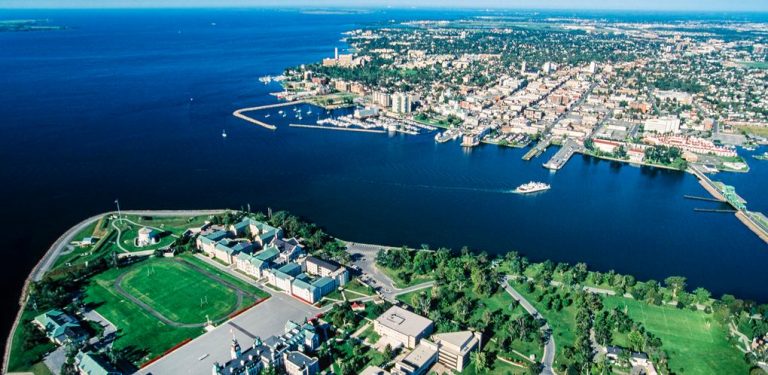
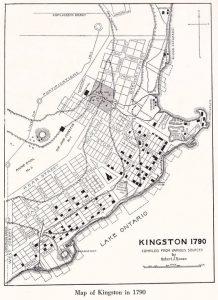
Kingston is at a natural junction where Lake Ontario flows into the St. Lawrence River and the Rideau Canal. Even before the development of contemporary residential areas and riverside parks, that spot left a lasting mark on the city. In the late 1700s, United Empire Loyalists established settlements here, and by the War of 1812, the harbor had transformed into a vital hub for both military operations and shipping. While batteries secured the waterfront, shipyards were engaged in building vessels for defense and commercial use.
During most of the 19th century, industrial operations were frequent along the shoreline. The harbor was vital for naval operations, shipbuilding, and commerce throughout the Great Lakes and the St. Lawrence. Fortifications, including Fort Henry and smaller harbor batteries, underscored the port’s crucial role in protecting Upper Canada.
The working waterfront underwent gradual changes as time passed. The landscape transformed from shipyards and industrial yards to parks, marinas, and residential neighborhoods. Naval vessels historically launched from this same shoreline. Today, people primarily know this shoreline for its walking paths, sailing clubs, and distinctive Eastern Ontario views.
Kingston’s historical limestone structures are still a significant part of what defines the city. Former warehouses and commercial buildings from the 1800s remain in the downtown core, repurposed as restaurants, shops, and galleries. Instead of being preserved as historical sites, a lot of these structures are still utilized for everyday purposes.
The result is a city where history is visible, but still part of daily life. Downtown streets, waterfront parks, and older neighbourhoods all reflect layers of the past while continuing to function as part of a modern and growing community.
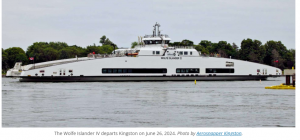
Hop on the free Wolfe Island ferry, and you’ll sail past Garden Island. Today it’s quiet and contains a few summer cottages; in the 1800s it was a humming shipbuilding community that helped power the region’s economy. People have built the past right into the limestone, the shoreline, and the street grid, rather than tucking it away in a display case.
A Glimpse into the Limestone City’s Allure
Wander through downtown, and you’ll discover limestone structures that have endured for more than a hundred years. These buildings now host cafes, restaurants, galleries, and small independent shops. This is one thing that contributes to the city’s unique character. History infuses everyday life here, extending beyond museum exhibits. And with Lake Ontario and the waterfront paths nearby, it’s easy to take the long way home along the water.
What makes Kingston truly special?
-
Deep roots: UEL beginnings, 19th-century fortifications, and a working harbour/shipbuilding legacy.
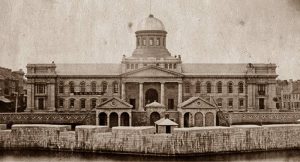
The Market Battery once guarded Kingston’s harbour, standing directly in front of City Hall in the 19th century. -
Water everywhere: lake, river, and canal; pick your view.

The St. Lawrence II, Kingston’s beloved brigantine, sails proudly on Lake Ontario during a golden summer evening. -
Vibrant downtown: Heritage buildings, markets, patios, and liveable, walkable streets.
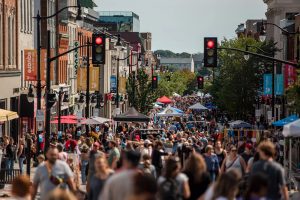
Princess Street Promenade turns Kingston’s main street into a pedestrian festival packed with vendors, music, and community spirit. -
Easygoing lifestyle: Many big-city amenities without the big-city pace.

Kingston’s west end is home to Costco, a membership-based retail warehouse offering bulk deals on groceries, electronics, and more—one of many shopping conveniences in the area
Important points: What you’ll discover in Kingston
You can visit for a short time and only see a little, or stay for a long time and still discover new things. Highlights include:
-
Fort Henry with costumed interpreters and summer sunset ceremonies.
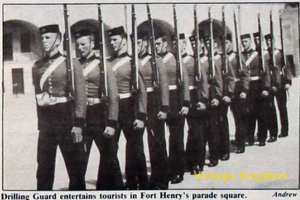
The Fort Henry Guard entertains visitors with precision drills on the parade square, 1984. -
Martello Towers (Murney and Shoal) showcasing 19th-century defence.
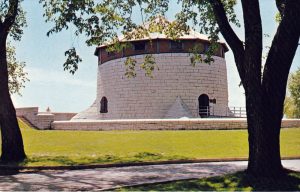
Murney Tower, circa 1968. Built in 1846, it is one of Kingston’s four Martello towers, part of the UNESCO World Heritage Site designation. -
Bellevue House, the Italianate villa linked to Sir John A. Macdonald.
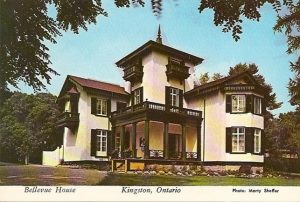
Bellevue House in Kingston, Ontario — the restored 1840s villa once home to Canada’s first Prime Minister, Sir John A. Macdonald -
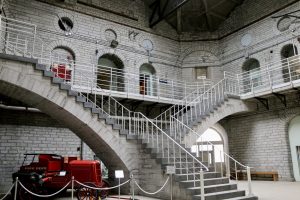
The central dome of Kingston Penitentiary, once the hub of daily prison operations, now part of the historic tours. -
Great Lakes Museum with the Edwardian passenger liner SS Keewatin.
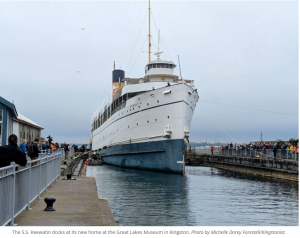
The S.S. Keewatin arrives at its new home, the Great Lakes Museum in Kingston. Photo by Michelle Dorey Forestell/Kingstonist. -
Queen’s University and Royal Military College, the city’s long-time academic anchors. Joined more recently by St. Lawrence College.
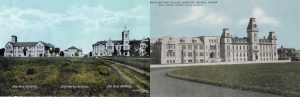
Historic postcard views of Queen’s University and the Royal Military College in Kingston, Ontario, circa early 1900s
Fort Henry: A Living Military Story with a View
The crown-topped fort guarded the Rideau Canal and the dockyards. Today, the drills, cannon demos, and storytelling bring the 1800s to life; and the Sunset Ceremony is pure pageantry (and a local favourite).
-
Expect precision drills, music, and a sense of how serious Kingston’s defensive role once was.
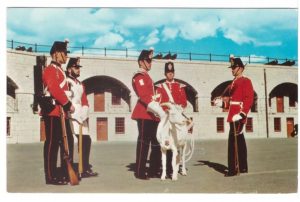
he Fort Henry Guard with their mascot goat (David) on the parade square, Kingston, Ontario, circa 1960s. -
Barracks and exhibits make daily soldier life feel tangible, not dusty.
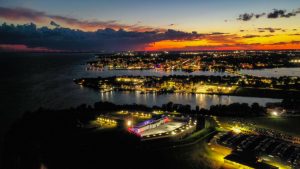
Fort Henry glowing against the Kingston skyline at sunset during the famous Sunset Ceremony
Kingston’s Martello towers were short, stout, and durable, engineered to withstand attacks and oversee the harbour.
-
Murney Tower: Open in summer as a museum; thick walls, clever design, great vantage.
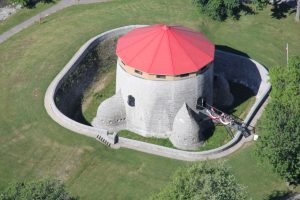
A bird’s-eye view of Murney Tower, one of Kingston’s historic Martello towers along the waterfront in Macdonald Park -
Shoal Tower: That picture-perfect cylinder just offshore near City Hall; a symbol of Kingston on the water.

Boats moored at Kingston’s downtown marina with Shoal Tower, a 19th-century Martello tower, in the background.
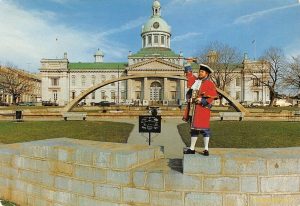
Built in 1844, when the area briefly served as Canada’s capital, City Hall remains the grandest civic building. Its neoclassical dome dominates the waterfront, but the stories inside are just as interesting.
-
Guided tours take you through the ornate council chambers, historic rooms, and down into the preserved police station cells in the basement.
-
A vivid reminder of how civic life once blended politics, justice, and everyday order.
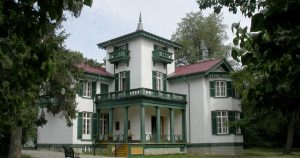
At Bellevue House, you’ll step into the home life of Sir John A. Macdonald. The setting is elegant, the stories are human, and the gardens make a lovely pause between more “military” stops.
-
A reminder that nation-building is also about family choices, health, and day-to-day life.
Delve into Kingston’s Past: Museums & Learning
-
Book ahead in peak season.

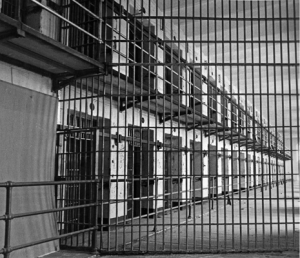
Inside Kingston Penitentiary — the historic maximum-security prison in Kingston, Ontario, now open for public tours. -
Special/express tours pop up throughout the summer.
Great Lakes Museum & SS Keewatin: Maritime Heritage Alive
Set on the waterfront with a working-dock atmosphere, the museum tells the story of shipbuilding, navigation, and life on the lakes. The star is the SS Keewatin — an Edwardian passenger liner you can tour bow to stern. Think polished woodwork, salons, cabins, and an engine room built like a cathedral of steel.
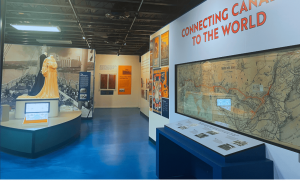
Frontenac County Schools Museum.
The Frontenac County Schools Museum focuses on the history of local education. A restored one-room schoolhouse displays desks, slates, and teaching tools that illustrate how earlier generations taught students across rural Eastern Ontario.

Explore Kingston by land and water tours.
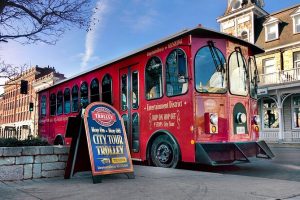
Kingston Trolley Tours
The tour bus offers guided routes through the city’s historic areas. Along the way, the tours pass sites such as City Hall, Queen’s University, Fort Henry, Kingston Penitentiary, and the waterfront, while providing background on the city’s history and development.
1000 Islands Cruises: Scenic Water Journeys
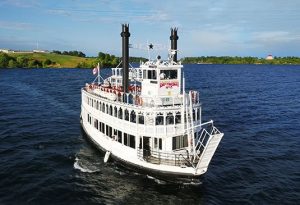
Cruises departing from Kingston’s waterfront travel through the nearby islands along the St. Lawrence River. Trips range from short sightseeing tours to longer cruises with meals on board, offering views of island cottages, historic landmarks, and the surrounding river landscape.
Queen’s University: Limestone, Lectures, and Game Day
Queen’s University, established in 1841, continues to be one of the central institutions in Kingston. The campus brings a steady student presence to the city and contributes to local research, arts, and athletics. Many of its limestone buildings reflect the same architectural character seen throughout the downtown core.
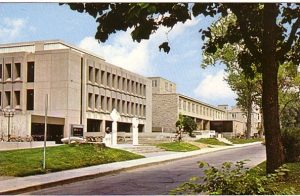
Royal Military College of Canada (RMC): Leadership on the Water
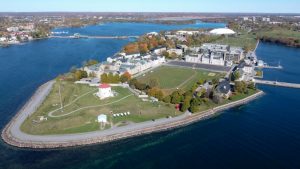
On Point Frederick, across the harbour, is the Royal Military College of Canada. The campus has trained Canadian military officers for generations and remains an important part of Kingston’s military and educational history. Graduate and WWI ace Billy Bishop, along with William Barker, did some of the earliest aerial shots of the city.
Normal Life: The Ideal Fit
Kingston offers many attractions for city dwellers, including a vibrant arts and culture scene, diverse dining options, top-tier educational institutions, and robust healthcare facilities, besides sporting events. It remains easy to navigate. The city’s approachable scale results from its neighborhoods being within easy driving distance of downtown and the waterfront.
Housing & Neighbourhoods (The Quick Tour)
There are many housing choices, from historic limestone homes by the lake to contemporary condos and streets perfect for families, all easily accessible. Proximity to Queen’s and RMC keeps rental demand steady; the broader region offers rural retreats, village principal streets, and waterfront pockets if you like a little elbow room.
-
Heritage districts: Character, walkability, and history on your doorstep.
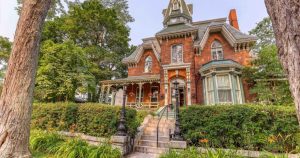
Front view of the Hochelaga Inn, a 19th-century red brick Victorian mansion with ornate trim, bay windows, and lush gardens in Kingston’s Sydenham Ward. -
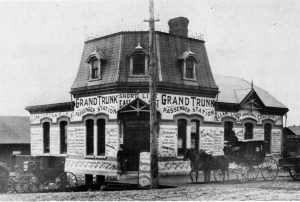
The Grand Trunk Railway station at Ontario and Johnson Streets in the 1890s, built with a limestone foundation and brick structure, served as a busy hub with horse-drawn carriages outside. 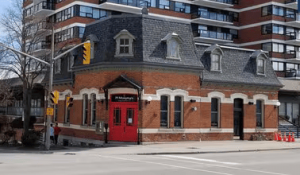
Once the GTR station, now a restaurant, on Ontario Street at Johnson Street in Kingston, Ontario, with a modern waterfront condominium in the background. -
Suburban streets: Parks, schools, and room to grow.

Family-friendly suburban living; space, comfort, and community -
Rural & lakes: Privacy, nature, and the classic Frontenac rock-and-pine vibe.
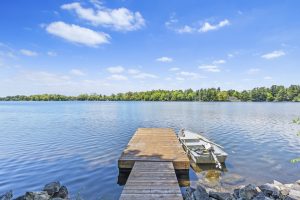
Quiet mornings by the lake — rural living at its finest in the Kingston area.
Note: Real estate conditions change — if you’re comparing neighbourhoods or timing a move, it helps to look at the latest stats before you choose a direction.
Safety, Community, and Green Spaces
-
Lake Ontario Park for picnics and sunsets.

Lake Ontario Park offers one of the best spots in Kingston for picnics, lake views, and sunsets -
City Park and Market Square for farmer’s markets, festivals, and in winter, a postcard skating rink.

The Women’s Art Festival in City Park — an annual Kingston tradition for over 40 years n -
Breakwater & Confederation Basin for sailboats, skyline, and that “I live near the water” feeling.
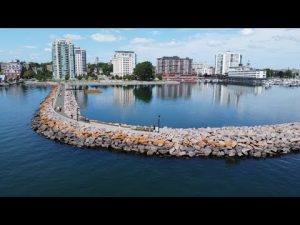
Breakwater and Confederation Basin — the perfect place to enjoy Kingston’s waterfront and marina views.
Conclusion
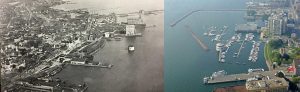
A city that reflects many layers of history, from Loyalist settlement to 19th century military defences, shipbuilding, and the growth of major institutions such as Queen’s University. Limestone buildings and the surrounding water remain defining features of the city. Today, the same downtown streets connect historic sites, waterfront parks, restaurants, and everyday local businesses.
Thinking about a visit… or a move?
I came here from Toronto to attend Queen’s University, and the city took hold of me. With many of the amenities of a larger centre, but wrapped in a more relaxed, enjoyable lifestyle, Kingston and its varied neighbourhoods made it easy to stay. I never left, and I’ve never regretted it.
FAQs
What is Kingston, Ontario known for?
Forts and towers, a historic waterfront, and some of the best-preserved limestone architecture in Canada. Add in Queen’s University, RMC, and an unbeatable setting at the junction of lake, river, and canal, and you’ve got a city with both heritage and momentum.
Is Kingston a good place to live?
Yes — it regularly scores well for livability thanks to its size, safety, culture, and access to services. It’s big enough to have what you need, small enough to feel like a community. (Short commutes don’t hurt, either.)
How can I explore Kingston’s historical sites?
Start with a trolley tour to orient yourself, then dive into Fort Henry, a Martello tower, and Bellevue House. Book Kingston Penitentiary tours in advance during peak season. If you like maritime history, the Great Lakes Museum and SS Keewatin are an impressive pair.
What are the main educational institutions?
Queen’s University and the Royal Military College of Canada. They bring global talent, local energy, and plenty of events to the city year-round.
________________________________________________________________________________________________________________________
Don’t Miss These Guides
Neighbourhoods in Kingston and Area
Explore established city communities, west end neighbourhoods, rural properties, and waterfront settings. Discover the link between location, amenities, lifestyle, and a home’s value and your long-term satisfaction.
Home Security Guide
Learn practical ways to improve home safety, from exterior lighting and entry point protection to modern monitoring systems. A secure property strengthens buyer confidence and long-term value.
Buyer’s vs. Seller’s vs. Balanced Markets
Understand how different market conditions affect pricing, competition, and negotiation strategies. Knowing the type of market you are entering helps you make better real estate decisions in the city and the surrounding area.