



Water damage often begins before visible signs appear. A small ceiling stain, a damp basement smell, or a sump pump that seems to run more than usual can all be early warnings. If you recognize and act on these signs early, you can prevent many major repairs.
Homes across Kingston and Eastern Ontario face water risks that many other regions do not. Limestone bedrock, high water tables, older foundations, heavy rainfall, and a long history of buried creeks and seasonal waterways beneath the city all increase the pressure water exerts on a home. Rural communities deal with their own challenges, including clay soil, swampy lowlands, culverts that freeze solid, and natural drainage paths that shift after storms.
Water behaves like a determined visitor. It takes the easiest route available, and it does not care whether that route runs under your lawn, through an old drain tile, down a wall cavity, or into a basement. This guide is about staying ahead of water damage in Kingston homes, rather than reacting after the fact, bringing everything together so you can protect your home, understand the warning signs, and prevent minor issues from becoming major repairs.
Why is water damage so typical here?
Understanding water damage in Kingston starts with the ground beneath your feet. Much of the city sits on limestone that does not absorb water. When the soil on top becomes saturated, the water table rises and pressure increases from both sides and below. That pressure pushes against basements, crawl spaces, and foundations year-round.
Certain parts of the city have naturally high water tables. In Williamsville, Kingscourt, Calvin Park, Portsmouth, and sections of downtown, sump pits rarely stay dry. My home in Williamsville has always had water sitting in the sump pit. That is not a sign of a problem; it is simply part of living in an area where groundwater sits close to the surface.
When groundwater rises, it exerts pressure on basement floors and walls. Any crack, joint, or weak point can begin to seep. Even homes without visible cracks can develop moisture problems because the pressure finds its own path.
Buried creeks beneath Kingston’s streets
Long before Kingston grew into a city, seasonal creeks and small rivers that carried runoff to Lake Ontario crossed the land. As the city expanded, its growth led to placing many of these waterways in underground pipes or filling them over entirely. The water still follows its old routes during heavy rain. When storms overwhelm the buried systems, the excess pressure pushes toward basements and low points.
These hidden waterways are one reason some Kingston homeowners experience a wet basement after twenty years of dryness. During a large storm, the old waterway simply reasserts itself.
Short, intense storms
Climate change has increased the number of high-intensity rain events. The city sometimes receives more rain in one hour than older drainage systems handled in a day. Gutters overflow, downspouts back up, sump pumps run continuously, and swale or culverts on rural roads become overwhelmed.
Brief bursts of extreme rain can create water problems even in homes that have never had a history of flooding.
Older homes and aging systems
Kingston has homes that range from nineteenth-century limestone houses to mid-century bungalows and 1970s subdivisions. Many of these older homes builders constructed long before modern waterproofing practices. Perimeter drains can become clogged, crushed, or simply reach the end of their service life. Foundations may have small cracks that have slowly grown as the building aged. Roofing materials wear down faster in our freeze-and-thaw cycles, and plumbing systems age like everything else.
A well-maintained home still ages. The longer a house has been standing, the more attention it needs to stay dry.
How water finds its way inside
Water enters a home through four main paths.
Surface water
We can manage visible surface water that comes from rain, melting snow, or overflowing gutters. Proper grading that directs water away from the foundation, along with clear gutters and extended downspouts, helps prevent water from collecting against the home and seeping in.
Groundwater
Groundwater is more complex to manage because it comes from below the ground. When the soil becomes saturated or when the water table rises, hydrostatic pressure increases. Even a hairline crack can begin to leak. The pressure will continue until the water finds a path. Many basements with no visible cracks take on moisture simply because the pressure behind the wall exceeds the structure’s resistance.
Roof leaks
Water that gets past the roof often travels a long way before you see it. Missing, curled, cracked, or loose shingles, failing flashing, damaged vent collars, and tired skylight seals all create easy openings. Ice dams form in winter when snow melts on warm sections of the roof and refreezes at the eaves. Water sits behind the ice until it seeps under the shingles.
Once inside the attic, water can soak the insulation, run along rafters, and travel down wall cavities. The stain on the ceiling is often several feet away from the real source. Many homeowners only notice the problem in spring, long after the damage has occurred.
Plumbing and mechanical failures
Not every water problem comes from outside. Hot water tanks fail without warning. Washing machine hoses can split. Flex hoses that feed sinks and dishwashers sometimes bulge, fray, or crack. Dishwashers, fridges with water lines, and toilets can leak slowly for months before anyone notices. Because these failures often occur while homeowners are at home, they can cause rapid, severe damage if not caught early.
Basement flooding and why it happens here so often
The basement is the canary in the coal mine. It is usually the first place you will notice water damage in a Kingston home. A faint smell, a cold corner of a floor, rust at the bottom of a furnace, soft drywall, or peeling paint are early clues that something is changing. Water almost always announces itself before it arrives.
Basements flood for several reasons, often in combination, including groundwater pressure, downspouts dumping water beside the foundation, negative grading, blocked swale or rural ditches, overwhelmed sump pumps, buried creeks that awaken in heavy rain, cracked foundations, old perimeter drains, and sewer backups.
Water that enters through the foundation usually starts small. A damp patch becomes a trickle, then a small puddle, then something more significant after a large storm. Once water gains access, it continues its progress until someone addresses the source.
Safety should be the first concern in any wet basement. If you suspect the water has come into contact with electrical outlets, do not enter. If you smell gas, leave the house and call the utility company from outside. Floodwater may contain sewage or bacteria, so protective gear is essential if you need to move through it.
Sump pumps and the importance of battery backup
In Kingston, a sump pump is more than a convenience. For many homes, it is a necessity. A sump pump lowers the water level around the foundation by removing groundwater that collects in the pit. When the water table rises, the pump prevents the water from reaching the basement floor.
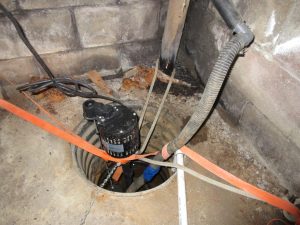
A sump pump needs to be reliable. It should be on its own circuit; the pit should be clear of debris, the float switch should move freely, and the discharge line should carry water well away from the foundation.
A battery backup system is essential. Large storms often cause power outages. Without electricity, a sump pump cannot run. A battery backup keeps the water moving when you need it most. Even a few hours of backup power can prevent a basement flood. Homeowners often find it surprising how fast a sump pit can fill when the water table is high. Without a pump, the pit can overflow quickly.
Some older homes even show the history of past issues. In unfinished basements, you may find a narrow trench along the interior perimeter that leads to a sump pit or drain. These were early interior drainage systems intended to give water somewhere to go. They work, but they also show that the house has been managing groundwater for a long time and needs ongoing attention.
Foundation cracks and seepage
For many years, a foundation might appear sturdy, only to develop a crack unexpectedly. As concrete hardens, it contracts and shifts a little. The earth compacts. There is an accumulation of water pressure. Not all cracks are a cause for concern. Others cracks let water in. The signs are clear once you know what to look for.
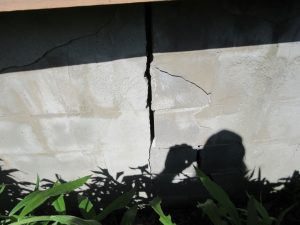
A widening crack is a warning. Rust-coloured streaks, damp spots, or water lines on the wall show that groundwater is pushing through. Even the joint between the floor and the wall can seep.
Repairing a crack earlier leads to better outcomes. Minor repairs are straightforward. Larger problems require specialists who can assess whether the issue is structural or related to water pressure.
Grading, gutters, downspouts, and the land around your home
Exterior drainage is one of the most effective ways to prevent water problems. It is also one of the simplest to maintain.
If the soil slopes toward your home, water will follow. Over the years, soil settles near the foundation, creating low spots. Rebuilding proper grading sends surface water away from the house instead of toward it.
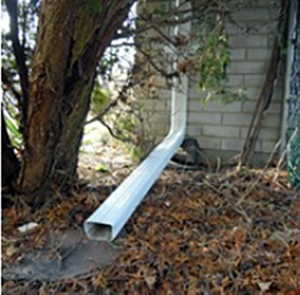
Gutters need regular cleaning. Leaves and debris cause water to spill over the edge, run down the siding, and settle beside the foundation. Downspouts need extensions that carry water at least six feet away from the walls. A downspout that ends right beside the house is one of the most common reasons for seepage.
Landscaping, swales, and where the water really goes
Landscaping significantly influences water flow across your property. Every flower bed, patio, walkway, and retaining wall can alter how water moves, making it crucial for water management efforts. If the soil or stonework slopes toward the house, water will flow toward it, increasing the chance of water damage in heavy rain.
Swales are vital for directing water away from buildings. Regularly clearing leaves, soil, or yard waste from them ensures they function properly, preventing water from settling against your foundation or a neighbour’s.
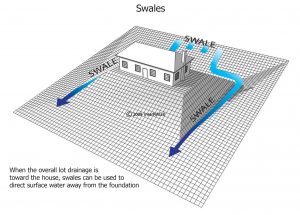
Inspect patios and walkways regularly to identify if they are level or pitched toward the house. Addressing issues early can prevent moisture buildup, damp patches, or basement staining over time.
A quick post-rain check reveals water movement issues. Observe where water actually goes, not where you expect it to. Puddles near the house or water flowing toward the walls indicate the need to adjust slopes, create shallow swales, or add gravel channels to improve drainage.
Downspouts that disappear underground
Many older Kingston homes have downspouts that drop straight into the ground. It looks tidy, but it hides the real risk of water damage. There is no way to see whether the underground pipe is clear, crushed, or broken. If it blocks, the water has nowhere to go. It backs up at the downspout, pours over the eaves, or empties directly into the soil beside the foundation.
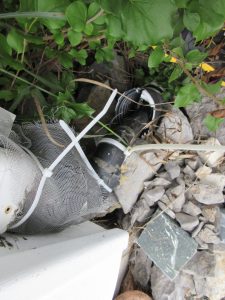
You only discover the problem when water pools beside the house or damp spots appear on the basement wall because everything is hidden. Surface extensions are simple, visible, and far more reliable than any hidden pipe. You can see where the water goes, and you can fix a problem before it turns into a leak.
Ice dams and winter backup
Ice dams form when heat from the attic melts the underside of the roof’s snow. The meltwater runs down until it meets the colder eavestrough, then refreezes. Over time, a ridge of ice builds up. Water pools behind it and creeps under the shingles. Many homeowners only see the result in spring, when paint bubbles or a brown ceiling stain appears.
Winter can be just as hard on gutters and downspouts as it is on shingles. If you don’t clear snow from the bottoms of downspouts at the start of the season, or if they’re partially blocked, meltwater will have nowhere to go. It freezes in the downspout, forming a solid column of ice. As that ice builds, the gutters often fill and freeze as well. Entire sections of gutter and downspout can twist or break away from the house simply from the weight of the ice.
This is especially common at cottages and seasonal properties that receive little attention in winter. Snow builds up, the first mild day sends meltwater into already packed downspouts, everything freezes solid again, and the cycle repeats until something gives.
Underground downspouts add another wrinkle. The melting snow on the roof and in the gutters creates water. When the ground remains frozen, this water then enters a buried pipe, and the pipe cannot drain properly. This form of water damage often gushes back out around the adapter collar where the downspout enters the PVC pipe. The water then concentrates in a small area right beside the foundation. Over a few thaw cycles, that is enough to send water through a crack or seam and straight into the basement.
Sound attic insulation, clear soffits, clean gutters, and making sure downspouts are free of snow and debris at ground level all help reduce these winter risks. Many times, replacing underground downspouts with visible above-ground extensions is the most straightforward and most reliable long-term fix.
Roof leaks, and why they happen
A roof leak usually starts long before you see any damage indoors. Missing shingles, cracked flashing, worn seals around plumbing vents, and old skylight frames all provide entry points for water to cause harm. Once it enters the roof deck, it moves slowly but steadily, soaking insulation and travelling along rafters. Many homeowners first notice a leak when a brown stain appears on the ceiling during spring snowmelt.
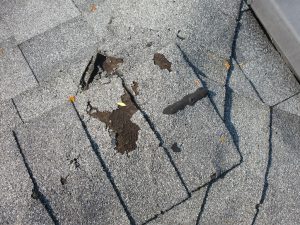
Kingston’s mix of older homes adds another twist. A century-old limestone home behaves differently from a 1950s bungalow or a 1970s two-storey. Some older homes have layers of roofing, and some flashing that was done decades before today’s standards. A quick roof inspection after every major storm can catch issues early.
Rural drainage, floodplains, and low-lying land
Outside the urban area, water follows the natural landscape. Homes in South Frontenac, Stone Mills, Central Frontenac, and Lennox and Addington face challenges such as clay soil that holds water, low-lying pockets that stay damp, and natural wetlands that rise during storms. Culverts, ditches, and swales, which are essential for rural properties, require clearing to function correctly. A blocked culvert on a private road can flood several properties, even those on slightly higher ground.
Before buying rural property, it is always wise to review Conservation Authority maps that show historic floodplains. Water flows where it always has, even if development has changed the surface.
Warning signs most people overlook.
Water damage almost always announces itself through small clues. A musty smell, soft baseboards, peeling paint, loose tiles, or a sump pump that runs more often than usual are all early hints that something needs attention. High humidity in a basement with no simple explanation is another reliable sign that water is present where it should not be.
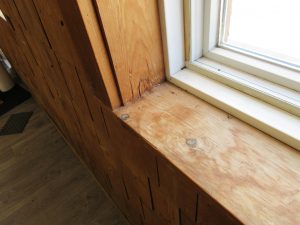
These small clues are often the difference between a simple repair and a costly restoration.
What to do when water gets inside
If water appears indoors, your priority is safety. Avoid any area where water may be in contact with electrical outlets. If the leak is from plumbing, turn off the main water valve immediately. If the water is touching the electrical panel or outlets, stay clear and call an electrician or the utility company.
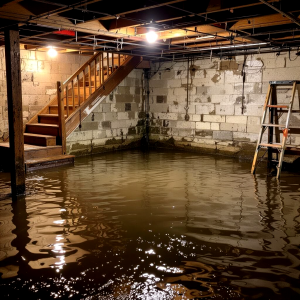
Document everything with photos and videos. Move the items to a dry area. Call your insurance provider and a professional water damage restoration company, such as ServiceMaster soon as possible. They have the commercial pumps, dryers, and meters needed to dry the structure properly. Drying of this water-damaged area should begin within 24 to 48 hours to avoid mould. For more detailed information about cleaning and health risks related to moisture and mould, you can also review Health Canada’s guidance on addressing moisture and mould in the home.
Long-term protection
Protecting your home from water damage is an ongoing process. Regular gutter cleaning, proper grading, sump pump maintenance, replacing worn hoses, and checking the roof after major storms all go a long way toward preventing water damage. A battery backup for your sump pump is one of the best investments you can make. Replacing old plumbing before it fails prevents indoor floods. Small actions, done consistently, protect your home and preserve your property value.
FAQ
1. Is water in my sump pit always a bad sign?
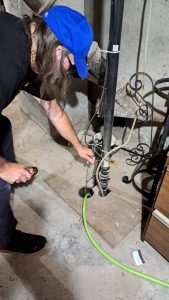
Not necessarily. In many Kingston neighbourhoods with high water tables, including Williamsville and parts of downtown, it is common for a sump pit to contain water most of the time. What matters is whether the pump keeps up and whether the pit ever overflows. If the pump runs constantly, or if you see water at the edge of the floor, it is time to investigate. Your sump pump should be level, have a cover, and include a battery backup to prevent water damage.
2. Do I really need a battery backup for my sump pump?
In this region, a battery backup is one of the best defences you can install. The worst basement floods often occur during storms that knock out the power. Without electricity, the pump stops, the pit fills quickly, and the pit overflows, leading to water damage! A backup system keeps the pump running long enough to get through most outages and can easily pay for itself by preventing even a single flood.
3. How can I tell if my downspouts are causing problems?
If your downspouts end right beside the foundation or drop straight into the ground with no visible outlet, they are likely suspects. Watch what happens in heavy rain. If water pools beside the house, pours over the gutters, or you notice damp spots on the basement wall in the same area, the downspouts need attention. Extending them by 6 feet from the house is a simple, effective fix to prevent water damage.
4. Are small hairline cracks in my basement walls dangerous?
Many homes have minor shrinkage cracks that never cause trouble. The concern is that a crack widens, shows rust-coloured staining, or leaks during storms or the spring thaw. You should inspect any crack that alters. Early repair is usually straightforward. Waiting can turn a minor job dealing with water damage into a larger structural or waterproofing project.
5. What is the difference between surface water and groundwater problems?
Surface water issues commonly manifest after rain or snowmelt and frequently involve grading, gutters, downspouts, or visible drainage. The water table and hydrostatic pressure drive groundwater problems. They may appear even when the surface looks dry. A good inspection will look at both how water moves across your lot and the signs of pressure behind the walls and floors.
6. Does home insurance cover all water damage?
Most basic policies cover sudden, accidental water damage, such as a burst pipe, but may not cover long-term seepage, poor maintenance, or many floods. Sewer backup and overland water usually require specific add-ons. Your insurance provider can help you review your policy before a problem arises to help you understand what your policy covers and what it does not.
📚 Don’t Miss These Guides
Preventing water damage is part of a broader home maintenance strategy. These related guides explore inspections, seasonal upkeep, rural infrastructure, and cost-saving maintenance practices for homeowners across Kingston and the surrounding Frontenac, Lennox, and Leeds communities.
Kingston Home Maintenance Costs: 21 Ways to Save
Regular maintenance helps prevent expensive repairs. This guide outlines practical strategies homeowners can use to manage upkeep costs and protect their property throughout the Kingston area and neighbouring Frontenac, Lennox, and Leeds regions.
A Kingston Area Guide to Wells and Septic Systems, 2025–26
Rural homes rarely have municipal services, often relying on private wells and septic systems. This guide explains how these systems function and what homeowners should understand about maintenance and protection.
Home Inspections: Benefits for Buyers and Sellers
Inspections often reveal hidden moisture issues, drainage concerns, and structural risks. This guide explains what inspectors look for and how inspection findings influence real estate decisions across Kingston and the nearby Frontenac, Lennox, and Leeds counties.
Protect Your Home: Seasonal Maintenance Tips That Pay Off
Seasonal upkeep helps prevent common problems like roof leaks, foundation moisture, and drainage issues. This guide reviews practical maintenance tasks that help homeowners protect their property year-round.