

Buying or selling a home in Ontario involves legal documents, timelines, and decisions that can have long-term financial consequences. One key document you will always see at the beginning of the process is the RECO Information Guide, which is essential for understanding your rights, obligations, and what to expect when working with a REALTOR®.
Rather than asking you to read the entire guideline line by line, the summary below explains the key parts in clear language.
Why work with a REALTOR®?
Feeling valued and confident in the process results from buyer and seller trust in their REALTOR®.
Working with a REALTOR® means more than accessing listings or handling paperwork. In Ontario, brokerages and their agents owe specific legal duties to protect your interests, including loyalty, confidentiality, and full disclosure.
As a client, you have the right to:
Loyalty. Your best interests must come first.
Confidentiality. Your personal information, your motivation, and your price limits must remain private, even after the transaction closes.
Full disclosure. We must share any information that could affect your decisions with you.
Protection from conflicts of interest. We must disclose any dispute and appropriately address it before work continues.
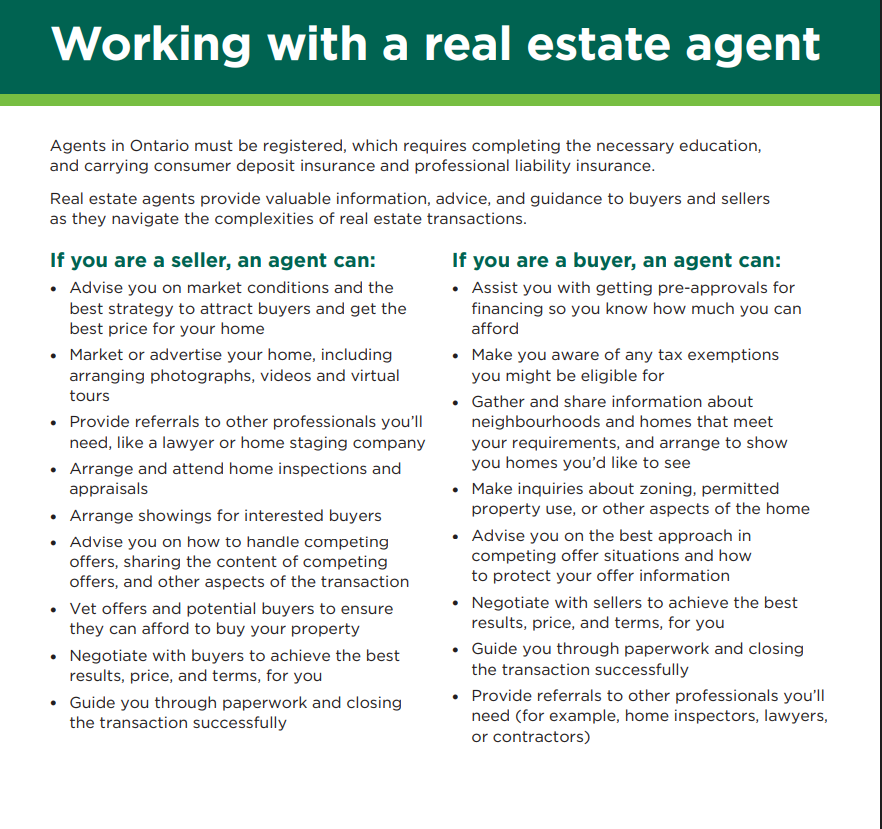
For sellers, professional representation includes advice on pricing, marketing, showings, offers, negotiations, and managing the transaction to closing.
For buyers, professional representation includes helping find suitable homes, checking zoning and permitted uses, developing a strategy, preparing offers, negotiating, and managing the transaction through closing.
What happens if you do not use an agent?
A buyer or seller who does not work with a brokerage is called a self-represented party.
When a self-represented party speaks to the agent who represents the other side, that agent has a legal duty to act only in the best interest of their own client. The agent must pass along any information shared, including price limits, motivation, or timing, to the client.
The agent you’re speaking with cannot offer advice, strategy, or guidance. A self-represented buyer or seller must determine value, negotiate terms, manage risks, and prepare documents without professional representation.
The representation agreement
A client relationship begins with a written representation agreement between the client and the brokerage. That agreement is the service contract.
The agreement sets out:
The services that the brokerage will provide
How they determine and settle the fees.
How long does the agreement last?
The holdover period, which can require payment of commission if a transaction occurs shortly after the agreement expires,
This agreement defines clearly the relationship, the services provided, and the responsibilities of both parties.

Multiple representation. An important rule.
Multiple representation occurs when a single brokerage represents both the buyer and the seller in a single transaction.
Multiple representation occurs only if both parties agree in writing before the transaction begins. Before any offers or negotiations begin, this written consent is required to ensure transparency and informed agreement.
If either party does not agree, the brokerage must arrange an alternative solution, such as referring one party to another representative or brokerage.
When multiple representations exist, the agent must act neutrally and cannot provide strategic advice to either side on price or negotiation.
If you ever have an issue with your REALTOR®
Most concerns arise from misunderstandings, and people can resolve them quickly.
The first step should always be to speak with the REALTOR® or the brokerage. The Broker of Record handles standards within the brokerage and often resolves issues at that level.
Buyers and sellers can contact the Real Estate Council of Ontario (RECO) if they have an unresolved concern. RECO oversees REALTORS® and brokerages across Ontario, handling complaints about their conduct and adherence to regulations. No brokerage may prevent a client from contacting RECO or to require a client to waive that right.
The result
Ontario’s real estate rules protect you and make the process transparent, helping you feel reassured and confident in your decisions.
Questions are always welcome. Having support and guidance helps you feel encouraged and confident to make informed decisions.
Frequently Asked Questions
Do I have to sign a representation agreement?
A representation agreement is required for full service, advice, and negotiation. Without one, a REALTOR® cannot act on your behalf.
Is it possible to cancel a representation agreement?
Each agreement contains its own termination terms. Review and understand these terms before signing.
Does multiple representation happen automatically?
Multiple representation happens only when all parties receive information and provide written agreement before the transaction proceeds.
Do buyers always pay their REALTOR® directly?
In most Ontario transactions, the buyer does not write a cheque to their REALTOR®. Typically, the seller agrees in the listing agreement to pay a total commission. The seller’s lawyer pays that commission from the sale proceeds after the deal closes, and then split between the listing brokerage and the buyer’s brokerage, per the agreement. Brokerages and lawyers handle all commission funds and pay them through trust accounts, rather than informally between individuals. Still, the buyer’s representation agreement entitles the buyer’s brokerage to compensation. If a seller does not offer enough commission to cover that amount, the buyer may make up the difference. Therefore, a rational discussion is always necessary before someone drafts an offer.
What is the purpose of the RECO guide?
The guide explains rights, obligations, and how representation works in Ontario.
Don’t Miss These Guides
Working With a Kingston REALTOR®
What does representation really mean in Ontario? This guide covers how a REALTOR® works for you, commission structures, multiple representation, and the importance of written agreements. If you want clarity before you start the process, this is the place to begin.
First Home Purchase: Kingston Area
Buying your first home can feel overwhelming. This step-by-step guide walks through pre-approval, budgeting, conditions, inspections, closing costs, and common mistakes to avoid. Written specifically for Kingston and area buyers, it focuses on practical advice you can actually use.
Home Inspections: Benefits for Buyers and Sellers
A home inspection is more than a checklist. Learn what inspectors look for, how to interpret findings, and when it makes sense for sellers to get ahead of potential issues. Clear expectations make for smoother negotiations and stronger decisions.
Selling a long-held property involves preparation, pricing strategy, and timing. This guide outlines the practical steps and considerations that help families navigate the transition with clarity.