



Smart Move or Stress Trap?
Ah, yes, the fixer-upper! Every year, I encounter young buyers who step into a dated house and whisper a hopeful phrase, ‘It has potential.’ And they are often right. A well-chosen fixer-upper can be a beacon of hope, an innovative way for a couple or first-time buyer to enter a neighbourhood that once felt out of reach. However, it’s important to remember that this potential can also hide thousands of dollars in unexpected repairs and surprises that no one posts on Instagram.

The truth is simple. A fixer-upper is not a cheaper house. It is a renovation project where you will live. The key is knowing which homes are worth the effort and which ones are better left alone.
Kingston and the surrounding communities offer a diverse range of housing options, from limestone farmhouses to 1960s bungalows and newer subdivisions. Every era of construction has strengths and weaknesses. Understanding these, along with your time, budget, and overall tolerance for renovation stress, makes all the difference.
This guide examines closely what younger buyers need to know, drawing on both local market experience and real-world examples, including a few lessons from my own 1912 home, where every project seemed to reveal something new behind the walls.
Why fixer-uppers appeal to younger couples?
For many first-time buyers, especially younger couples, fixer-uppers feel like the only path into the market. A fully updated home in an established neighbourhood can be entirely out of reach, while one in need of work can look far more promising. There is also something appealing about shaping a home with your own hands, making it personal rather than walking into someone else’s choices.
However, realism must accompany optimism. Renovations are not a weekend project. They change your routine, your finances, and your patience. And unlike what you see on television, the surprises do not appear with cheerful background music and a contractor who solves everything in thirty minutes. Real surprises cost real money.
Fixer-uppers can indeed be a great opportunity, but they can also become a problem when buyers underestimate what is inside the walls or assume every project will go smoothly. It’s crucial to approach these projects with a realistic mindset, understanding that surprises are part of the process.
The truth behind the walls: My 1912 Williamsville home
Older Kingston homes proudly carry their history, but that history often comes with a few construction quirks. In my own 1912 home, renovations revealed things I never could have predicted. Behind one wall, a window lay hidden. Builders had covered this window on both sides: they used siding on the outside and drywall on the inside. This left no hint that the window had ever existed. It simply reappeared during a renovation, like a time capsule.
In the back room, the bottom three feet of the wall lacked insulation because the framing ran horizontally rather than vertically. You would never know until the walls came down, but you could certainly feel it every winter.
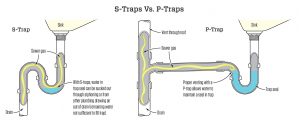
Electrical surprises were everywhere. Wiring ran between the subfloor and the floorboards, something that perhaps made sense, or was the easy way, decades ago, but would never meet today’s safety requirements. Plumbing included an S-trap, which is no longer permitted locally because it can siphon water out of the trap, allowing sewer gases to enter the home. Older houses also commonly hide lead supply pipes, which often need to be replaced.
These discoveries did not mean the house was a bad purchase. They meant I had to understand what I was dealing with. And that is precisely the mindset young buyers need to bring to any fixer-upper. A surprise behind the wall is not a disaster if you expected one.
The honest cost of “just needs some work.”
While fixer-uppers may seem affordable based on their purchase price, it’s crucial to understand that the home’s cost is just the beginning. The real cost lies in transforming the house into a safe, functional, and comfortable space. This understanding will prepare you for the journey ahead.
Cosmetic updates are usually the easiest for young buyers to plan around. Paint, flooring, lighting, trim, and minor improvements can transform a dated home into a modern one without requiring a large budget. Many couples handle these themselves.

The real strain comes from structural and system upgrades. A kitchen renovation can cost between $25,000 and $40,000, even if you keep the same layout. This cost includes not only the new cabinets and countertops but also the plumbing and electrical work. Bathrooms, although small, also carry higher price tags because of the costs of plumbing, electrical work, waterproofing, and ventilation. Then some upgrades are not visible, such as insulation hidden inside walls, replacing outdated electrical systems, updating plumbing stacks, or addressing moisture problems.
A fixer-upper becomes unaffordable the moment the renovation costs exceed the home’s future value. In Kingston, neighbourhood matters more than any countertop, tile, or paint colour. Renovations hold value when the house is in an area that buyers already find desirable; this means that a well-renovated home in a desirable neighbourhood can often sell for more than the cost of the renovations, while a poorly renovated home in a less desirable neighbourhood may not recoup its renovation costs.
Where fixer-uppers make sense in Kingston
Specific neighbourhoods offer good potential because updated homes in these areas sell well. Strathcona Park, Bayridge, Henderson Place, Polson Park, Portsmouth Village, and parts of Meadowbrook and Kingscourt reward renovations. Many of these areas feature homes built between the 1950s and the 1980s. They were straightforward builds with solid framing and predictable layouts, making them ideal candidates for cosmetic and moderate updates.
Downtown Kingston and the older parts of Williamsville, Rideau Ward, Portsmouth, and other pockets scattered throughout the city have some incredible heritage homes, but renovating them requires patience, expertise, and, often, deeper pockets. They are beautiful, full of character, but they come with century-old foundations, plaster walls, legacy wiring, and surprises that belong in their own chapter of a history book.
Newer developments, such as Woodhaven, Westwoods, and parts of Westbrook, often involve only minor cosmetic updates rather than structural ones. However, be aware of additions, especially decks, that lack a permit. These homes give younger buyers the feel of a fixer-upper without the risk of major underlying issues.
Rural fixer-uppers require another layer of planning. Wells, septic systems, drainage, foundation movement, and heating systems all play a role. Renovating a rural home can be rewarding, but it demands a deeper understanding of how the systems work and when they are nearing the end of their lifespan.
What younger couples often underestimate
Most couples expect renovations will cost money. What they underestimate is how renovations affect daily life. Dust moves through the house no matter how well you seal off the rooms. Simple tasks take longer. Even cooking can become a challenge when they tear apart your kitchen. Many buyers discover that living in a renovation is a lifestyle change, not a weekend inconvenience.
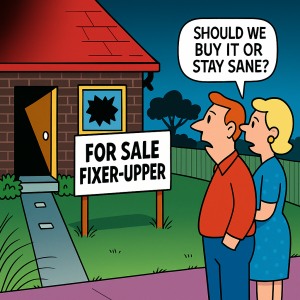
Time is another issue. A project that initially appears to be a two-week task can actually stretch into two months. Everything depends on material availability, contractor schedules, unexpected discoveries, and the extent to which you are doing the work yourself.
There is also the emotional side. Renovations involve endless decisions—fixtures, paint colours, flooring types, hardware, tile patterns, and layout changes. Despite agreement, couples can still experience decision fatigue.
Understanding these non-financial costs upfront helps young buyers enter the process with clear expectations.
DIY enthusiasm versus professional reality
Many young couples want to tackle part of the work themselves to save money, which is a great instinct when applied to the right tasks. Painting, removing old flooring, installing vinyl plank, laying simple trim, or updating basic hardware are all achievable with patience, the right tools, and a willingness to learn.

Where DIY becomes risky is in systems that affect safety. Professionals should always handle electrical work, plumbing connections, structural changes, HVAC updates, roofing, and anything involving a foundation. The risk of damage or injury is real, and insurance companies have strong opinions about unlicensed work.
Remember that “saving money” only works if you perform the repair correctly the first time. A professional correcting a DIY mistake usually costs more than hiring that professional in the beginning.
A few red flags worth slowing down for
Most homes have minor issues. A little moisture in a basement corner, a tired roof, and some older wiring. These are not deal-breakers. However, a combination of multiple major issues should prompt any buyer to pause.
Here are a few situations where careful consideration is necessary:
• a roofline that sags or dips
• foundation walls that bow or bulge
• active moisture with mould present
• widespread outdated electrical, especially knob and tube
• a mix of copper and aluminum wiring
• Kitec plumbing in specific eras
• multiple unpermitted additions
• a persistent sewer smell
• spongy floors in more than one area
A fixer-upper can handle one or two of these; more than a couple, and you should be wary.
A special warning: vermiculite insulation
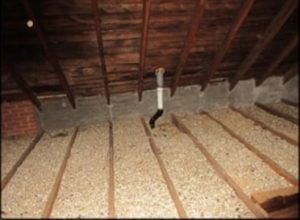
People commonly installed vermiculite insulation in Kingston’s older homes, particularly in the attics. Some vermiculite produced before 1990 contained asbestos. A qualified professional must do the testing, and removal requires specialized abatement. This is not a DIY task. Licensed experts should always handle this health and safety issue. I did not have vermiculite, but there was some suspicious tape on the ductwork. I had tested locally at Paul Davis Restoration ; fortunately, it was negative.
When a fixer-upper becomes a wonderful decision
A fixer-upper is a good choice when the structure is sound, the neighbourhood supports the investment, and the work needed matches your budget and timeline. In these cases, a dated home becomes a path to long-term equity. Young couples who plan well, pace themselves, and know when to bring in professionals often come out far ahead.
A successful fixer-upper usually follows a pattern. Buyers fall in love with the location, understand the house needs work, budget realistically, and accept the timeline without rushing. They recognize surprises will happen, but they also know neighbourhood value and thoughtful planning protect their investment.
When walking away is the smart move?
There is no shame in walking away from a fixer-upper. Some homes require more work than they are worth. If the renovation cost exceeds the potential resale value, or the house presents multiple structural concerns, or the first round would completely drain your budget for work, stepping back is the wiser choice.
The right fixer-upper feels challenging, but not overwhelming. It stretches your skills without breaking the bank. Most importantly, it should feel like a home you can grow into, not a project that consumes your life.
The Kingston buyer’s bottom line
A fixer-upper can be an excellent opportunity for younger buyers, but only when approached with clear expectations. Renovating a home teaches patience, problem-solving, and resilience. It also creates pride and gives couples a shared accomplishment they will remember for years later.
Suppose you’re considering buying a fixer-upper in Kingston or the surrounding communities. In that case, I can help you compare it to recent sales, understand the true scope of the renovation, and determine whether the numbers make sense. With more than a decade of local experience, I can decide if a house is worth the effort or suggest that you leave it alone quietly.

Buying smart matters. Preparation matters even more.
FAQ
Is it cheaper to buy a fixer-upper in Kingston?
The purchase price is usually lower, but the total cost is rarely cheaper. Renovations, materials, labour, and unexpected discoveries often add up to more than buyers expect. A fixer-upper only becomes a good deal when the home is structurally sound, the neighbourhood supports long-term value, and the renovation plan fits your budget.
How do I know if the fixer-upper is worth the investment?
Start with location. If other updated homes in the same neighbourhood are selling well, your renovation dollars will usually hold their value. Next, consider the condition of the major systems. If the roof, wiring, plumbing, foundation, windows, and heating system are all near the end of their life, the cost can outweigh the benefit. A good home inspection is essential, especially for older homes.
What renovation projects offer the best return?
The highest returns in Kingston typically come from:
• updated kitchens
• modern bathrooms
• improved energy efficiency
• new flooring
• open layout adjustments when structurally workable
• fresh paint and improved lighting
Major structural repairs rarely yield a direct return, but they protect the home’s long-term value.
How do younger couples prepare for the lifestyle side of renovations?
Expect dust, noise, delays, and a temporary loss of everyday routines. Meals may become simpler. Rooms will be unavailable. Tools will live on the dining table for weeks. Planning small, contained projects helps avoid feeling overwhelmed. Spreading the work over time also makes the process more manageable.
Should we live in the fixer-upper during the renovations?
Many couples do, especially in Kingston’s competitive market, but it depends on the scope of the work. Living in the home can slow down large projects and add stress, but it also saves on rental costs. If the major systems are functioning correctly and the house is safe, living through cosmetic updates is manageable. Larger structural or electrical projects are best handled before moving in.
What issues should make me walk away?
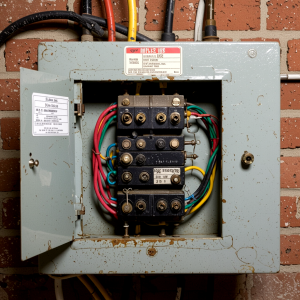
A single problem is manageable. A cluster is not. Buyers should pause when they see:
• foundation movement
• widespread moisture or mould
• active knob and tube wiring
• structural sagging
• multiple unpermitted additions
• Kitec plumbing
• failing septic systems on rural properties
When several major issues arise simultaneously, the wisest course of action is often to move forward.
Are DIY renovations worth it?
DIY can save money and give a strong sense of ownership, especially for cosmetic work. However, electrical, plumbing, HVAC, roofing, and structural changes are best left to licensed professionals. Insurance companies in Ontario will not cover damage caused by unlicensed work; therefore, it is essential to make informed decisions.
How do fixer-uppers perform when it comes time to sell?
A well-renovated home in a desirable Kingston neighbourhood usually sells very well, especially if thoughtful people complete the upgrades. Buyers appreciate modern systems, improved layouts, quality materials, and energy efficiency. Completing projects properly and avoiding shortcuts achieves the strongest resale results.
📚 Don’t Miss These Guides
Buying a fixer-upper requires careful evaluation of renovation costs, financing options, and neighbourhood value. These related guides explore budgeting, property research, and inspection considerations for buyers looking at renovation opportunities across Kingston and the surrounding Frontenac, Lennox, and Leeds communities.
Kingston and Area Home Buyers Guidebook 2026
A comprehensive guide covering the entire buying process, including financing preparation, property searches, inspections, and closing steps for buyers entering the market throughout the Kingston area and neighbouring Frontenac, Lennox, and Leeds regions.
Neighbourhoods in Kingston and Area
Location often determines whether renovation investment makes sense. This guide explores neighbourhood characteristics, amenities, and long-term value considerations across Kingston and the nearby Frontenac, Lennox, and Leeds counties.
Rent or Buy: Making the Right Choice
Some buyers consider renovation projects while weighing the financial benefits of renting versus buying. This guide explains how budgeting, lifestyle goals, and market conditions influence that decision.
Online listings often reveal properties that need updating or renovation. This guide explains how buyers can use online tools effectively while understanding the limits of listing platforms and the importance of local market insight.
Home Inspections: Benefits for Buyers and Sellers
Fixer-upper properties often involve hidden structural or mechanical issues. This guide explains how inspections help buyers better understand repair needs before committing to a purchase.
Match the Home You Buy to Your Budget: What Kingston Buyers Need to Know
Renovation costs can quickly affect affordability. This guide explains how buyers can balance purchase price, repair expenses, and long-term costs before committing to a renovation project.