


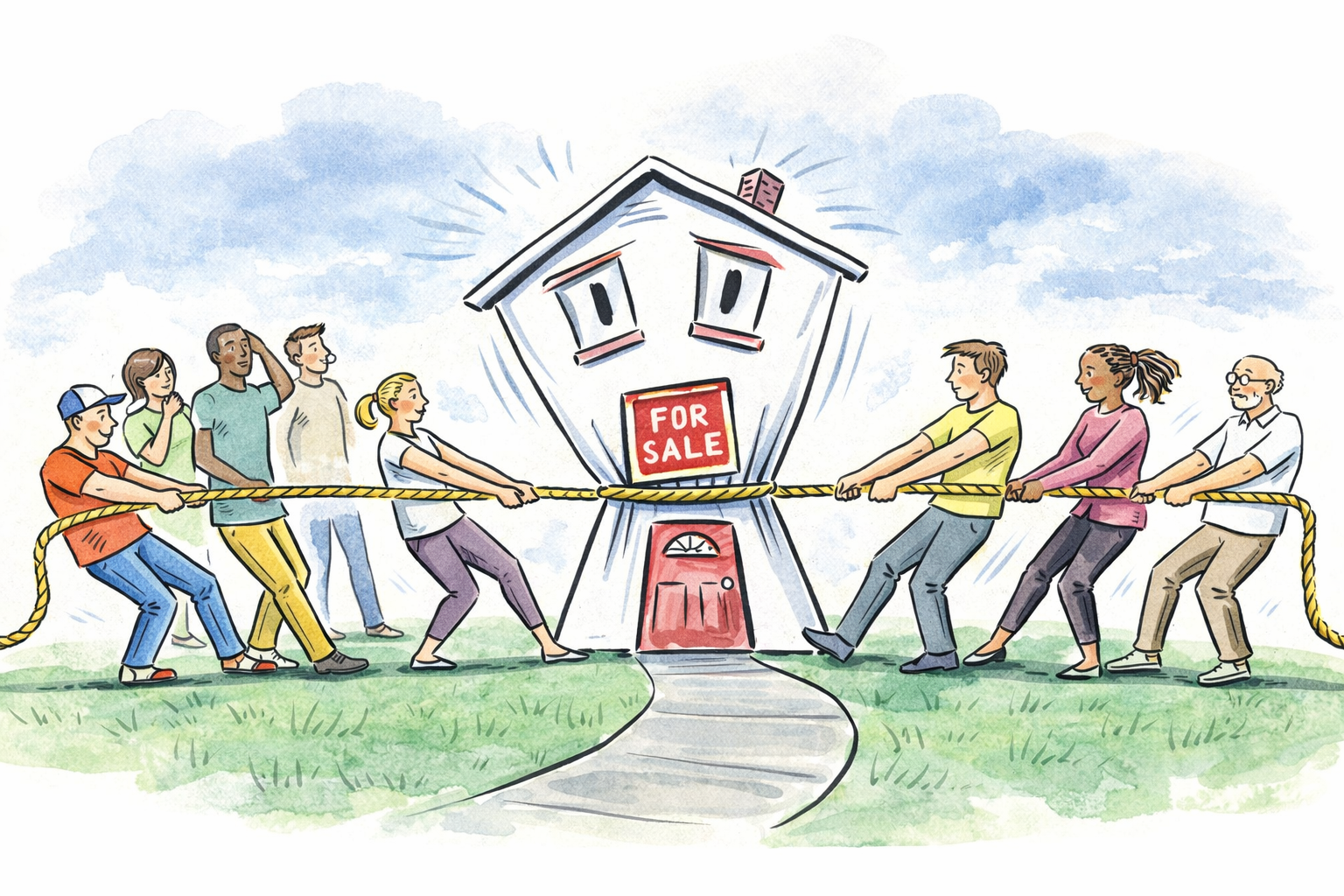
Bidding wars still happen in Kingston and the surrounding area, but they look very different from what they did during the peak pandemic years. During COVID, tight inventory, steady demand, and historically low interest rates created conditions where bidding wars became routine. It was not unheard of to see twenty or more offers on a single property. That level of competition is no longer typical. Today, when bidding wars occur, they usually involve a handful of buyers rather than dozens.
Bidding wars occur when more than one buyer submits an offer on the same property, and competition pushes buyers to raise the price or improve the terms. Multiple offers do not automatically result in bidding wars, and the highest price does not always win. Sellers often consider closing dates, financing strength, conditions, and overall certainty alongside price.
Ontario has traditionally used a closed, or blind, bidding system where buyers submit offers without knowing the details of competing bids. That system still sees widespread use. Sellers now also have the option to allow open bidding, which allows them to disclose specific offer details so buyers can see how they compare. Sellers can choose whether to use open bidding, and they use it selectively based on the property and their comfort level.
For buyers in today’s market
Buyers should understand that current bidding activity varies by property type and price range. Well-priced homes in desirable locations can still attract competition, but these situations are now more property-specific rather than market-wide.
Buyers should focus on the overall strength of their offer, not just the price. Clean financing, reasonable conditions, and a closing date that works for the seller often matter as much as the number on the first page.
For sellers in today’s market
Sellers should be cautious about relying on a bidding war as a strategy. While competition is still possible, it is no longer automatic. Accurate pricing remains the most effective way to attract serious buyers.
In today’s market, a competitive situation might involve three, four, or five offers rather than the twenty or more sometimes seen during the pandemic. Recognizing this shift helps set realistic expectations from the outset.
Why escalation clauses do not always gain acceptance.
Buyers who want to remain competitive despite uncertainty about the final sale amount sometimes employ escalation clauses. They allow a buyer to agree to beat another offer by a set amount, up to a defined maximum.
A simplified example might read:
The Buyer agrees that if the Seller receives another bona fide written offer acceptable to the Seller, the Buyer will increase the Purchase Price by $2,000 above the competing offer, up to a maximum Purchase Price of $725,000. The seller will provide proof of the competing offer upon acceptance.
Not all sellers will accept escalation clauses. Some prefer straightforward offers without moving parts, while others are uncomfortable with the additional complexity. As a result, sellers should use escalation clauses selectively and only when they suit the situation.
Bottom line
Bidding wars are no longer the default in Kingston and area real estate. They still happen, but they are smaller, more focused, and more dependent on the individual property. Understanding when competition is real and how to respond to it matters far more today than relying on assumptions from the pandemic market. Understanding how bidding wars work in the Kingston real estate market can help buyers prepare stronger offers and avoid costly mistakes.
FAQ
Are bidding wars still common in Kingston?
They still occur, but far less often than during the pandemic. When they happen, they usually involve a few buyers rather than dozens.
Does the highest offer always win in bidding wars?
No. Sellers often consider financing strength, conditions, closing dates, and overall certainty alongside price.
Is open bidding required in Ontario?
No, open bidding is optional. Closed or blind bidding remains widely used.
Are escalation clauses common in Kingston offers?
Occasionally, people use them, but many sellers prefer straightforward offers and will not accept escalation clauses.
Should buyers expect homes to sell far over asking?
Not. Many homes sell through negotiation rather than competitive bidding.
Do bidding wars develop even if no one plans one?
Yes. A bidding war can grow simply because several buyers independently value the same property. There is no rule that a bidding war has to be engineered by an agent or seller.
Can an agent claim there are other offers if there aren’t?
No. Ontario rules prohibit a listing agent from suggesting or implying competing offers unless there are actual written offers signed and ready to present to the seller.
Don’t Miss These Guides
If you are planning to buy a home in Kingston and the surrounding Eastern Ontario communities, these guides explain several important parts of the process that many buyers encounter along the way. Understanding the broader steps involved in Kingston real estate purchases, from financing and relocation to renovation planning, can help buyers make better decisions in competitive markets.
First Home Purchase: Kingston Area 2026
Buying your first home in Kingston and the surrounding Eastern Ontario communities can feel overwhelming, especially when the market becomes competitive. This guide explains the entire process, including mortgage pre-approval, budgeting, how offers work in Ontario, and how negotiations typically unfold in the Kingston and Area real estate market.
Relocating to Kingston and Area 2026
If you are moving to Kingston or nearby communities such as Amherstview, Odessa, Gananoque, or South Frontenac, this guide explains what buyers should understand before purchasing property in the region. It covers neighbourhood choices, commuting routes, schools, waterfront areas, and key factors affecting the Kingston housing market.
Purchasing a Fixer-Upper in Kingston and Area 2025–26
When housing inventory is limited, buyers in Kingston and surrounding Eastern Ontario communities sometimes find opportunities by purchasing a fixer-upper. This guide explains renovation costs, financing considerations, inspection concerns, and resale factors that affect older homes across Kingston, Frontenac County, and Loyalist Township.